
Market Cap

Market Cap: How to Value Crypto Projects

Market cap tells you how much the entire crypto market values a project. It’s the most important number for comparing different cryptocurrencies.

Market capitalization is the total value of all coins in circulation, calculated by multiplying the current price by the circulating supply. It shows the relative size and importance of different crypto projects.

How Market Cap Works

Simple formula: Current Price × Circulating Supply = Market Cap

A $1 coin with 1 billion circulating supply has the same market cap ($1 billion) as a $1,000 coin with 1 million circulating supply. Price per coin is meaningless without considering supply.

Fully Diluted Market Cap includes all tokens that will ever exist, including those not yet released. This gives a more complete picture of potential future value dilution.
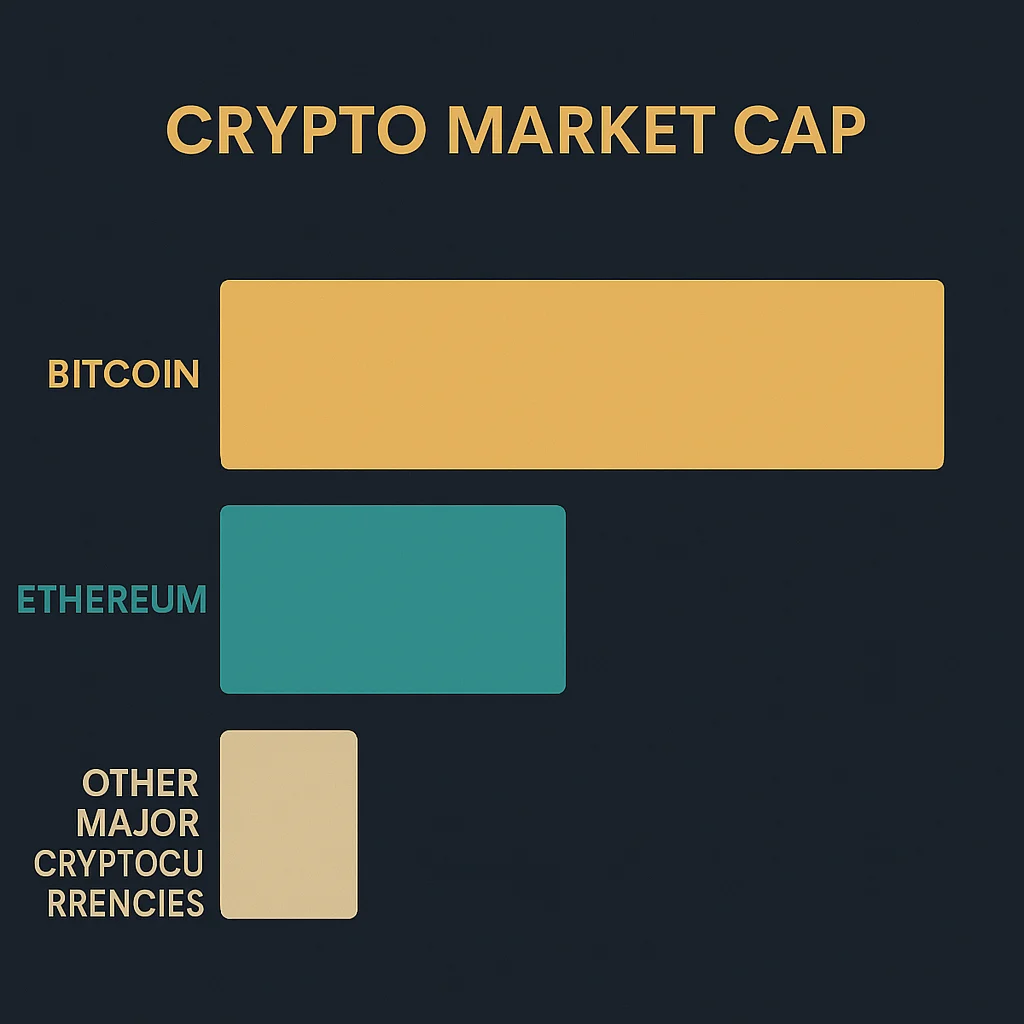
Bar chart comparing market caps of Bitcoin, Ethereum, and other major cryptocurrencies

Real-World Examples

  • Bitcoin – ~$600 billion market cap (19.7M BTC × ~$30K)
  • Ethereum – ~$240 billion market cap (120M ETH × ~$2K)
  • Shiba Inu – $6 billion market cap despite low price due to massive supply

Why Beginners Should Care

Market cap helps you understand realistic price potential. A coin with 100 billion tokens can’t reach $1,000+ per token without exceeding global GDP.

Compare similar projects by market cap, not price. Two DeFi tokens might have different prices, but market cap shows which the market values more highly.

Related Terms: Circulating Supply, Total Supply, Token Economics, Whale

Back to Crypto Glossary

Similar Posts

  • Rebase Token

    Rebase Token: Algorithmic Supply Adjustment Rebase tokens automatically adjust their total supply to maintain target prices or economic conditions. It’s like having money that multiplies or divides to keep its buying power constant. A rebase token automatically increases or decreases the total token supply held by all users proportionally to achieve specific economic targets like…

  • Secure Element

    Secure Element: Hardware Security ChipA secure element is a tamper-resistant hardware chip designed to store sensitive information like private keys. It's like having a tiny vault built into your device that's extremely difficult to break into.A secure element is a specialized hardware component designed to provide isolated, tamper-resistant storage and processing for sensitive data such…

  • DeFi Composability

    DeFi Composability: Building Block Finance DeFi composability allows protocols to integrate seamlessly, creating complex financial products by combining simpler components. It’s like financial Lego blocks that snap together perfectly. DeFi composability refers to the ability of decentralized finance protocols to interact and build upon each other, creating more complex financial products through modular integration. This…

  • Token Approval

    Token Approval: Granting Spending PermissionToken approval allows smart contracts to spend tokens on behalf of users through explicit permission mechanisms. It's like giving someone permission to use your credit card with specific spending limits.Token approval is a mechanism that grants smart contracts permission to transfer specific amounts of tokens from user wallets without requiring signatures…

  • NFT Gaming

    NFT Gaming: Blockchain-Based Digital GamingNFT gaming integrates non-fungible tokens into video games to enable true ownership of in-game assets. It's like owning actual collectible cards that you can trade with anyone, use in multiple games, and keep forever regardless of what happens to the original game.NFT gaming refers to video games that utilize non-fungible tokens…

  • Transaction Analysis

    Transaction Analysis: Blockchain Data InvestigationTransaction analysis involves examining blockchain data to understand patterns, track funds, and investigate suspicious activities. It's like being a detective who follows money trails in the digital world.Transaction analysis refers to the systematic examination of blockchain transaction data to identify patterns, trace fund flows, and investigate potential illegal or suspicious activities. This…