
FUD (Fear, Uncertainty, Doubt)

FUD: Fear, Uncertainty, and Doubt

FUD is FOMO’s evil twin. While FOMO makes you buy at peaks, FUD makes you sell at bottoms. Understanding FUD helps you think clearly when markets panic.

FUD stands for Fear, Uncertainty, and Doubt – negative sentiment spread to influence crypto prices downward. Sometimes it’s legitimate concerns, often it’s manufactured panic designed to shake out weak hands.

How FUD Works

Legitimate FUD includes real threats like regulatory crackdowns, exchange hacks, or technical vulnerabilities. Smart investors pay attention to genuine risks.

Manufactured FUD comes from competitors, short sellers, or media seeking clicks. They amplify minor issues or spread misleading information to trigger panic selling.

Social media echo chambers amplify both types of FUD. One negative headline becomes a thousand panicked posts, creating self-reinforcing fear cycles.
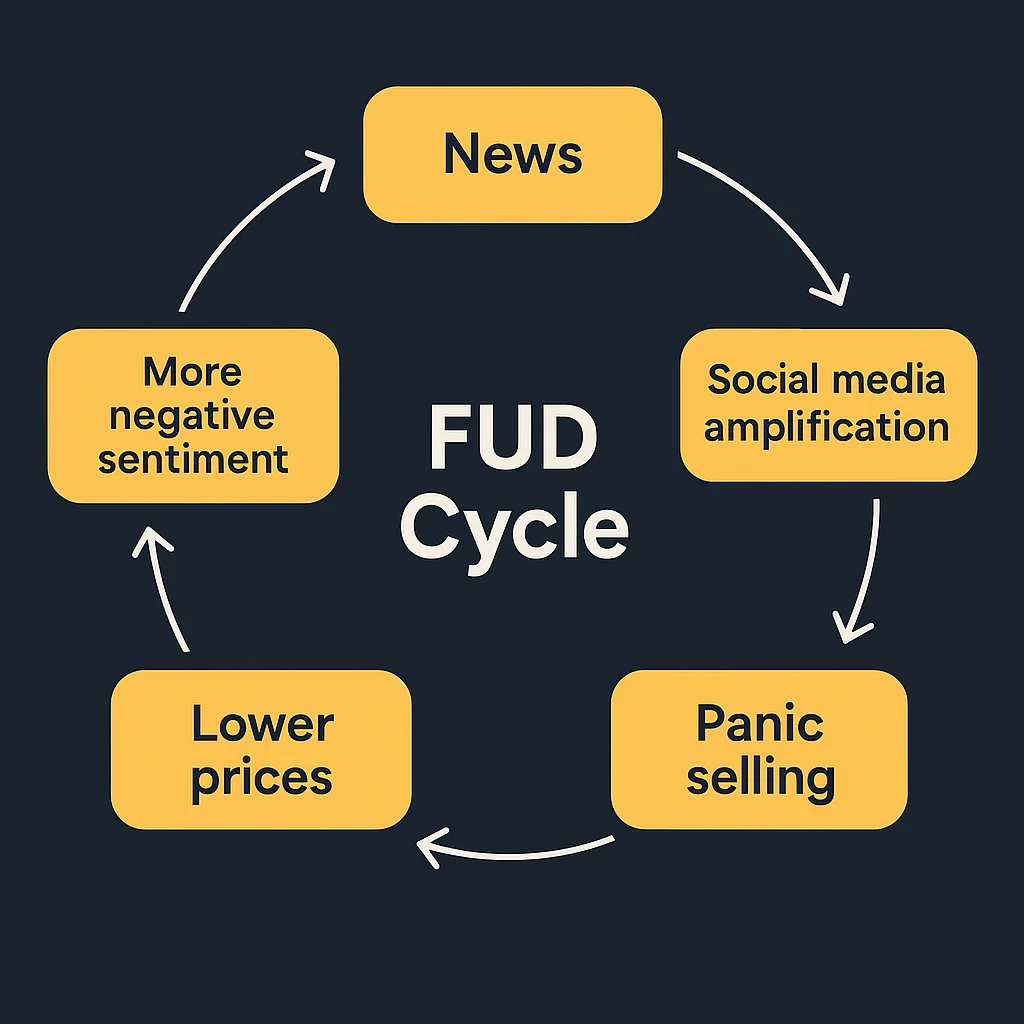
FUD cycle infographic showing news, social media amplification, panic selling, lower prices, and negative sentiment

Real-World Examples

  • China ban news – Recycled every few months, causes temporary price drops
  • Tether collapse fears – Persistent despite ongoing operations
  • Environmental concerns – Bitcoin mining energy usage criticism

Why Beginners Should Care

Learning to distinguish between legitimate concerns and manufactured FUD is crucial for long-term success. Markets overreact to both positive and negative news.

Real risks deserve attention – regulatory changes, technical vulnerabilities, and macroeconomic factors matter. But temporary news cycles often create buying opportunities for patient investors.

Related Terms: FOMO, Bear Market, Paper Hands, Market Manipulation

Back to Crypto Glossary

Similar Posts

  • Layer 1

    Layer 1: The Foundation Blockchain Layer 1 refers to the base blockchain protocol that processes transactions and maintains consensus. It’s the foundation that everything else builds on top of. Layer 1 (L1) is the main blockchain network that handles transaction processing, consensus, and security independently without relying on other blockchains. These are the foundational networks…

  • Dust

    Dust: Tiny Amounts That Clog Networks Dust refers to cryptocurrency amounts so small they’re not economically viable to spend due to transaction fees exceeding their value. It’s like having pennies that cost dollars to use. Dust consists of very small amounts of cryptocurrency that cost more in transaction fees to send than their actual value….

  • Premium

    Premium: Price Above Fair ValuePremium refers to the amount by which an asset's price exceeds its underlying value or reference price. It's like paying extra for convenience or brand name compared to the basic product cost.Premium is the additional amount paid above an asset's fair value, net asset value, or reference price. In cryptocurrency markets, premiums…

  • Multi-Signature (Multisig)

    Multi-Signature (Multisig): Shared Control for Enhanced Security Multisig wallets require multiple signatures to authorize transactions. It’s like requiring multiple keys to open a safe – no single person can move funds alone. Multi-signature (multisig) is a wallet configuration that requires signatures from multiple private keys to authorize transactions. Common setups include 2-of-3 (any 2 signatures…

  • Total Supply

    Total Supply: Maximum Token QuantityTotal supply refers to the maximum number of cryptocurrency tokens that will ever exist, including those not yet in circulation. It's like knowing how many copies of a collectible item will ever be made.Total supply encompasses all cryptocurrency tokens that exist or will ever be created, including circulating supply, locked tokens,…

  • Application Layer

    Application Layer: User-Facing Blockchain AppsThe application layer consists of user-facing applications and services built on top of blockchain infrastructure. It's where users actually interact with blockchain technology.The application layer comprises decentralized applications (dApps), user interfaces, and services that provide end-user functionality built on blockchain infrastructure. This layer makes blockchain technology accessible and useful for everyday users.How…