
Phishing Attack

Phishing Attack: How Scammers Steal Your Crypto

Phishing attacks are the #1 way people lose crypto. Scammers create fake websites that look identical to real ones, then steal your login credentials and private keys.

A phishing attack is a fraudulent attempt to obtain sensitive information by impersonating a trustworthy entity through fake websites, emails, or messages. In crypto, this usually means fake exchange login pages or wallet connection prompts that steal your credentials.

How Phishing Attacks Work

Fake websites that look identical to popular exchanges or DeFi platforms trick users into entering their passwords or connecting their wallets. The scammer captures this information and drains accounts immediately.

Social engineering often precedes the technical attack. Scammers send urgent emails about “account verification” or “security breaches” to create panic and rush victims into clicking malicious links.

Browser extensions and mobile apps can also be phishing tools, designed to capture wallet interactions and steal private keys when users think they’re using legitimate software.
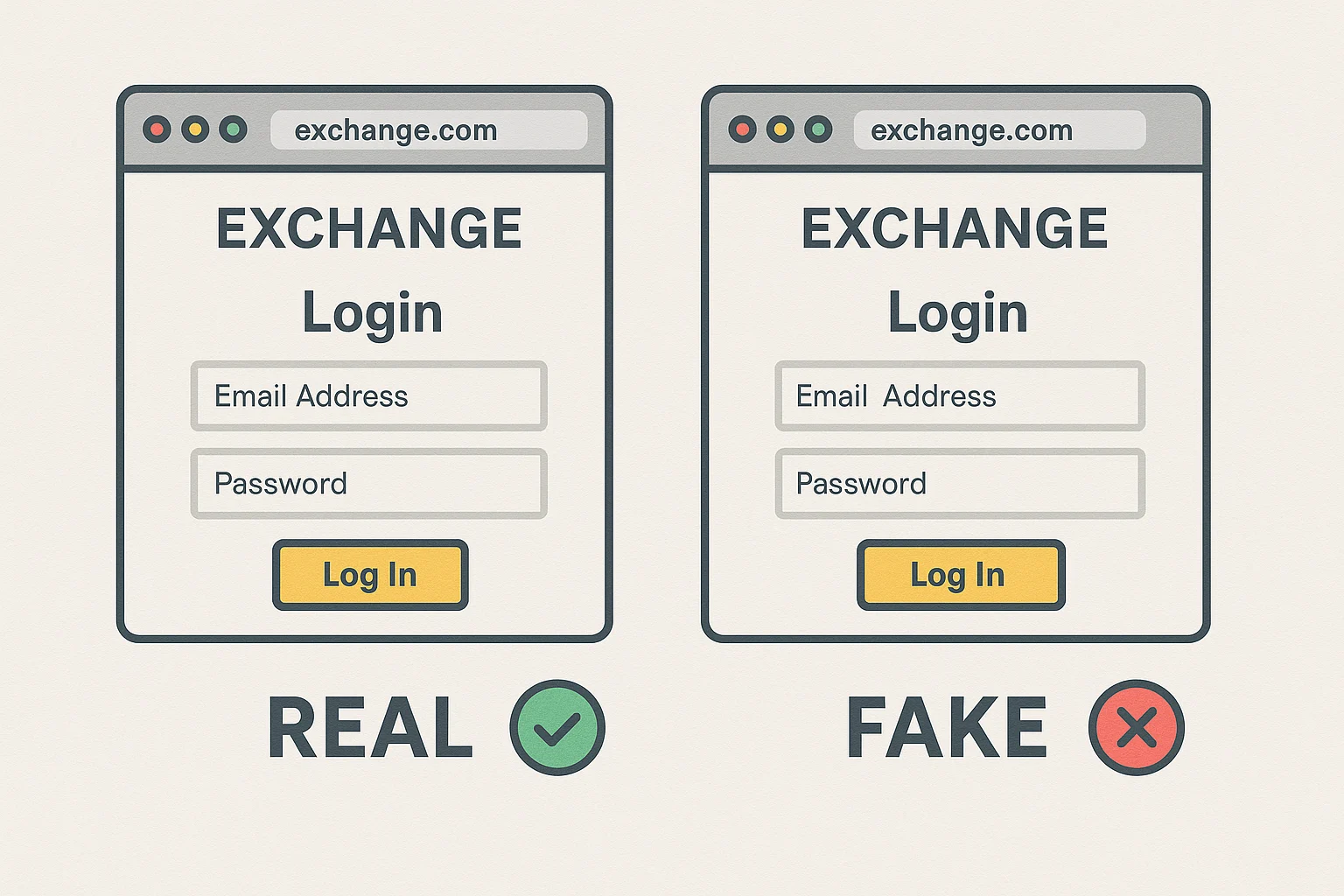
Side-by-side comparison of real and fake cryptocurrency exchange login pages, highlighting subtle URL differences

Real-World Examples

  • Fake MetaMask extensions in browser stores that steal wallet seeds
  • Impersonator emails claiming to be from Coinbase requiring “immediate action”
  • Fake DeFi platforms offering impossible yields to lure in victims

Why Beginners Should Care

Crypto transactions are irreversible. Once scammers have your private keys or drain your accounts, there’s no customer service to call, no bank to reverse charges.

Always verify URLs carefully – scammers use similar domains like “craken.com” instead of “kraken.com”. Bookmark legitimate sites and use those bookmarks instead of clicking email links.

Enable two-factor authentication and use hardware wallets to add extra security layers that make phishing attacks much harder to execute successfully.

Related Terms: Two-Factor Authentication, Hardware Wallet, Private Key, Rug Pull

Back to Crypto Glossary

Similar Posts

  • Token Economy

    Token Economy: Digital Asset EcosystemsToken economies are systems where digital tokens serve as medium of exchange, store of value, and incentive mechanisms within specific ecosystems. They're like creating your own mini-economy with digital money.A token economy refers to an ecosystem where cryptocurrency tokens facilitate economic activity, incentivize participation, and coordinate behavior among participants. These economies can…

  • Sandwich Attack

    Sandwich Attack: Extracting Value from Your Trades Sandwich attacks place trades before and after your transaction to manipulate prices and extract profit from your slippage. It’s like cutting in line twice – once in front of you and once behind you. A sandwich attack involves placing a buy order immediately before a victim’s trade and…

  • Rollup-as-a-Service (RaaS)

    Rollup-as-a-Service (RaaS): Custom Blockchain Infrastructure RaaS platforms provide infrastructure for deploying custom rollups without building all the technical components from scratch. It’s like having a franchise model for blockchain networks. Rollup-as-a-Service (RaaS) provides infrastructure and tooling for organizations to deploy their own application-specific rollups without deep blockchain development expertise. These platforms handle the technical complexity…

  • MetaMask

    MetaMask: Your Gateway to Web3 MetaMask is the browser extension wallet that connects you to the decentralized web. It’s like having a crypto wallet built into your browser that talks to every DeFi protocol. MetaMask is a browser extension and mobile wallet that enables interaction with Ethereum-based applications directly through web browsers. It manages private…

  • Transaction

    Transaction: Moving Value on the BlockchainA cryptocurrency transaction transfers value from one address to another on a blockchain network. It's like writing a check, but with mathematical guarantees instead of trust.A transaction is a digitally signed transfer of cryptocurrency from one wallet address to another, recorded permanently on the blockchain. Every transaction includes sender information, recipient…

  • Modular Execution Layer

    Modular Execution Layer: Specialized Transaction Processing Modular execution layers handle transaction processing separately from consensus and data availability. It’s like having specialized assembly lines instead of one worker doing everything. A modular execution layer is a specialized blockchain component that focuses solely on processing transactions and executing smart contracts while relying on other layers for…