
Rug Pull

Rug Pull: When Projects Disappear With Your Money

Rug pulls are crypto’s version of old-fashioned exit scams. Developers build hype, collect investor money, then vanish into the digital night.

A rug pull is when cryptocurrency project developers abandon the project and steal investor funds. The term comes from “pulling the rug out” from under investors who trusted the project.

How Rug Pulls Work

Soft rug pulls involve developers gradually selling their tokens while hyping the project, slowly draining liquidity without obvious theft. The project eventually dies from lack of development.

Hard rug pulls are more dramatic – developers remove all liquidity from trading pools, making tokens worthless overnight. Investors wake up to find their tokens can’t be sold.

Smart contract backdoors allow developers to mint unlimited tokens or drain funds directly from the contract, even after launch. The code looks legitimate but contains hidden functions.
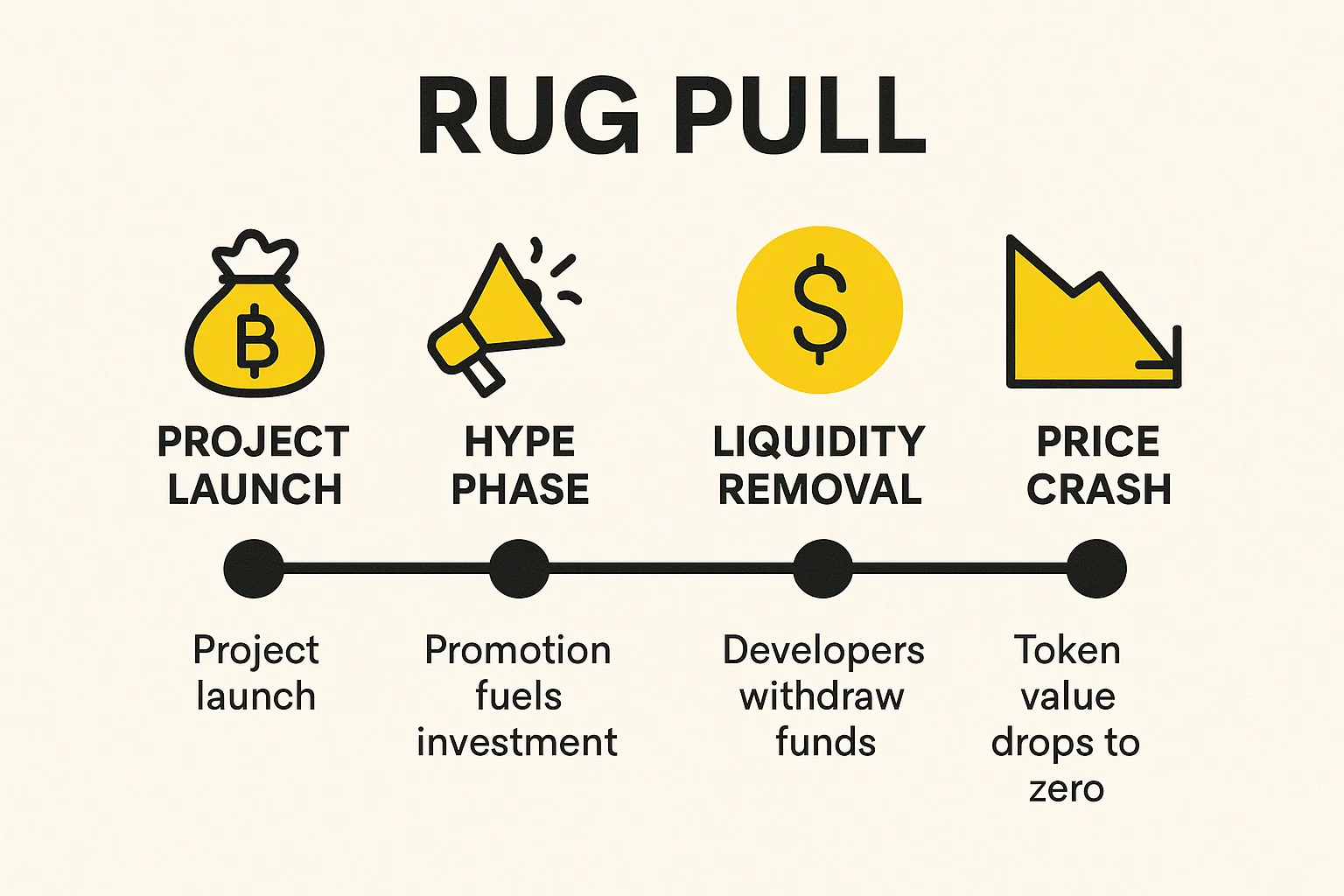
Infographic timeline showing a rug pull process: project launch, hype phase, sudden liquidity removal, and price crash to zero

Real-World Examples

  • Squid Game Token – Gained 2,300% then crashed 99% when developers pulled liquidity
  • AnubisDAO – Raised $60 million then disappeared within 20 hours
  • Meerkat Finance – $31 million “hack” that looked suspiciously like an inside job

Why Beginners Should Care

New DeFi projects launch daily, many created specifically to rug pull investors. If returns seem too good to be true, they probably are.

Research thoroughly before investing in new projects. Check if tokens are locked, if the team is doxxed (publicly known), and if the smart contract has been audited by reputable firms.

Never invest more than you can afford to lose in experimental DeFi projects, especially those promising unrealistic returns.

Related Terms: Smart Contract, Liquidity Pool, Token Lock, Phishing Attack

Back to Crypto Glossary

Similar Posts

  • Flashbots

    Flashbots: MEV Infrastructure Flashbots is a research and development organization that builds infrastructure to mitigate the negative externalities of MEV. They’re trying to make the blockchain economy more fair and transparent. Flashbots develops tools and infrastructure to democratize MEV extraction and reduce its harmful effects on regular users. Their products include private mempools, MEV-protected transaction…

  • Order Book

    Order Book: Market Trading QueueAn order book displays all buy and sell orders for a trading pair, showing market depth and price discovery. It's like a transparent auction house where everyone can see all bids and offers.An order book is a real-time list of buy and sell orders for a specific trading pair, organized by…

  • EigenLayer

    EigenLayer: Ethereum Restaking ProtocolEigenLayer enables Ethereum validators to restake their ETH to secure additional protocols and earn extra rewards. It's like using the same security deposit to protect multiple different services simultaneously.EigenLayer is a protocol that allows Ethereum validators to restake their staked ETH to provide security for additional protocols and services beyond Ethereum itself. This…

  • Rarity

    Rarity: Scarcity-Based Value AssessmentRarity refers to how uncommon or scarce particular traits, items, or attributes are within collections or ecosystems. It's like having a rare baseball card that's valuable because few others like it exist.Rarity describes the relative scarcity of digital assets, particularly NFT traits or characteristics, that affects their perceived value and market pricing. Rarer…

  • ENS

    ENS: Ethereum Name ServiceENS provides human-readable names for Ethereum addresses, making cryptocurrency transactions more user-friendly. It's like having domain names for websites instead of remembering IP addresses.Ethereum Name Service (ENS) is a decentralized naming system that maps human-readable names to Ethereum addresses, smart contracts, and other identifiers. ENS makes blockchain interactions more accessible by replacing complex…

  • Arbitrage

    Arbitrage: Risk-Free Profit from Price DifferencesArbitrage involves simultaneously buying and selling the same asset on different markets to profit from price differences. It's like buying wholesale and selling retail, but happening instantly.Arbitrage is the practice of taking advantage of price differences for the same asset across different markets or exchanges to generate risk-free profits. This activity…