
Two-Factor Authentication (2FA)

Two-Factor Authentication (2FA): Your Crypto’s Second Lock

2FA is the minimum security standard for any crypto account worth protecting. If you’re not using it, you’re basically leaving your front door unlocked.

Two-factor authentication (2FA) requires two different verification methods to access your account – typically something you know (password) plus something you have (phone or hardware token). It dramatically reduces the risk of account takeovers even if your password is compromised.

How 2FA Works

SMS 2FA sends codes to your phone, but this method is vulnerable to SIM swapping attacks where scammers take control of your phone number.

Authenticator apps like Google Authenticator or Authy generate time-based codes that change every 30 seconds. These are much more secure than SMS since they don’t rely on phone networks.

Hardware tokens like YubiKey provide the highest security by requiring physical possession of the device to generate authentication codes.
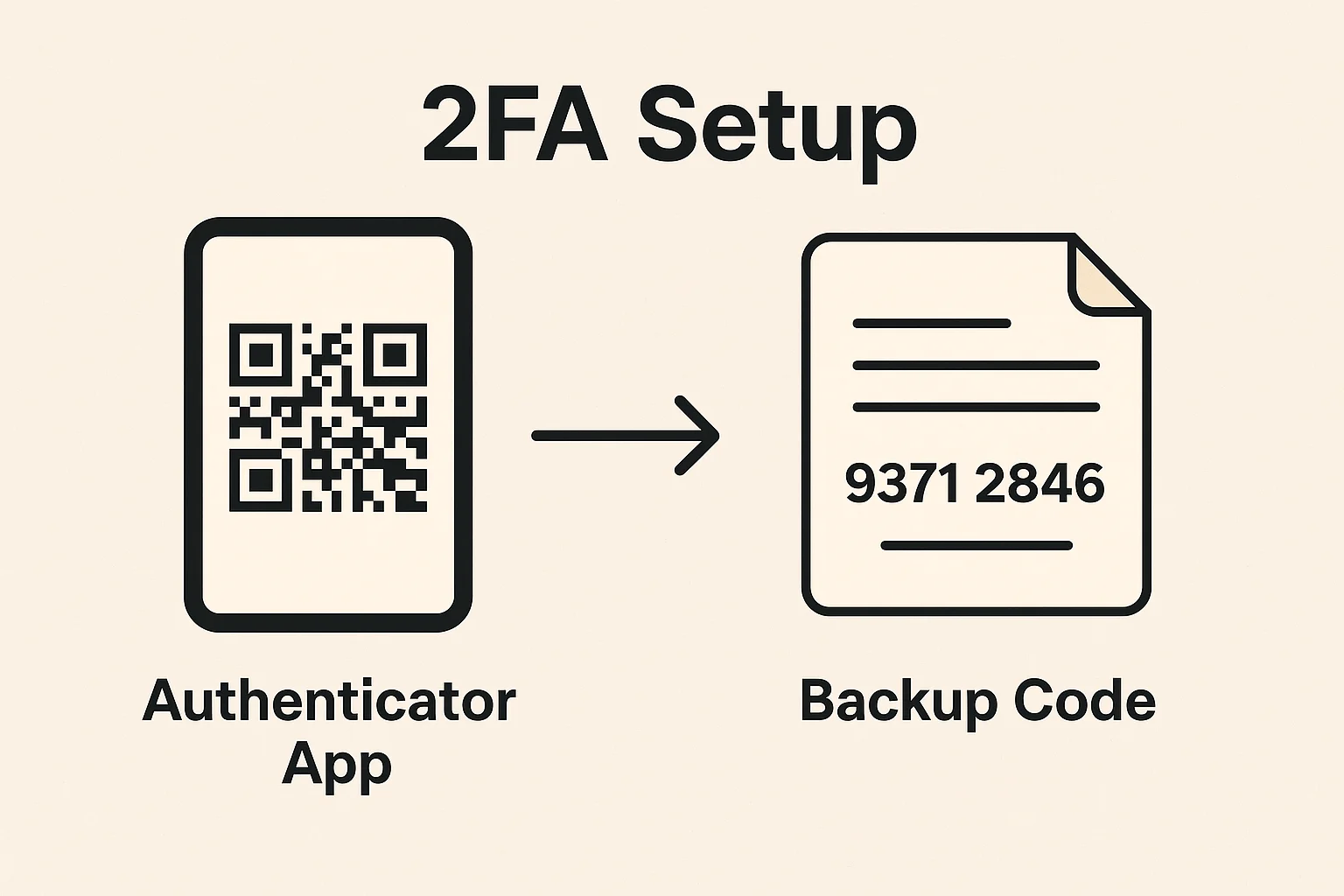
Infographic showing the 2FA setup process with a QR code scanned by an authenticator app and generation of a backup code

Real-World Examples

  • Exchange accounts – Kraken, Coinbase, and Binance all support multiple 2FA methods
  • Wallet apps – MetaMask and other wallets offer 2FA for additional protection
  • DeFi platforms – Some protocols now support 2FA for administrative functions

Why Beginners Should Care

Password breaches happen constantly. If your exchange password gets leaked and you don’t have 2FA enabled, scammers can drain your account in minutes.

Use authenticator apps instead of SMS whenever possible. For high-value accounts, consider hardware keys like YubiKey for maximum security.

Always save your 2FA backup codes in a secure location – if you lose your phone without backups, you could be permanently locked out of your accounts.

Related Terms: Phishing Attack, Hardware Wallet, Exchange, Security

Back to Crypto Glossary

Similar Posts

  • Dynamic NFTs (dNFTs)

    Dynamic NFTs (dNFTs): Evolving Digital Assets Dynamic NFTs can change their metadata, appearance, or properties based on external data or on-chain events. They’re like digital collectibles that grow and evolve over time. Dynamic NFTs (dNFTs) are non-fungible tokens that can modify their metadata, attributes, or visual appearance in response to external data feeds, user actions,…

  • Token Distribution

    Token Distribution: Allocating Digital AssetsToken distribution refers to how cryptocurrency tokens are allocated among different stakeholders and released into circulation. It's like deciding how to divide up a pie among various groups of people.Token distribution encompasses the initial allocation and ongoing release of cryptocurrency tokens to various stakeholder groups including founders, investors, community members, and…

  • Flash Mint

    Flash Mint: Temporary Token Creation Flash mints create tokens temporarily within single transactions that must be returned or burned before the transaction completes. It’s like borrowing inventory that must be returned instantly. Flash minting allows creating large amounts of tokens temporarily within a single transaction, provided they are burned or properly backed before the transaction…

  • Node

    Node: The Network’s Backbone Nodes are individual computers that maintain copies of the blockchain and enforce network rules. They’re the distributed infrastructure that makes cryptocurrency possible. A node is a computer that participates in a blockchain network by maintaining a copy of the distributed ledger and relaying transactions. Nodes validate transactions, store blockchain history, and…

  • Sustainable Yield

    Sustainable Yield: Long-Term Return GenerationSustainable yield refers to returns that can be maintained long-term without depleting the underlying value source. It's like earning interest that doesn't eventually destroy the principal.Sustainable yield represents returns generated from real economic activity and value creation rather than unsustainable token emissions or Ponzi-like mechanisms. These yields can theoretically continue indefinitely.How Sustainable…

  • Cold Storage

    Cold Storage: Maximum Security for Crypto Assets Cold storage keeps cryptocurrency private keys completely offline, away from any internet connection. It’s the digital equivalent of storing gold bars in a bank vault rather than your wallet. Cold storage refers to keeping cryptocurrency private keys on devices or media that have never been connected to the…