
Oracle

Oracle: Connecting Blockchains to Reality

Oracles are the bridges between blockchain smart contracts and real-world data. Without them, DeFi would be a closed system talking only to itself.

An oracle is a service that provides external data to blockchain networks, enabling smart contracts to access real-world information like prices, weather, sports scores, or any off-chain data. Blockchains can’t access external APIs directly, so oracles act as trusted data feeds.

How Oracles Work

Data aggregation combines information from multiple sources to prevent single points of failure. Price oracles might average data from 10+ exchanges to provide accurate, manipulation-resistant feeds.

Cryptographic proofs ensure data integrity during transmission from external sources to blockchain networks. Oracles sign data with private keys that smart contracts can verify.

Decentralized oracle networks use multiple independent node operators to fetch and verify data, reducing risks of manipulation or single points of failure that plague centralized oracles.
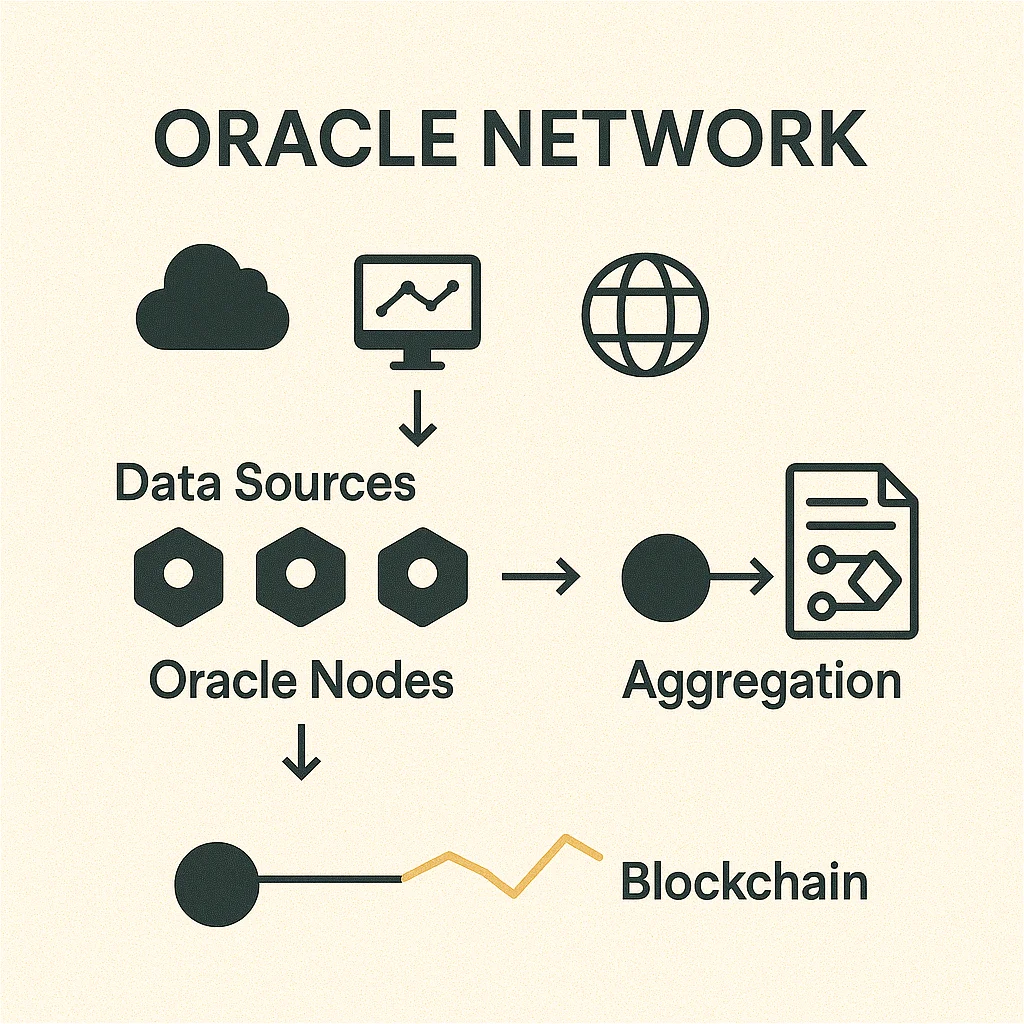
Infographic showing how oracle networks connect multiple data sources to blockchain smart contracts via aggregation and oracle nodes

Real-World Examples

  • Chainlink – Largest oracle network providing price feeds to thousands of DeFi protocols
  • Band Protocol – Cross-chain oracle solution supporting multiple blockchains
  • Tellor – Decentralized oracle network secured by crypto-economic incentives

Why Beginners Should Care

Oracle failures can catastrophically break DeFi protocols. If price feeds fail or get manipulated, lending protocols can liquidate healthy positions or allow undercollateralized borrowing.

Oracle attacks have caused hundreds of millions in DeFi losses. Attackers manipulate price feeds to exploit smart contracts that rely on inaccurate data.

Choose DeFi protocols that use reputable, decentralized oracle solutions rather than single-source price feeds vulnerable to manipulation.

Related Terms: Smart Contract, DeFi, Price Feed, Chainlink

Back to Crypto Glossary

Similar Posts

  • MetaMask

    MetaMask: Your Gateway to Web3 MetaMask is the browser extension wallet that connects you to the decentralized web. It’s like having a crypto wallet built into your browser that talks to every DeFi protocol. MetaMask is a browser extension and mobile wallet that enables interaction with Ethereum-based applications directly through web browsers. It manages private…

  • Public Key

    Public Key: Your Crypto Receiving Address Your public key is like your email address for crypto – you can share it freely without security concerns. A public key is cryptographically derived from your private key and generates your wallet addresses where others can send you cryptocurrency. It’s mathematically linked to your private key but reveals…

  • Token Incentives

    Token Incentives: Rewarding Desired BehaviorToken incentives use cryptocurrency rewards to encourage specific behaviors or participation in networks and protocols. They're like loyalty points that actually have real value and utility.Token incentives refer to mechanisms that distribute cryptocurrency tokens to users who perform desired actions or contribute value to networks and protocols. These align user behavior with…

  • Storage Rent

    Storage Rent: Pay-per-Use Blockchain StorageStorage rent is a proposed mechanism where users pay ongoing fees for maintaining data on blockchain networks. It's like paying monthly rent for keeping files in cloud storage instead of a one-time purchase.Storage rent refers to fee mechanisms that charge users for ongoing blockchain storage rather than allowing permanent storage after…

  • Gwei

    Gwei: Ethereum’s Gas Price Unit Gwei is the denomination used for Ethereum gas prices. Understanding gwei helps you avoid overpaying for transactions when the network gets congested. Gwei (gigawei) is a unit of Ethereum’s native currency equal to one billionth of an ETH (10^-9 ETH). It’s the standard unit for expressing gas prices, making it…

  • Mobile Wallet

    Mobile Wallet: Cryptocurrency on Your PhoneMobile wallets are smartphone applications that store, send, and receive cryptocurrency. They're like having a digital bank in your pocket with global reach.A mobile wallet is a smartphone application that enables users to store, manage, and transact with cryptocurrencies directly from their mobile devices. These wallets prioritize convenience and accessibility for…