
Wrapped Token

Wrapped Token: Bringing Assets Cross-Chain

Wrapped tokens let you use Bitcoin on Ethereum, Ethereum on Solana, and any asset on any blockchain. They’re the universal adapters of crypto.

A wrapped token is a cryptocurrency that represents another asset on a different blockchain, maintaining a 1:1 peg through collateralization. The original asset gets locked in a smart contract while an equivalent wrapped version gets minted on the target chain.

How Wrapped Tokens Work

Custodial wrapping involves trusted entities holding the original asset and minting wrapped versions. WBTC uses this model – BitGo holds real Bitcoin while minting wrapped Bitcoin on Ethereum.

Decentralized bridges use smart contracts and multi-signature schemes to lock assets and mint wrapped versions without single custodians. These are more decentralized but also more complex.

Burning and redemption processes allow users to destroy wrapped tokens and receive the underlying asset back, maintaining the 1:1 peg relationship.
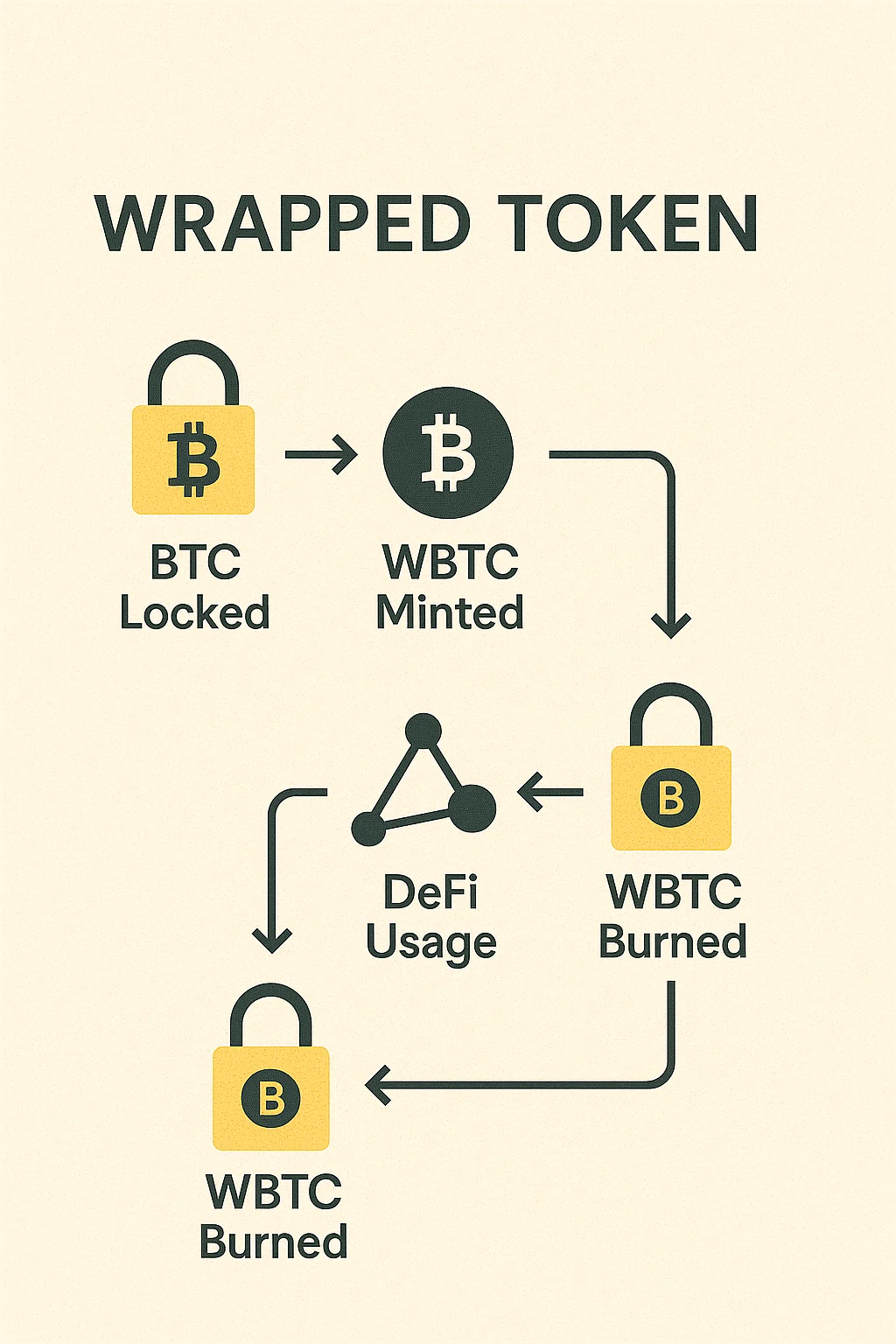
Infographic showing the wrapped token process: BTC locked, WBTC minted, used in DeFi, burned, and BTC returned

Real-World Examples

  • Wrapped Bitcoin (WBTC) – Bitcoin usable in Ethereum DeFi with $1+ billion market cap
  • Wrapped Ethereum (WETH) – ETH conforming to ERC-20 standards for DeFi compatibility
  • Cross-chain bridges creating wrapped versions of tokens across different blockchains

Why Beginners Should Care

Wrapped tokens unlock cross-chain DeFi opportunities. You can earn yield on Bitcoin through Ethereum protocols or use Ethereum assets on faster, cheaper chains.

Trust assumptions vary significantly. Custodial wrapped tokens require trusting centralized entities, while decentralized bridges have smart contract risks.

Depeg risks exist if the backing mechanism fails. Wrapped tokens should trade at 1:1 with underlying assets, but this isn’t guaranteed during extreme market stress.

Related Terms: Bridge, Cross-Chain, DeFi, Smart Contract

Back to Crypto Glossary

Similar Posts

  • Asset Backing

    Asset Backing: Value Foundation for TokensAsset backing refers to reserves of real-world assets that support the value of cryptocurrency tokens. It's like having gold in a vault to back paper money.Asset backing involves holding reserves of traditional assets like cash, bonds, commodities, or real estate to support the value and redemption of cryptocurrency tokens. This creates…

  • Airdrop

    Airdrop: Free Tokens From the Sky Airdrops distribute free tokens to wallet addresses, usually to reward early users or generate buzz for new projects. Some are worth pennies, others change lives. An airdrop is the distribution of free cryptocurrency tokens to wallet addresses, typically as a marketing strategy, reward for early adoption, or method of…

  • Trading Pairs

    Trading Pairs: Currency Exchange MarketsTrading pairs represent the exchange rate between two different cryptocurrencies or assets. They're like forex pairs but for digital currencies.A trading pair consists of two assets that can be traded against each other, showing the exchange rate between them. Trading pairs enable price discovery and liquidity for cryptocurrency markets.How Trading Pairs WorkBase…

  • Market Stability

    Market Stability: Reducing Price VolatilityMarket stability refers to conditions where asset prices experience relatively small fluctuations over time. It's like having calm seas instead of stormy waters for your investments.Market stability describes market conditions characterized by relatively low volatility, predictable price movements, and reduced extreme fluctuations. Stable markets enable better planning and reduce risks for participants.How…

  • Cryptography

    Cryptography: Mathematical Security FoundationCryptography is the mathematical science of securing information through encryption, digital signatures, and other techniques. It's the foundation that makes cryptocurrencies and blockchain technology secure and trustworthy.Cryptography refers to mathematical techniques for securing information, enabling authentication, and protecting data confidentiality through algorithms and protocols. Modern cryptocurrency systems depend entirely on cryptographic security for…

  • AML (Anti-Money Laundering)

    AML (Anti-Money Laundering): Fighting Financial Crime AML regulations force crypto businesses to monitor and report suspicious activities. It’s the government’s attempt to prevent crypto from becoming a money laundering paradise. Anti-Money Laundering (AML) refers to laws, regulations, and procedures designed to prevent criminals from disguising illegally obtained funds as legitimate income. Crypto exchanges and businesses…