
Proof of Stake (PoS)

Proof of Stake (PoS): Energy-Efficient Consensus

Proof of Stake secures blockchain networks through economic staking rather than energy-intensive mining. It’s like replacing a gold rush with a security deposit system.

Proof of Stake (PoS) is a consensus mechanism where validators are chosen to create new blocks based on their stake in the network rather than computational power. Validators put up cryptocurrency as collateral and earn rewards for honest participation.

How Proof of Stake Works

Stake-based selection chooses validators to propose and validate blocks based on the amount of cryptocurrency they’ve locked up as collateral.

Economic security aligns validator incentives through rewards for honest behavior and penalties (slashing) for malicious actions or poor performance.

Energy efficiency eliminates the need for energy-intensive mining since validators are selected through economic mechanisms rather than computational competition.
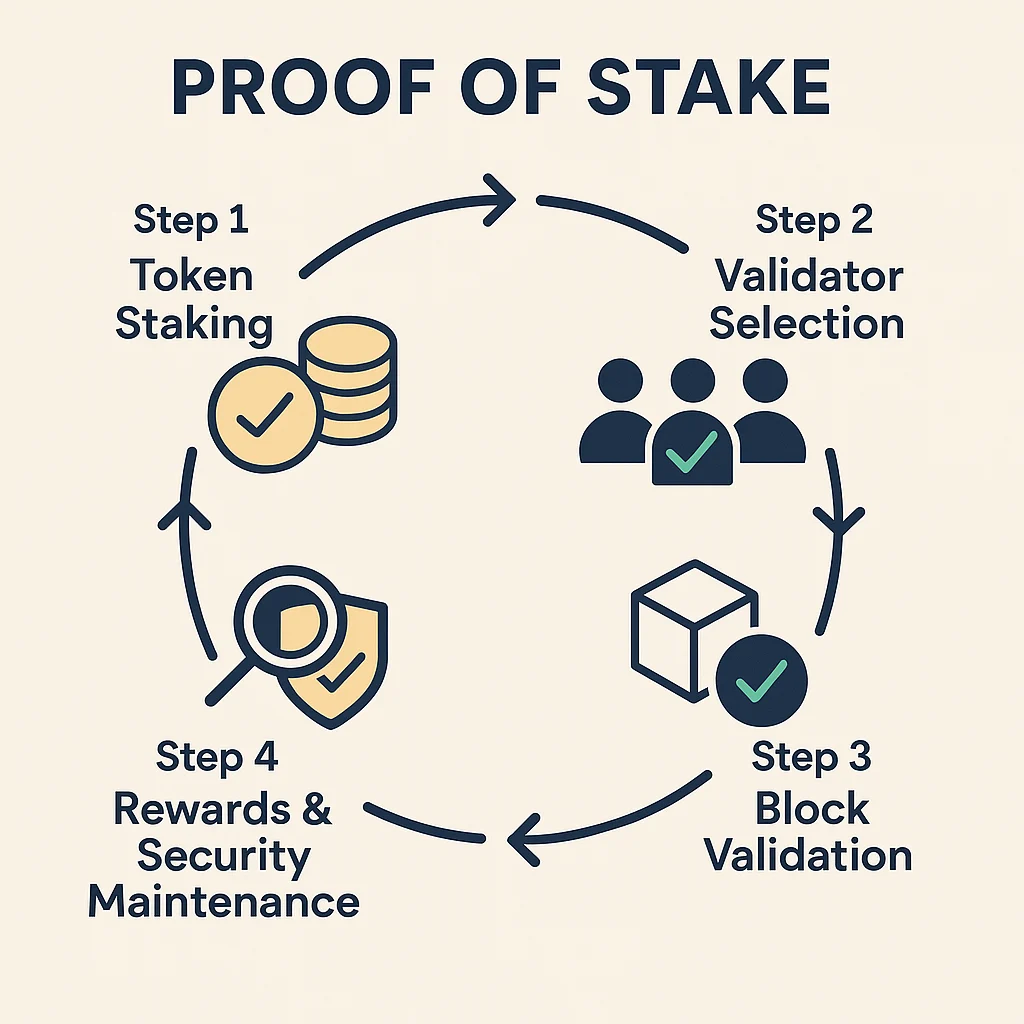
Infographic showing the Proof of Stake cycle: token staking, validator selection, block validation, rewards distribution, and security maintenance

Real-World Examples

  • Ethereum 2.0 transitioned from Proof of Work to Proof of Stake in 2022, reducing energy consumption by 99%+
  • Cardano built on Proof of Stake from launch with focus on peer-reviewed development
  • Polkadot uses nominated Proof of Stake with delegation to professional validators

Why Beginners Should Care

Environmental benefits make PoS networks much more sustainable than energy-intensive Proof of Work mining.

Participation opportunities allow token holders to earn staking rewards by helping secure networks without specialized mining hardware.

Different trade-offs compared to Proof of Work in terms of decentralization, security assumptions, and wealth concentration dynamics.

Related Terms: Staking, Validator, Slashing, Proof of Work

Back to Crypto Glossary

Similar Posts

  • Capital Efficiency

    Capital Efficiency: Maximizing Resource UtilizationCapital efficiency measures how effectively investments generate returns relative to the amount of capital deployed. It's like getting the most miles per gallon from your investment fuel.Capital efficiency refers to maximizing returns or utility from invested capital through optimal allocation, leverage, or innovative strategies that reduce required capital while maintaining or…

  • Dynamic NFTs (dNFTs)

    Dynamic NFTs (dNFTs): Evolving Digital Assets Dynamic NFTs can change their metadata, appearance, or properties based on external data or on-chain events. They’re like digital collectibles that grow and evolve over time. Dynamic NFTs (dNFTs) are non-fungible tokens that can modify their metadata, attributes, or visual appearance in response to external data feeds, user actions,…

  • Flash Loan

    Flash Loan: Borrowing Millions Without Collateral Flash loans let you borrow millions of dollars without putting up collateral, but you must pay it back in the same transaction. It’s DeFi’s most mind-bending innovation. A flash loan is an uncollateralized loan that must be borrowed and repaid within a single blockchain transaction. If you can’t repay…

  • zk-SNARKs

    zk-SNARKs: Zero-Knowledge Proof Technologyzk-SNARKs are cryptographic proofs that verify information without revealing the underlying data. They're like proving you know a secret without telling anyone what the secret actually is.zk-SNARKs (Zero-Knowledge Succinct Non-Interactive Arguments of Knowledge) are cryptographic proofs that allow verification of computations without revealing the inputs or intermediate steps. This enables privacy and scalability…

  • NFT Lending

    NFT Lending: Borrowing Against Digital Art NFT lending allows using non-fungible tokens as collateral for cryptocurrency loans. It’s like pawning your rare baseball cards, except the cards live in digital wallets. NFT lending enables borrowers to use their non-fungible tokens as collateral to obtain cryptocurrency loans while retaining the potential upside of their digital assets….

  • Liquidation Bot

    Liquidation Bot: Automated Debt Collection Liquidation bots monitor lending protocols for undercollateralized positions and automatically liquidate them for profit. They’re like repo men but for DeFi loans. A liquidation bot is an automated program that monitors DeFi lending protocols for loans that fall below required collateral ratios and triggers liquidations to earn rewards. These bots…