
MEV (Maximal Extractable Value)

MEV (Maximal Extractable Value): The Hidden Tax on DeFi

MEV is the extra profit that miners and validators can extract by reordering, including, or excluding transactions within blocks. It’s like cutting in line at the blockchain cafeteria.

Maximal Extractable Value (MEV) is the additional profit that block producers can capture by strategically ordering transactions, beyond standard block rewards and fees. This creates an invisible tax on DeFi users through front-running, sandwich attacks, and arbitrage extraction.

How MEV Works

Transaction ordering power lets miners and validators see pending transactions and arrange them to maximize their profit, often at the expense of regular users.

Front-running involves placing transactions ahead of known profitable trades to capture arbitrage opportunities or cause slippage for the original trader.

Sandwich attacks place transactions before and after target trades to manipulate prices and extract value from the victim’s transaction through artificial slippage.
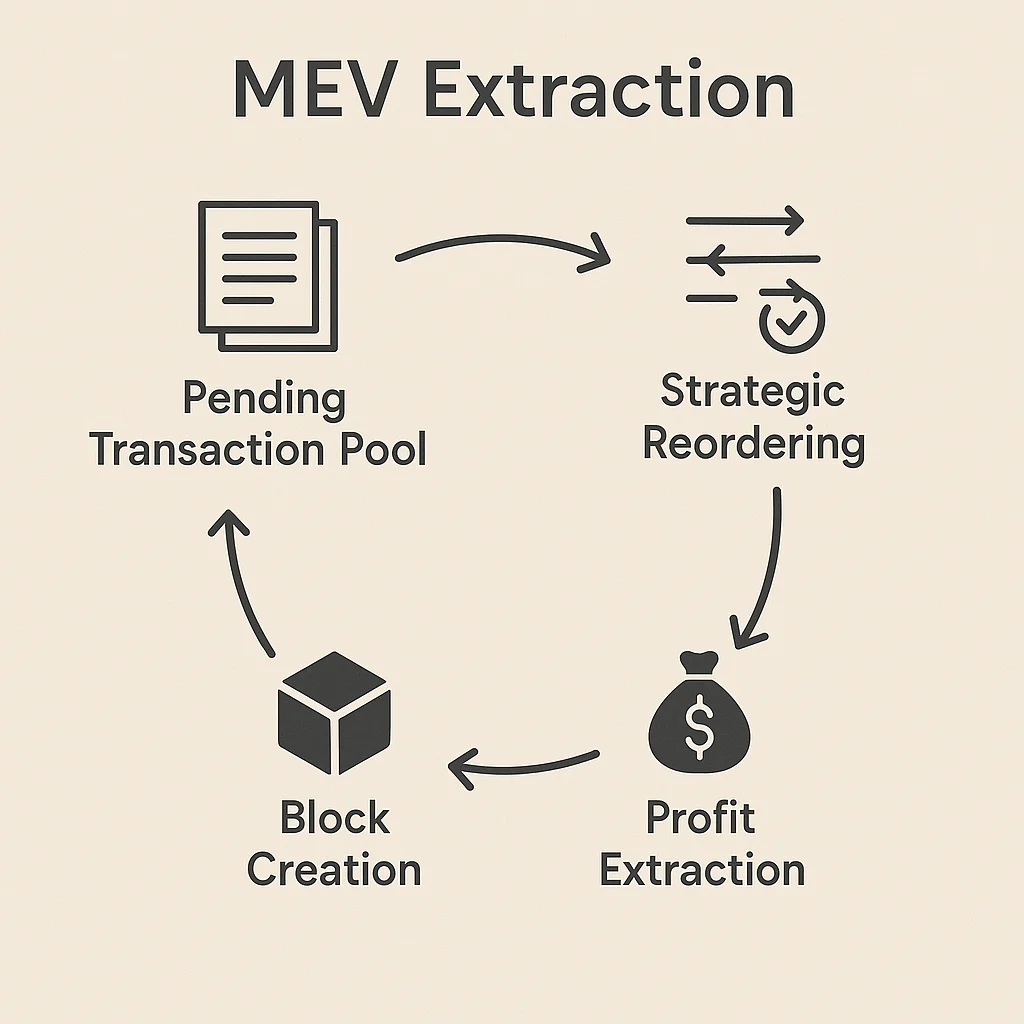
Infographic showing MEV extraction process: pending transaction pool, strategic reordering, profit extraction, and block creation

Real-World Examples

  • DEX arbitrage bots extract millions daily by front-running price differences between exchanges
  • Liquidation sniping involves front-running liquidation transactions to capture discounted collateral
  • NFT sniping uses MEV to front-run popular NFT purchases and flip for immediate profit

Why Beginners Should Care

Hidden costs from MEV can significantly increase the real cost of DeFi transactions beyond visible gas fees through increased slippage and worse execution prices.

Protection strategies include using private mempools, MEV-protected RPC endpoints, or protocols specifically designed to prevent MEV extraction.

Ecosystem impact sees billions in value extracted from regular users annually, raising questions about fairness and sustainability of current blockchain designs.

Related Terms: Front-Running, Sandwich Attack, Slippage, DeFi

Back to Crypto Glossary

Similar Posts

  • Private Key Security

    Private Key Security: Protecting Your Digital IdentityPrivate key security involves protecting the cryptographic keys that control cryptocurrency access from theft, loss, or compromise. It's like safeguarding the master key to your digital vault.Private key security encompasses all practices and technologies used to protect cryptographic private keys from unauthorized access, theft, or loss. These keys are the…

  • DeFi Insurance

    DeFi Insurance: Protecting Against Smart Contract Risk DeFi insurance provides coverage against smart contract failures, hacks, and protocol exploits. It’s like buying fire insurance for your digital assets in experimental financial protocols. DeFi insurance offers protection against losses from smart contract bugs, hacks, oracle failures, and other technical risks in decentralized finance protocols. Users pay…

  • Crypto Vesting Schedule

    Crypto Vesting Schedule: Gradual Token Release Vesting schedules control when team members, investors, or community members can access their allocated tokens. It’s like having a time-locked savings account that prevents dumping. A crypto vesting schedule defines when and how allocated tokens become available for use, typically spreading releases over months or years to prevent market…

  • Rarity

    Rarity: Scarcity-Based Value AssessmentRarity refers to how uncommon or scarce particular traits, items, or attributes are within collections or ecosystems. It's like having a rare baseball card that's valuable because few others like it exist.Rarity describes the relative scarcity of digital assets, particularly NFT traits or characteristics, that affects their perceived value and market pricing. Rarer…

  • Time-Weighted Average Price (TWAP)

    Time-Weighted Average Price (TWAP): Manipulation-Resistant Pricing TWAP calculates asset prices over extended time periods to resist manipulation and provide more stable price references for protocols. It’s like taking your temperature every hour instead of just once. Time-Weighted Average Price (TWAP) is a pricing mechanism that calculates the average price of an asset over a specific…

  • Validator Jailing

    Validator Jailing: Temporary Network Punishment Validator jailing temporarily removes misbehaving validators from consensus participation while allowing them to return after penalties. It’s like being sent to the penalty box in hockey. Validator jailing is a punishment mechanism that temporarily excludes validators from consensus participation and rewards due to violations like extended downtime or rule infractions….