
Airdrop

Airdrop: Free Tokens From the Sky

Airdrops distribute free tokens to wallet addresses, usually to reward early users or generate buzz for new projects. Some are worth pennies, others change lives.

An airdrop is the distribution of free cryptocurrency tokens to wallet addresses, typically as a marketing strategy, reward for early adoption, or method of decentralizing token ownership. Recipients usually don’t need to pay anything to receive airdropped tokens.

How Airdrops Work

Snapshot-based airdrops take blockchain snapshots at specific times, then distribute tokens to addresses holding certain cryptocurrencies or using specific protocols during the snapshot.

Task-based airdrops require users to complete actions like following social media accounts, joining communities, or testing protocols before receiving tokens.

Retroactive airdrops reward past users of protocols that later launch governance tokens. These are often the most valuable since they reward genuine usage over speculation.
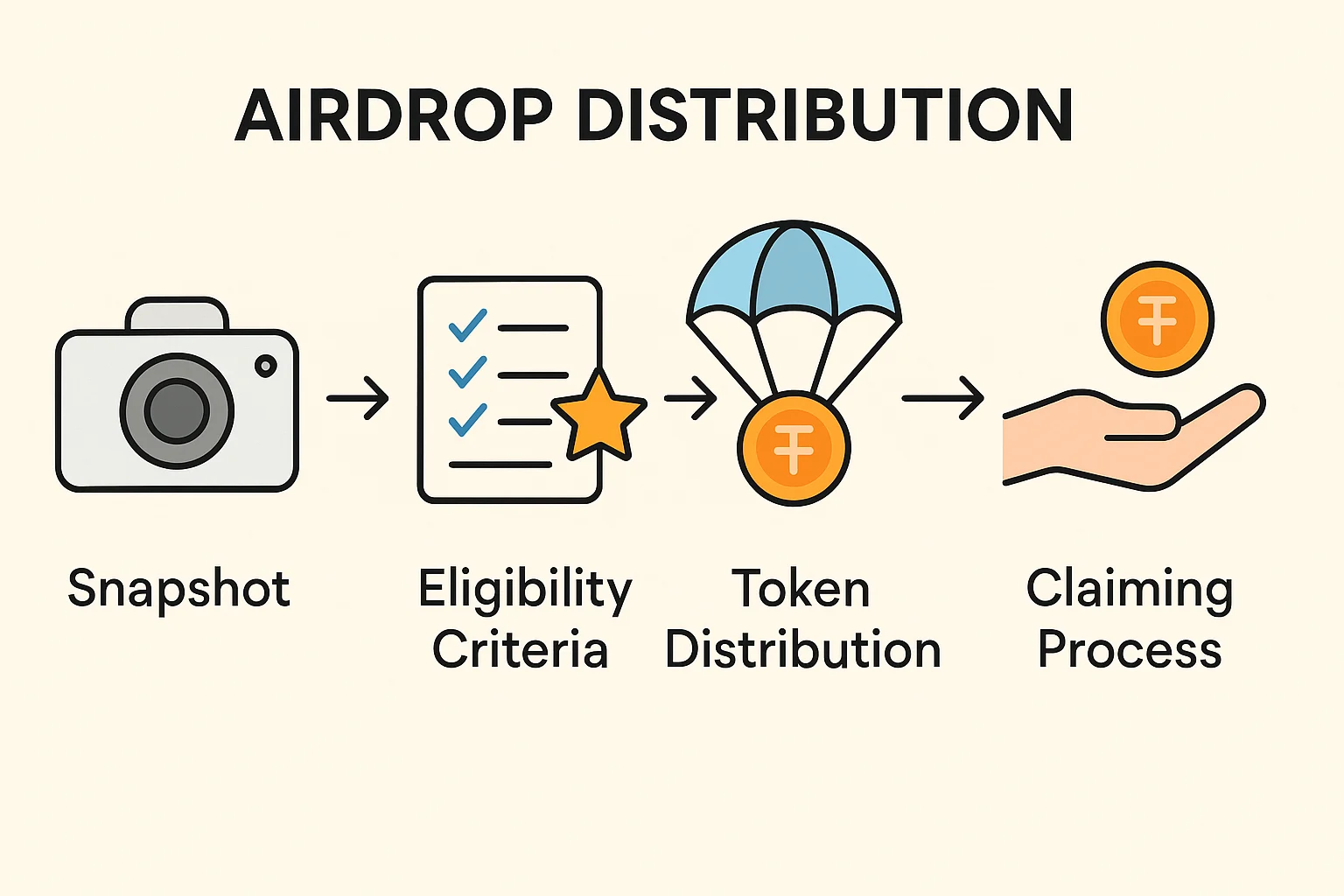
Infographic showing the airdrop distribution process from blockchain snapshot to eligibility verification, token delivery, and claim steps

Real-World Examples

  • Uniswap (UNI) airdropped 400 tokens worth $1,200+ to early platform users
  • Ethereum Name Service (ENS) distributed tokens based on domain ownership duration
  • dYdX rewarded trading volume with governance tokens worth thousands for active users

Why Beginners Should Care

Airdrop farming involves using multiple protocols hoping for future token distributions. This can be profitable but requires gas fees and time investment with no guarantees.

Scam airdrops are common – malicious tokens that steal funds when you try to sell them or interact with fake contracts. Never connect wallets to unknown airdrop claims.

Tax implications exist in many jurisdictions where airdropped tokens count as taxable income at fair market value when received.

Related Terms: Token Distribution, Governance Token, DeFi, Wallet

Back to Crypto Glossary

Similar Posts

  • Wallet Signature Spoofing

    Wallet Signature Spoofing: Fake Authorization Attacks Wallet signature spoofing tricks users into signing malicious transactions that appear legitimate but actually authorize harmful actions. It’s like signing a contract where the fine print changes after you sign. Wallet signature spoofing involves presenting misleading information about transaction contents to trick users into signing authorizations for unintended actions….

  • Layer Separation

    Layer Separation: Modular Blockchain ArchitectureLayer separation divides blockchain functionality into distinct layers that can be optimized independently. It's like having specialized departments in a company that each focus on what they do best.Layer separation refers to blockchain architectures that divide functionality into distinct layers such as consensus, execution, and data availability, enabling independent optimization and…

  • Stablecoin

    Stablecoin: Price-Stable Digital CurrencyA stablecoin is a cryptocurrency designed to maintain stable value relative to reference assets like the US dollar. It combines the benefits of digital currency with price stability for practical use.A stablecoin is a cryptocurrency designed to maintain a stable value relative to a reference asset, typically fiat currencies like the US…

  • Asset Locking

    Asset Locking: Securing Value Across ChainsAsset locking involves securing cryptocurrency on one blockchain to enable representation or usage on another network. It's like putting money in escrow while you get a receipt to spend elsewhere.Asset locking refers to securing cryptocurrency tokens in smart contracts or custody solutions to enable their representation or usage on different…

  • Transaction Verification

    Transaction Verification: Confirming Payment ValidityTransaction verification is the process of confirming that cryptocurrency transactions are valid before adding them to the blockchain. It's like having bank tellers check that signatures match and accounts have sufficient funds before processing checks.Transaction verification refers to the systematic process where network participants validate cryptocurrency transactions by checking digital signatures,…

  • Treasury

    Treasury: Protocol Fund ManagementA treasury is a fund controlled by cryptocurrency projects or DAOs for development, operations, and community initiatives. It's like a company's bank account that's managed by community voting instead of executives.A treasury refers to cryptocurrency funds held and managed by protocols, DAOs, or projects for operational expenses, development funding, and community initiatives. These…