
Token Burn

Token Burn: Destroying Supply for Value

Token burns permanently remove cryptocurrency from circulation by sending it to addresses where it can never be recovered. It’s digital deflation in action.

Token burn is the permanent removal of cryptocurrency tokens from circulation by sending them to an unusable address or smart contract that destroys them. This reduces total supply, potentially increasing the value of remaining tokens.

How Token Burns Work

Burn addresses are cryptocurrency addresses with no known private keys, ensuring sent tokens can never be retrieved. Bitcoin uses addresses like 1BitcoinEaterAddressDontSendf59kuE for provable burns.

Smart contract burns automatically destroy tokens through code, often triggered by specific events like transaction fees or governance votes.

Buyback and burn programs see projects purchase tokens from open markets then burn them, combining market buying pressure with supply reduction.
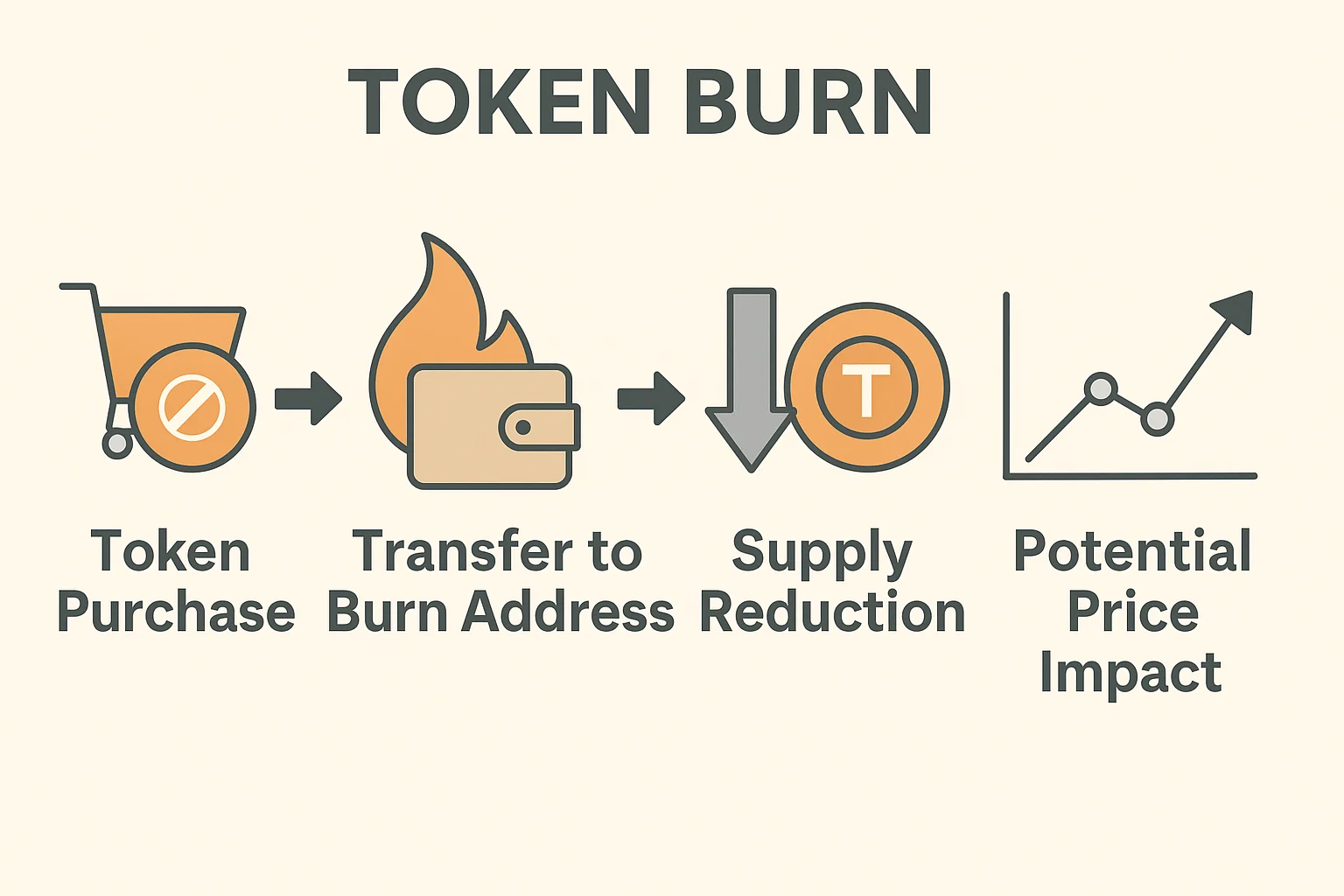
Infographic showing the token burn process from token purchase to transfer to a burn address, leading to supply reduction and potential price impact

Real-World Examples

  • Binance Coin (BNB) burns tokens quarterly based on exchange profits
  • Ethereum EIP-1559 burns base fees from every transaction, making ETH deflationary during high usage
  • Shiba Inu community-driven burns attempt to reduce massive token supply

Why Beginners Should Care

Supply and demand economics suggest that reducing supply while maintaining demand should increase token value, though this isn’t guaranteed in practice.

Marketing benefits from burns often create more price impact than the actual supply reduction, especially for tokens with large circulating supplies.

Sustainability questions arise when burn mechanisms depend on continuous project revenue or community participation that might not persist long-term.

Related Terms: Tokenomics, Supply, Deflationary, Buyback

Back to Crypto Glossary

Similar Posts

  • Phishing Attack

    Phishing Attack: How Scammers Steal Your Crypto Phishing attacks are the #1 way people lose crypto. Scammers create fake websites that look identical to real ones, then steal your login credentials and private keys. A phishing attack is a fraudulent attempt to obtain sensitive information by impersonating a trustworthy entity through fake websites, emails, or…

  • Market Cycle

    Market Cycle: Recurring Price PatternsMarket cycles are recurring patterns of price movements in cryptocurrency markets driven by investor psychology and market dynamics. They're like seasons that markets go through repeatedly over time.Market cycles refer to recurring patterns of price appreciation and depreciation in cryptocurrency markets driven by alternating periods of optimism and pessimism among investors. These…

  • Payment Channel

    Payment Channel: Off-Chain Transaction RoutingPayment channels enable fast, cheap cryptocurrency transactions between parties without recording every transaction on the blockchain. They're like running a tab at a restaurant instead of paying for each item separately.A payment channel is an off-chain mechanism that allows two parties to conduct multiple cryptocurrency transactions without broadcasting each one to…

  • Mining

    Mining: How New Bitcoins Are Created Bitcoin mining is the process that creates new bitcoins and secures the network. It’s like a global lottery where miners compete to solve mathematical puzzles for rewards. Mining is the computational process of validating transactions and adding new blocks to a blockchain while earning newly created cryptocurrency as rewards….

  • Time-Weighted Average Price (TWAP)

    Time-Weighted Average Price (TWAP): Manipulation-Resistant Pricing TWAP calculates asset prices over extended time periods to resist manipulation and provide more stable price references for protocols. It’s like taking your temperature every hour instead of just once. Time-Weighted Average Price (TWAP) is a pricing mechanism that calculates the average price of an asset over a specific…

  • Sidechain

    Sidechain: Independent Chains with Main Chain Connections Sidechains operate independently while maintaining bridges to main blockchains. They’re like having a separate express lane that connects back to the main highway when needed. A sidechain is an independent blockchain that runs parallel to a main blockchain and is connected through a two-way bridge allowing asset transfers….