
EVM (Ethereum Virtual Machine)

EVM (Ethereum Virtual Machine): The World Computer

The EVM is the runtime environment where Ethereum smart contracts execute. It’s like having one giant computer that runs the same programs across thousands of machines worldwide.

The Ethereum Virtual Machine (EVM) is a decentralized computing environment that executes smart contracts on the Ethereum blockchain. Every Ethereum node runs an identical copy of the EVM, ensuring smart contracts produce the same results regardless of where they execute.

How the EVM Works

Bytecode execution converts smart contract code into EVM instructions that every node can understand and execute identically. This ensures deterministic results across the entire network.

Gas metering prevents infinite loops and resource abuse by charging computational costs for every operation. Complex operations cost more gas than simple ones.

State management tracks account balances, smart contract storage, and all other network data in a global state that updates with each block.
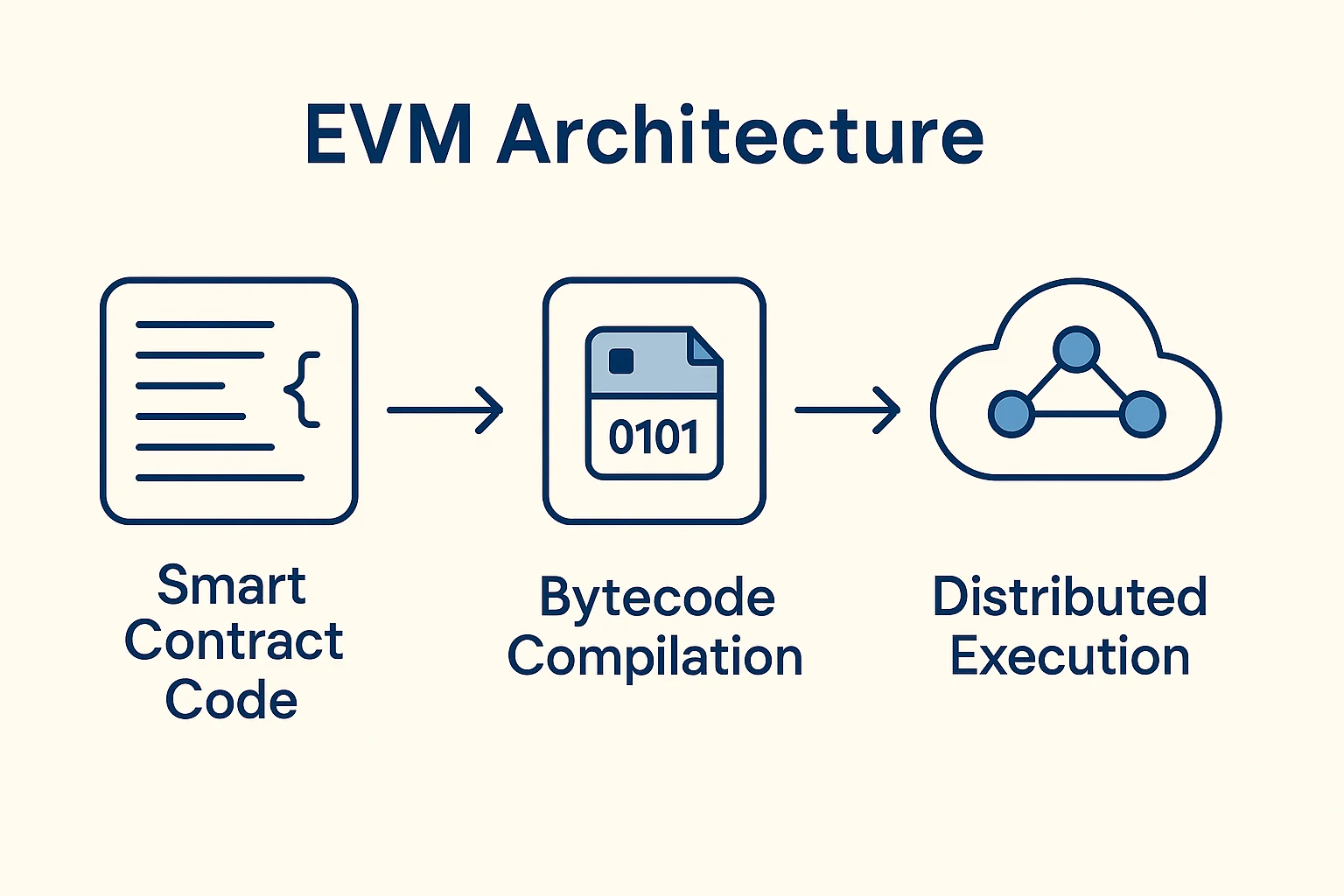
Infographic showing Ethereum Virtual Machine architecture with smart contract code, bytecode compilation, and distributed execution across nodes

Real-World Examples

  • All Ethereum dApps run on the EVM, from Uniswap to Compound to OpenSea
  • EVM-compatible chains like Polygon and Avalanche can run Ethereum smart contracts without modification
  • Layer 2 solutions often maintain EVM compatibility for seamless developer migration

Why Beginners Should Care

Developer network effects make EVM the most popular smart contract platform, with thousands of developers building compatible applications and tools.

Cross-chain compatibility allows moving dApps between EVM-compatible chains without rewriting code, providing flexibility and scaling options.

Learning investment in EVM-based platforms transfers to multiple blockchains, making it the most versatile smart contract skillset for developers.

Related Terms: Smart Contract, Gas Fees, Ethereum, dApp

Back to Crypto Glossary

Similar Posts

  • Delegated Proof of Stake (DPoS)

    Delegated Proof of Stake (DPoS): Democratic Validation DPoS lets token holders vote for validators who secure the network on their behalf. It’s like electing representatives to Congress, but for blockchain consensus. Delegated Proof of Stake (DPoS) is a consensus mechanism where token holders vote for a limited number of delegates who validate transactions and secure…

  • Storage Refund

    Storage Refund: Incentivizing Data CleanupStorage refund mechanisms return gas fees to users who clean up blockchain storage by removing unnecessary data. It's like getting a deposit back when you return empty bottles.Storage refund refers to mechanisms that provide gas fee rebates or payments to users who free up blockchain storage space by deleting data or…

  • Mining

    Mining: How New Bitcoins Are Created Bitcoin mining is the process that creates new bitcoins and secures the network. It’s like a global lottery where miners compete to solve mathematical puzzles for rewards. Mining is the computational process of validating transactions and adding new blocks to a blockchain while earning newly created cryptocurrency as rewards….

  • Monetary Policy

    Monetary Policy: Controlling Money SupplyMonetary policy refers to how money supply, interest rates, and economic incentives are managed within a currency system. In crypto, it's usually controlled by code instead of central banks.Monetary policy encompasses the rules and mechanisms that control cryptocurrency supply, inflation rates, and economic incentives within blockchain networks. Unlike traditional currencies, crypto monetary…

  • Two-Factor Authentication (2FA)

    Two-Factor Authentication (2FA): Your Crypto’s Second Lock 2FA is the minimum security standard for any crypto account worth protecting. If you’re not using it, you’re basically leaving your front door unlocked. Two-factor authentication (2FA) requires two different verification methods to access your account – typically something you know (password) plus something you have (phone or…

  • Network Governance

    Network Governance: Blockchain Decision MakingNetwork governance encompasses the processes and mechanisms for making decisions about blockchain protocol changes and upgrades. It's like the constitutional system that determines how a digital nation changes its laws.Network governance refers to the systems and processes through which blockchain networks make decisions about protocol upgrades, parameter changes, and strategic direction. This…