
Hard Fork

Hard Fork: Splitting the Blockchain

Hard forks create permanent splits in blockchain networks, often resulting in two separate cryptocurrencies. They’re like corporate divorces – messy, dramatic, and usually involving lots of arguing about money.

A hard fork is a permanent change to a blockchain’s protocol that makes previously invalid blocks valid, or vice versa, requiring all nodes to upgrade to the new rules. Nodes that don’t upgrade continue following the old chain, potentially creating two separate networks.

How Hard Forks Work

Incompatible changes to blockchain rules require hard forks. This might include changing block size limits, consensus mechanisms, or fundamental protocol features that older software can’t understand.

Network consensus determines which fork becomes the “main” chain. Usually, the fork with more hash power, developer support, and economic activity becomes dominant while the other dies.

Cryptocurrency splits can result when communities disagree about fork changes. Both chains continue operating with their own tokens, exchanges, and user bases.
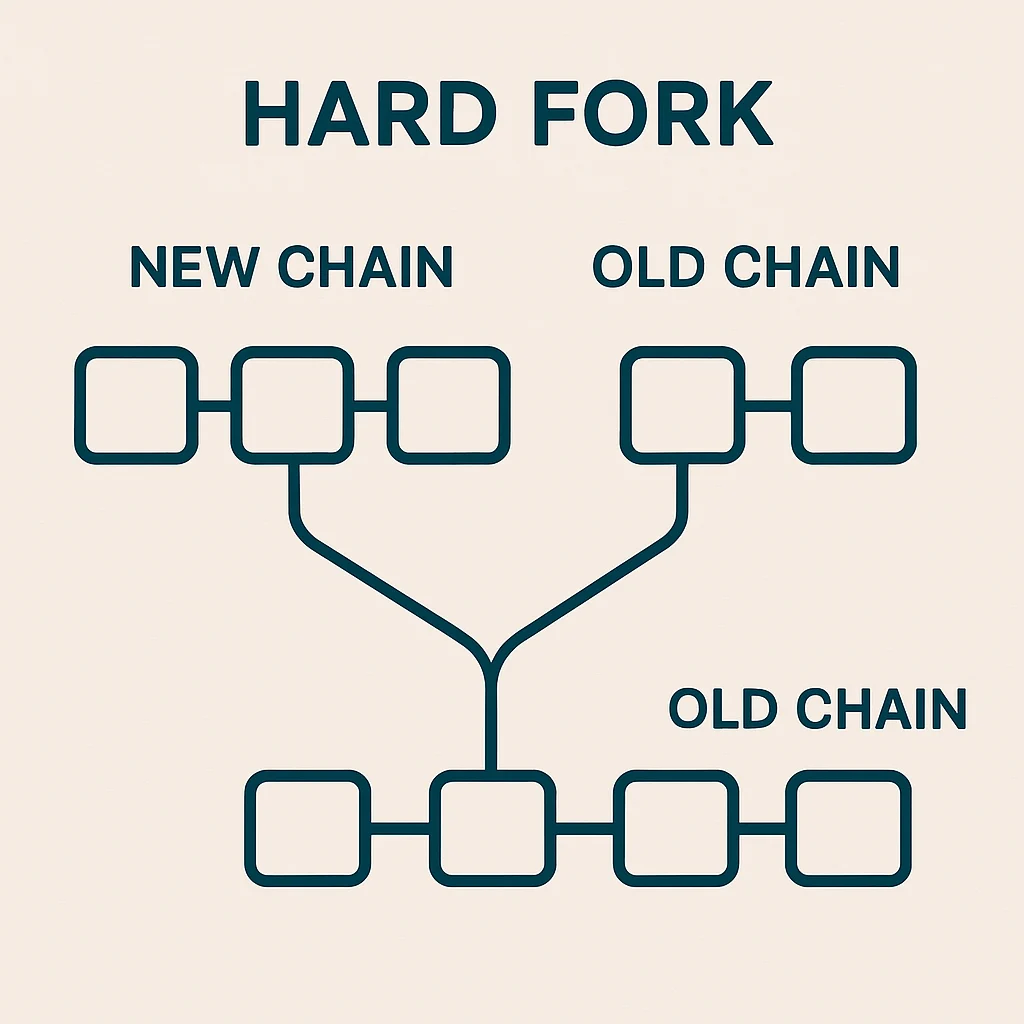
Infographic showing a hard fork with one blockchain splitting into two separate chains labeled "Old Chain" and "New Chain"

Real-World Examples

  • Bitcoin Cash fork – Disagreement over block size led to permanent split creating BCH
  • Ethereum Classic – Original Ethereum chain after the DAO hack hard fork
  • Bitcoin SV – Further split from Bitcoin Cash over technical and philosophical differences

Why Beginners Should Care

Free coins sometimes result from hard forks when you automatically receive tokens on both chains. However, this isn’t guaranteed and requires proper wallet management.

Network disruption during contentious hard forks can cause transaction delays, exchange suspensions, and price volatility as markets figure out which chain has value.

Research required to understand which fork to support, as community splits can be permanent and choosing wrong can mean holding worthless tokens.

Related Terms: Soft Fork, Consensus Mechanism, Node, Chain Split

Back to Crypto Glossary

Similar Posts

  • DeFi Primitives

    DeFi Primitives: Basic Building BlocksDeFi primitives are fundamental financial functions like lending, borrowing, and trading that serve as building blocks for more complex decentralized finance applications. They're like Lego blocks for financial services.DeFi primitives refer to basic financial functions implemented as smart contracts that can be combined to create more complex financial products and services. These…

  • Wallet Drainer

    Wallet Drainer: Malicious Fund Extraction Wallet drainers are malicious smart contracts or applications designed to steal all assets from connected wallets through deceptive transaction approvals. They’re digital pickpockets with smart contract superpowers. A wallet drainer is malicious software that tricks users into signing transactions that grant unlimited access to their cryptocurrency holdings. These attacks often…

  • Gasless Transactions

    Gasless Transactions: Fee-Free User Experience Gasless transactions eliminate the need for users to hold native tokens for transaction fees by having third parties sponsor the gas costs. It’s like having someone else pay for your Uber rides. Gasless transactions enable users to interact with blockchain applications without holding native tokens for gas fees. Third parties,…

  • Rollups

    Rollups: Scaling Through Bundling Rollups process hundreds of transactions off-chain then bundle the results into single on-chain transactions. It’s like carpooling for blockchain transactions – everyone shares the gas costs. Rollups are Layer 2 scaling solutions that execute transactions off the main blockchain but post transaction data on-chain for security. They inherit the security of…

  • Governance Token

    Governance Token: Voting Rights in Digital Form Governance tokens turn users into stakeholders with voting power over protocol decisions. It’s democracy meets DeFi, with mixed results. A governance token grants holders voting rights on protocol decisions like parameter changes, upgrade proposals, treasury spending, and strategic direction. Token weight typically determines voting power – more tokens…

  • Trading Pairs

    Trading Pairs: Currency Exchange MarketsTrading pairs represent the exchange rate between two different cryptocurrencies or assets. They're like forex pairs but for digital currencies.A trading pair consists of two assets that can be traded against each other, showing the exchange rate between them. Trading pairs enable price discovery and liquidity for cryptocurrency markets.How Trading Pairs WorkBase…