
Rollups

Rollups: Scaling Through Bundling

Rollups process hundreds of transactions off-chain then bundle the results into single on-chain transactions. It’s like carpooling for blockchain transactions – everyone shares the gas costs.

Rollups are Layer 2 scaling solutions that execute transactions off the main blockchain but post transaction data on-chain for security. They inherit the security of the main chain while dramatically reducing costs and increasing throughput.

How Rollups Work

Batch processing combines hundreds of transactions into cryptographic proofs or compressed data that gets submitted to the main chain as a single transaction.

Two main types exist: Optimistic rollups assume transactions are valid unless challenged, while Zero-Knowledge rollups use cryptographic proofs to guarantee validity.

Data availability ensures anyone can reconstruct rollup state from main chain data, maintaining decentralization and enabling independent verification of rollup operators.
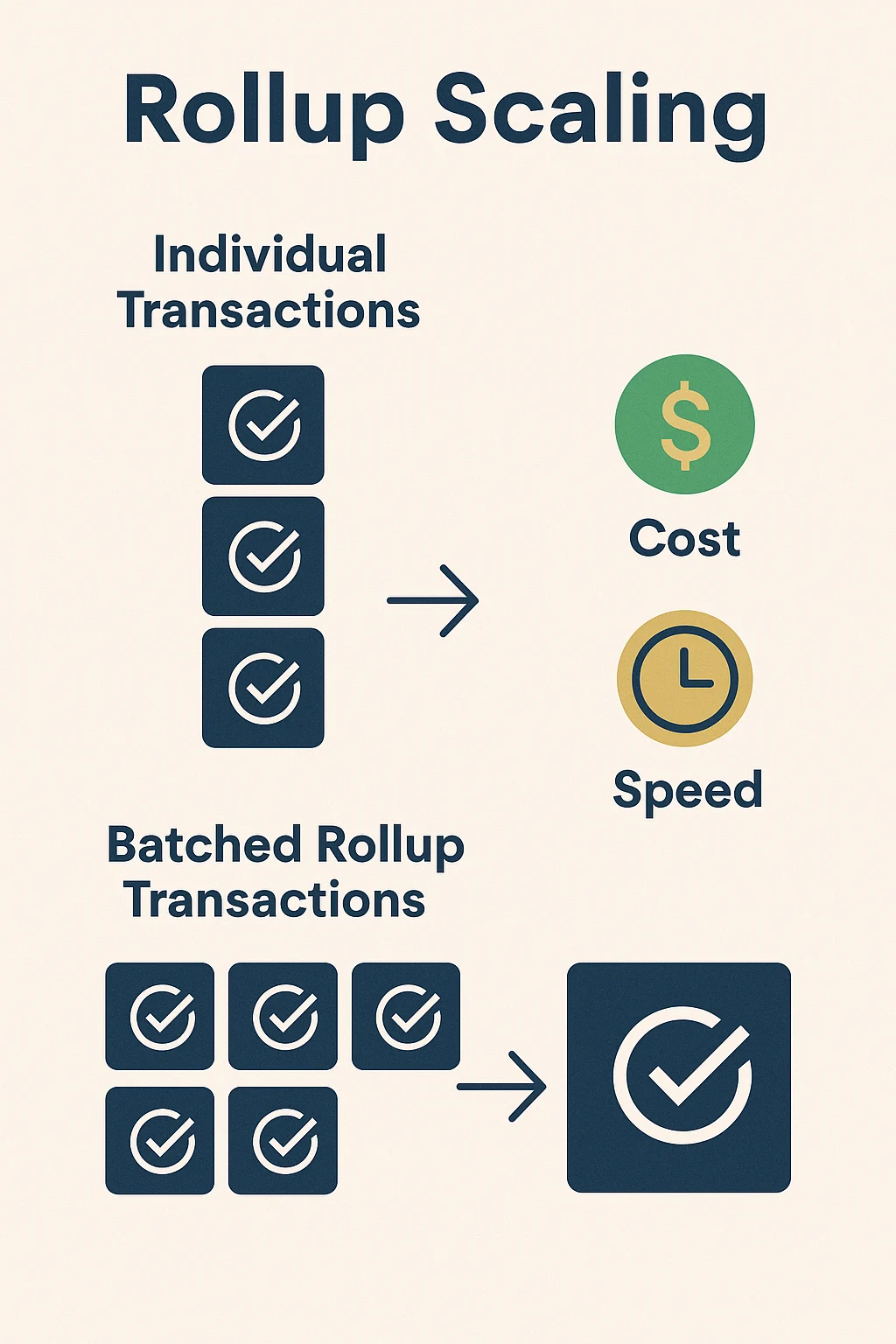
Infographic comparing individual blockchain transactions to batched rollup transactions, showing improvements in cost and speed

Real-World Examples

  • Arbitrum – Popular optimistic rollup with major DeFi protocols and lower fees
  • Optimism – Ethereum scaling solution with retroactive public goods funding
  • StarkNet – Zero-knowledge rollup using STARK proofs for scalability

Why Beginners Should Care

Massive fee savings make DeFi accessible to smaller users who were priced out by high Ethereum mainnet transaction costs during peak usage.

Security inheritance from Ethereum mainnet provides stronger guarantees than sidechains or independent Layer 1 blockchains with smaller validator sets.

Growing ecosystem sees major protocols launching on rollups, making them increasingly necessary for accessing the latest DeFi innovations and competitive yields.

Related Terms: Layer 2, Optimistic Rollup, zk-Rollup, Scaling

Back to Crypto Glossary

Similar Posts

  • EVM (Ethereum Virtual Machine)

    EVM (Ethereum Virtual Machine): The World Computer The EVM is the runtime environment where Ethereum smart contracts execute. It’s like having one giant computer that runs the same programs across thousands of machines worldwide. The Ethereum Virtual Machine (EVM) is a decentralized computing environment that executes smart contracts on the Ethereum blockchain. Every Ethereum node…

  • Due Diligence

    Due Diligence: Research Before InvestmentDue diligence involves thoroughly researching and evaluating cryptocurrency projects before investing. It's like test driving a car and checking its history before buying.Due diligence refers to the comprehensive investigation and analysis of cryptocurrency projects, including technology, team, tokenomics, and market factors before making investment decisions. Proper due diligence helps identify opportunities and…

  • Proof of Work (PoW)

    Proof of Work (PoW): Bitcoin’s Security Model Proof of Work is how Bitcoin solves the double-spending problem without trusted authorities. It’s energy-intensive by design – that’s a feature, not a bug. Proof of Work is a consensus mechanism where miners compete to solve computationally difficult puzzles to validate transactions and create new blocks. The winning…

  • HODL

    HODL: The Art of Doing Nothing HODL started as a typo but became crypto’s most important investment strategy. Sometimes the best move is not moving at all. HODL means holding cryptocurrency long-term regardless of short-term price volatility, derived from a misspelled “hold” in a 2013 Bitcoin forum post. It represents the strategy of buying and…

  • Delegation

    Delegation: Assigning Voting or Staking RightsDelegation allows token holders to assign their voting power or staking rights to other participants while retaining ownership. It's like giving someone your vote without giving them your tokens.Delegation refers to assigning voting rights, staking authority, or other token-based powers to third parties while maintaining ownership of the underlying tokens. This…

  • Application Layer

    Application Layer: User-Facing Blockchain AppsThe application layer consists of user-facing applications and services built on top of blockchain infrastructure. It's where users actually interact with blockchain technology.The application layer comprises decentralized applications (dApps), user interfaces, and services that provide end-user functionality built on blockchain infrastructure. This layer makes blockchain technology accessible and useful for everyday users.How…