
SocialFi

SocialFi: Social Media Meets Financial Incentives

SocialFi combines social networking with decentralized finance, rewarding users for creating content and engaging with communities. It’s like getting paid to post, but with actual economic models behind it.

SocialFi refers to social finance applications that integrate social media features with DeFi economics, enabling users to monetize social interactions through token rewards, NFT creation, and community governance. Users earn from content creation, curation, and social engagement.

How SocialFi Works

Token incentives reward users for creating valuable content, engaging with others’ posts, and building community participation through measurable contributions.
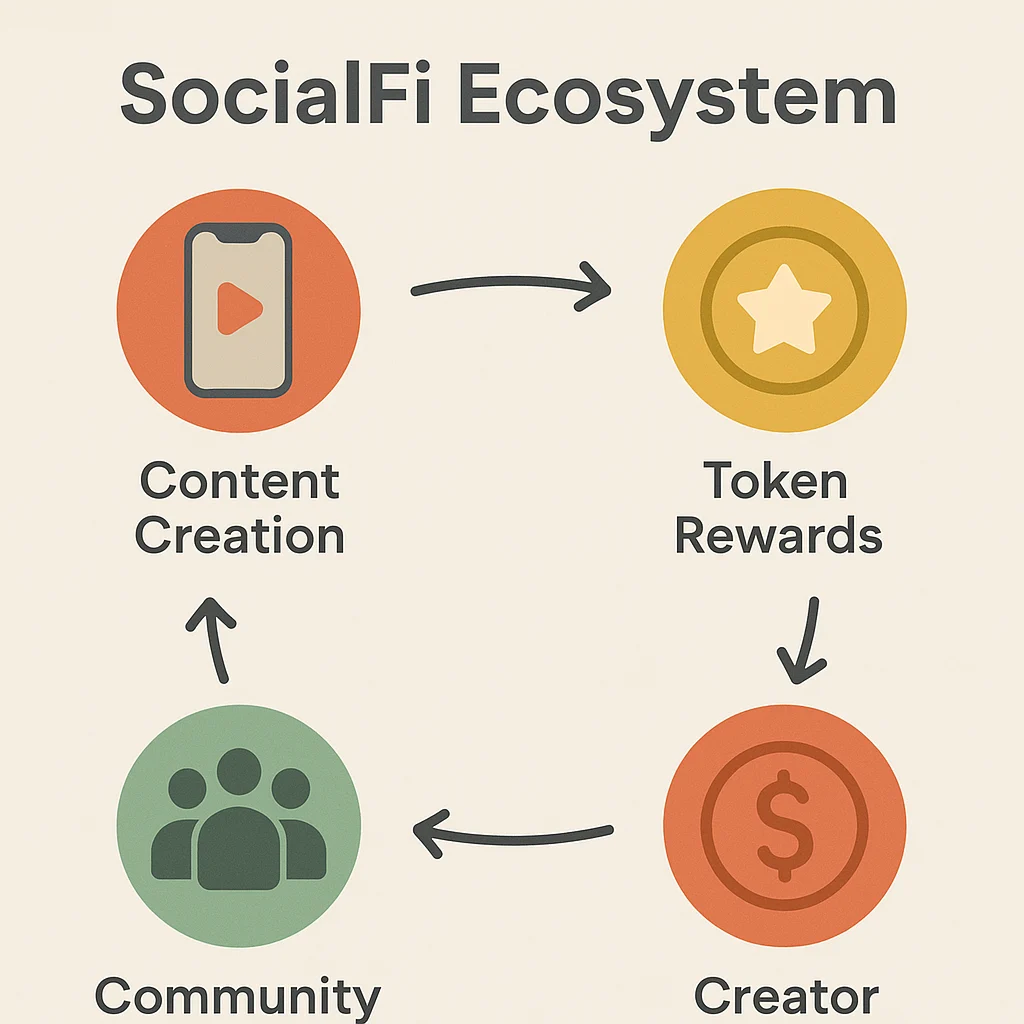
Infographic showing the SocialFi ecosystem with stages: content creation, token rewards, community governance, and creator monetization

Governance participation gives community members voting power over platform rules, feature development, and treasury allocation based on their contributions.

[IMAGE: SocialFi ecosystem showing content creation → token rewards → community governance → creator monetization]

Real-World Examples

  • Friend.tech enables trading shares of social media influencers with price discovery based on popularity
  • Lens Protocol provides decentralized social networking with composable profiles and monetization
  • BitClout (now DeSo) created social tokens tied to individual creators’ influence

Why Beginners Should Care

Direct monetization opportunities for content creators without relying on advertising revenue or platform algorithm changes that affect reach.

Ownership benefits as users control their social graphs, content, and earnings rather than being subject to centralized platform policies.

Speculation risks when social tokens become investment vehicles rather than utility tokens, creating unsustainable economic models.

Related Terms: Social Token, Community Governance, Token Incentives

Back to Crypto Glossary

Similar Posts

  • Liquidity Sniping

    Liquidity Sniping: Front-Running New Pools Liquidity sniping involves immediately buying tokens when new liquidity pools are created, often using bots to front-run regular users. It’s like cutting in line at the grand opening sale. Liquidity sniping is the practice of using automated systems to immediately purchase tokens as soon as new liquidity pools go live,…

  • On-Chain Reputation

    On-Chain Reputation: Verifiable Digital Standing On-chain reputation tracks user behavior and achievements through permanent blockchain records. It’s like having a credit score built from your entire crypto transaction history. On-chain reputation systems create verifiable records of user behavior, achievements, and interactions that persist across applications and can’t be faked or manipulated. These systems enable trust…

  • Cryptography

    Cryptography: Mathematical Security FoundationCryptography is the mathematical science of securing information through encryption, digital signatures, and other techniques. It's the foundation that makes cryptocurrencies and blockchain technology secure and trustworthy.Cryptography refers to mathematical techniques for securing information, enabling authentication, and protecting data confidentiality through algorithms and protocols. Modern cryptocurrency systems depend entirely on cryptographic security for…

  • DeFi Security

    DeFi Security: Protecting Decentralized FinanceDeFi security involves protecting decentralized finance protocols and users from smart contract vulnerabilities, economic attacks, and operational risks. It's cybersecurity for programmable money.DeFi security encompasses the practices, technologies, and protocols used to protect decentralized finance applications from hacks, exploits, and other security threats. This includes smart contract auditing, economic security, and user…

  • Zero-Knowledge Proof (ZKP)

    Zero-Knowledge Proof (ZKP): Proving Without Revealing Zero-knowledge proofs let you prove you know something without revealing what you know. It’s like proving you’re over 21 without showing your birth date, address, or any other personal information. A zero-knowledge proof (ZKP) is a cryptographic method that allows one party to prove they possess certain information without…

  • Rug Detector

    Rug Detector: Automated Scam Identification Rug detectors are tools that analyze token contracts and trading patterns to identify potential rug pulls before they happen. They’re like having a fraud investigator built into your trading interface. A rug detector is software that automatically analyzes cryptocurrency projects for red flags that indicate potential rug pulls or exit…