
Airdrop

Airdrop: Free Tokens From the Sky

Airdrops distribute free tokens to wallet addresses, usually to reward early users or generate buzz for new projects. Some are worth pennies, others change lives.

An airdrop is the distribution of free cryptocurrency tokens to wallet addresses, typically as a marketing strategy, reward for early adoption, or method of decentralizing token ownership. Recipients usually don’t need to pay anything to receive airdropped tokens.

How Airdrops Work

Snapshot-based airdrops take blockchain snapshots at specific times, then distribute tokens to addresses holding certain cryptocurrencies or using specific protocols during the snapshot.

Task-based airdrops require users to complete actions like following social media accounts, joining communities, or testing protocols before receiving tokens.

Retroactive airdrops reward past users of protocols that later launch governance tokens. These are often the most valuable since they reward genuine usage over speculation.
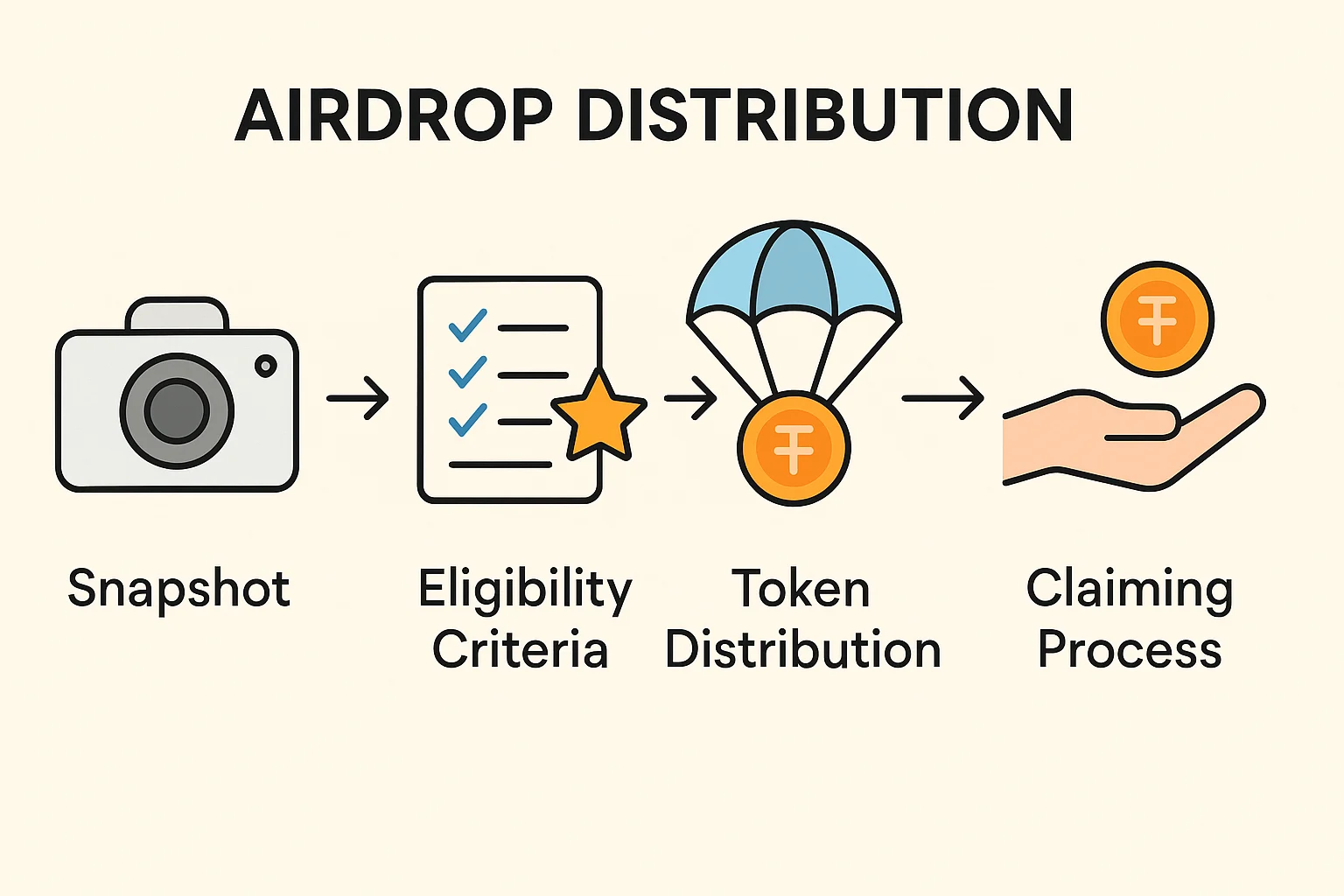
Infographic showing the airdrop distribution process from blockchain snapshot to eligibility verification, token delivery, and claim steps

Real-World Examples

  • Uniswap (UNI) airdropped 400 tokens worth $1,200+ to early platform users
  • Ethereum Name Service (ENS) distributed tokens based on domain ownership duration
  • dYdX rewarded trading volume with governance tokens worth thousands for active users

Why Beginners Should Care

Airdrop farming involves using multiple protocols hoping for future token distributions. This can be profitable but requires gas fees and time investment with no guarantees.

Scam airdrops are common – malicious tokens that steal funds when you try to sell them or interact with fake contracts. Never connect wallets to unknown airdrop claims.

Tax implications exist in many jurisdictions where airdropped tokens count as taxable income at fair market value when received.

Related Terms: Token Distribution, Governance Token, DeFi, Wallet

Back to Crypto Glossary

Similar Posts

  • Data Availability Layer

    Data Availability Layer: Ensuring Information Access Data availability layers ensure that blockchain data remains accessible for verification without requiring full nodes to store everything. It’s like having a library system where you can verify any book exists without storing them all. A data availability layer guarantees that blockchain transaction data is published and remains accessible…

  • Full Node

    Full Node: Complete Blockchain ParticipantA full node maintains a complete copy of the blockchain and validates all transactions independently. It's like having the complete library instead of just borrowing books when you need them.A full node is a computer that downloads, stores, and validates the complete blockchain history while participating in network consensus and transaction…

  • Asset Backing

    Asset Backing: Value Foundation for TokensAsset backing refers to reserves of real-world assets that support the value of cryptocurrency tokens. It's like having gold in a vault to back paper money.Asset backing involves holding reserves of traditional assets like cash, bonds, commodities, or real estate to support the value and redemption of cryptocurrency tokens. This creates…

  • Market Maker

    Market Maker: Providing Trading LiquidityMarket makers provide continuous buy and sell orders to ensure trading liquidity and narrow bid-ask spreads. They're like the vendors at a farmer's market who are always ready to trade.A market maker is an individual or entity that provides liquidity to trading markets by continuously offering to buy and sell assets…

  • zk-Rollup

    zk-Rollup: Zero-Knowledge Scaling Solutionzk-Rollups are Layer 2 scaling solutions that bundle hundreds of transactions into single proofs, dramatically reducing costs while maintaining security. They're like packing many letters into one envelope instead of sending each letter separately, but with mathematical proof that all letters are authentic.zk-Rollup refers to a Layer 2 scaling technology that processes…

  • Throughput

    Throughput: Network Processing CapacityThroughput measures how many transactions a blockchain network can process per second. It's like measuring how many cars can drive through a highway during rush hour.Throughput refers to the number of transactions a blockchain network can process within a given time period, typically measured in transactions per second (TPS). Higher throughput enables more…