
AML (Anti-Money Laundering)

AML (Anti-Money Laundering): Fighting Financial Crime

AML regulations force crypto businesses to monitor and report suspicious activities. It’s the government’s attempt to prevent crypto from becoming a money laundering paradise.

Anti-Money Laundering (AML) refers to laws, regulations, and procedures designed to prevent criminals from disguising illegally obtained funds as legitimate income. Crypto exchanges and businesses must implement AML compliance to operate legally.

How AML Works in Crypto

Transaction monitoring systems flag unusual patterns like rapid large deposits, immediate withdrawals, or transactions with known high-risk addresses.

Suspicious Activity Reports (SARs) must be filed with government agencies when exchanges detect potential money laundering. This creates permanent records tied to user identities.

Chain analysis tools track crypto movements across addresses, making it harder to obscure transaction histories compared to traditional cash-based money laundering.
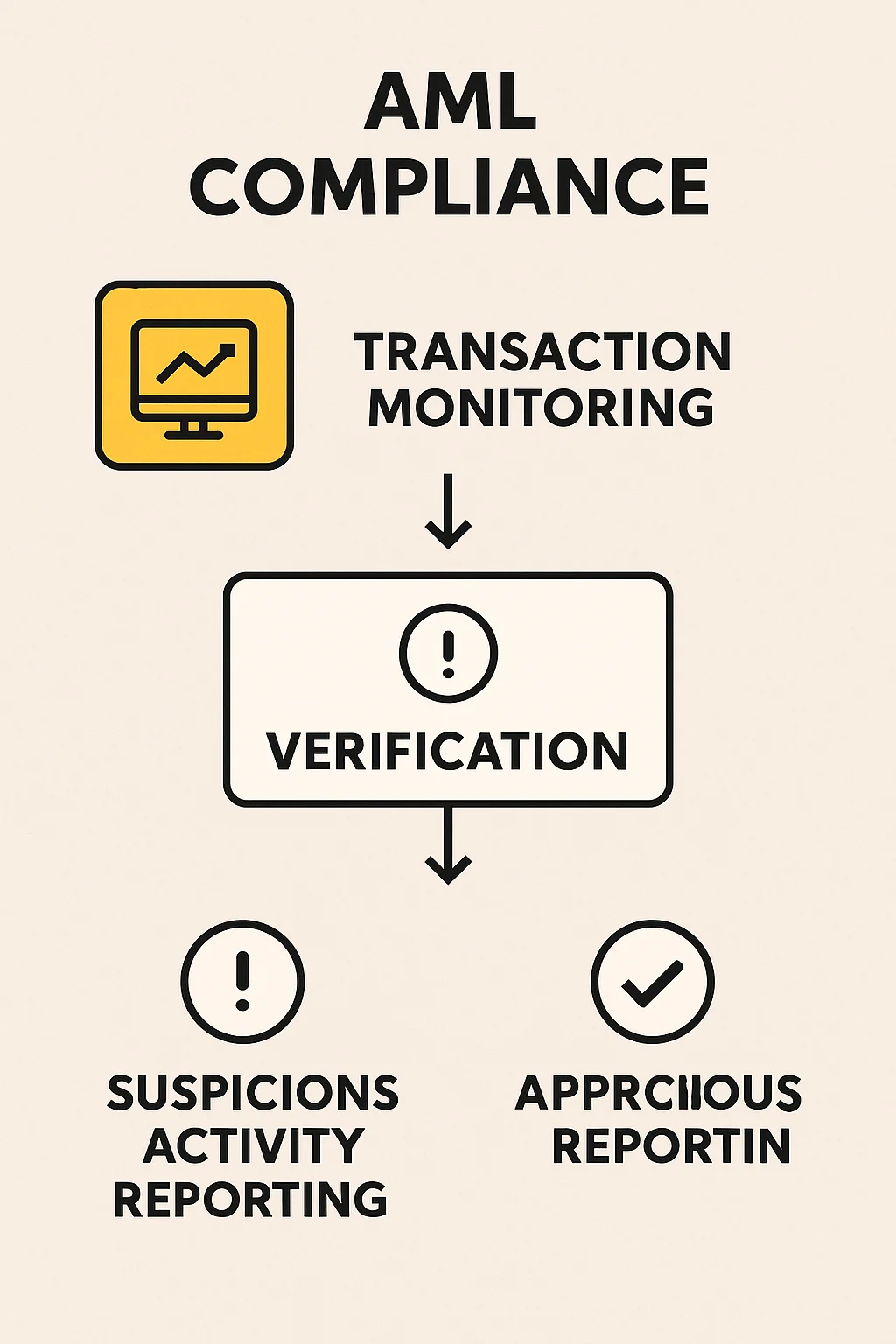
Flowchart showing AML compliance steps: transaction monitoring, risk verification, and suspicious activity reporting

Real-World Examples

  • Binance paid $4.3 billion in fines for AML violations and inadequate compliance
  • Tornado Cash sanctions highlighted tensions between privacy tools and AML enforcement
  • Exchange delistings of privacy coins like Monero due to AML compliance challenges

Why Beginners Should Care

AML compliance affects your crypto experience through identity verification requirements, transaction limits, and account monitoring that can trigger investigations.

Privacy expectations should be adjusted – regulated exchanges share transaction data with governments upon request. True privacy requires decentralized tools with their own risks.

Choose exchanges with strong compliance records like Kraken that balance regulatory requirements with user protection and transparent policies.

Related Terms: KYC, Exchange, Privacy Coin, Regulation

Back to Crypto Glossary

Similar Posts

  • Double Spending

    Double Spending: Using Digital Money TwiceDouble spending is the risk of using the same digital currency twice in different transactions. It's like making photocopies of cash and trying to spend each copy separately.Double spending refers to the potential problem where the same digital currency unit could be spent multiple times, which blockchain technology specifically prevents…

  • Flash Mint

    Flash Mint: Temporary Token Creation Flash mints create tokens temporarily within single transactions that must be returned or burned before the transaction completes. It’s like borrowing inventory that must be returned instantly. Flash minting allows creating large amounts of tokens temporarily within a single transaction, provided they are burned or properly backed before the transaction…

  • Public Key

    Public Key: Cryptographic Identity VerificationA public key is the openly shareable part of a cryptographic key pair that enables others to send you cryptocurrency or verify your digital signatures. It's like your mailing address that you can give to anyone who wants to send you mail.Public key refers to the cryptographic component of a key…

  • Satoshi

    Satoshi: Bitcoin's Smallest UnitA satoshi is the smallest unit of bitcoin, equal to 0.00000001 BTC. It's named after Bitcoin's pseudonymous creator and makes bitcoin divisible for everyday transactions.A satoshi (sat) is the smallest divisible unit of bitcoin, representing one hundred millionth of a bitcoin. This granular divisibility enables bitcoin to function as digital cash for transactions…

  • Voting

    Voting: Decentralized Decision MakingVoting in cryptocurrency enables token holders to participate in governance decisions that shape project direction and protocol changes. It's like being a shareholder who can vote on company decisions, except the company is a decentralized protocol owned by its users.Voting refers to the democratic process where cryptocurrency token holders express preferences on…

  • Hard Fork

    Hard Fork: Splitting the Blockchain Hard forks create permanent splits in blockchain networks, often resulting in two separate cryptocurrencies. They’re like corporate divorces – messy, dramatic, and usually involving lots of arguing about money. A hard fork is a permanent change to a blockchain’s protocol that makes previously invalid blocks valid, or vice versa, requiring…