
Crypto Vesting Schedule

Crypto Vesting Schedule: Gradual Token Release

Vesting schedules control when team members, investors, or community members can access their allocated tokens. It’s like having a time-locked savings account that prevents dumping.

A crypto vesting schedule defines when and how allocated tokens become available for use, typically spreading releases over months or years to prevent market dumping. Different stakeholders usually have different vesting terms based on their role and contribution timing.

How Vesting Schedules Work

Time-based releases unlock predetermined percentages of tokens at regular intervals, such as monthly or quarterly distributions over 2-4 years.

Cliff periods require waiting a minimum time before any tokens become available, ensuring initial commitment before any rewards are accessible.

Performance milestones may trigger additional unlocks based on project achievements, user adoption, or revenue targets rather than pure time passage.
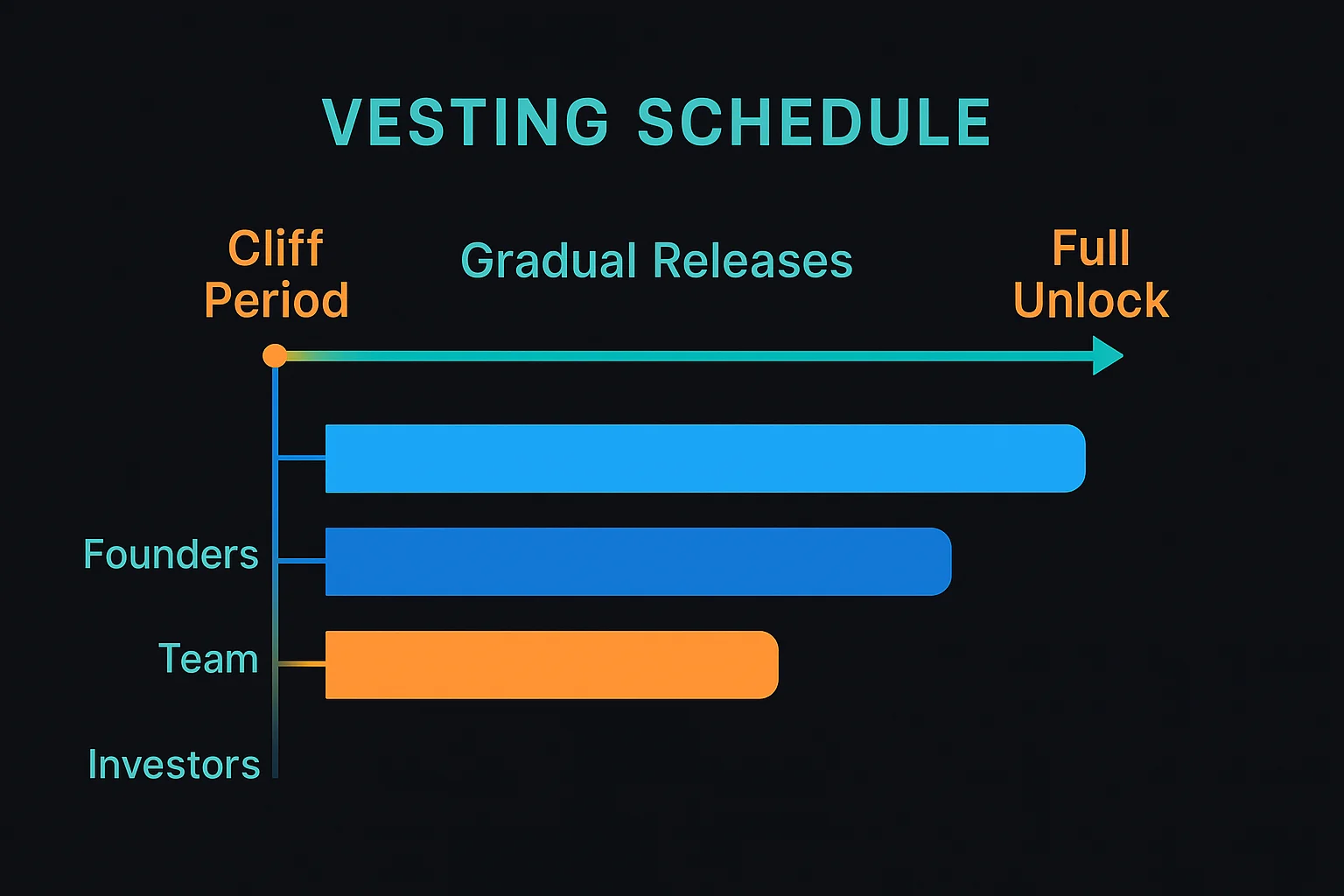
Vesting schedule timeline showing cliff period, gradual token releases, and full unlock across founders, team, and investors

Real-World Examples

  • Team allocations often have 1-year cliffs with 4-year total vesting to ensure long-term commitment
  • Investor tokens may have shorter 6-month cliffs with 2-year vesting periods
  • Community rewards sometimes have no cliffs but longer overall vesting to encourage participation

Why Beginners Should Care

Market pressure understanding helps predict potential selling pressure as large token allocations become available for trading.

Team incentives alignment through long vesting periods suggests teams are committed to long-term project success rather than quick exits.

Investment timing considerations around major vesting events that could significantly impact token prices through increased supply.

Related Terms: Token Allocation, Lock-up Period, Team Incentives, Supply Schedule

Back to Crypto Glossary

Similar Posts

  • Appchain

    Appchain: Application-Specific Blockchains Appchains are blockchains designed for single applications or use cases rather than general-purpose smart contracts. They’re like having a dedicated highway for one type of vehicle instead of mixed traffic. An appchain is a blockchain optimized for a specific application or use case rather than supporting general-purpose smart contracts. This specialization enables…

  • Price Feed

    Price Feed: Real-Time Market DataPrice feeds provide real-time cryptocurrency market data to applications and smart contracts that need current asset values. They're like financial news tickers that continuously update with the latest stock prices, but for digital assets and automated systems.Price feed refers to continuous streams of current market prices and trading data that supply…

  • Consensus Mechanism

    Consensus Mechanism: How Networks Agree Consensus mechanisms solve the fundamental problem of getting thousands of independent computers to agree on a single version of truth without central authority. A consensus mechanism is the process by which a distributed network of nodes agrees on the validity of transactions and the current state of the blockchain. It…

  • Cross-Chain Messaging

    Cross-Chain Messaging: Inter-Blockchain Communication Cross-chain messaging enables smart contracts on different blockchains to communicate and trigger actions across networks. It’s like having a universal translator for blockchain conversations. Cross-chain messaging allows smart contracts on different blockchain networks to send data, trigger functions, and coordinate actions across multiple chains. This enables true interoperability beyond simple asset…

  • Transaction Approval

    Transaction Approval: Authorizing Blockchain ActionsTransaction approval is the process of authorizing blockchain operations through wallet signatures or smart contract permissions. It's like signing checks, but with permanent consequences.Transaction approval involves granting permission for blockchain operations through cryptographic signatures, smart contract interactions, or delegation mechanisms. These approvals authorize spending, contract execution, or account access.How Transaction Approval WorksSignature…

  • Scaling

    Scaling: Handling More TransactionsScaling refers to increasing a blockchain network's capacity to handle more transactions per second without sacrificing security or decentralization. It's the holy grail of blockchain development.Scaling in blockchain technology involves improving transaction throughput, reducing costs, and maintaining performance as networks grow in size and usage. This typically requires technical solutions that balance speed,…