
Decentralization

Decentralization: Power to the People

Decentralization distributes control away from single authorities across many independent participants. It’s the difference between having one king versus a thousand voters making decisions.

Decentralization refers to the distribution of power, control, and decision-making away from central authorities to a network of independent participants. In blockchain systems, this means no single entity controls the network, transactions, or governance decisions.

How Decentralization Works

Distributed control spreads network operations across thousands of independent nodes, miners, or validators who collectively maintain system integrity without central coordination.

Consensus mechanisms enable distributed networks to agree on valid transactions and network state without requiring trust in central authorities or intermediaries.

Resistance benefits make decentralized systems harder to shut down, censor, or manipulate since attackers would need to compromise many independent participants simultaneously.
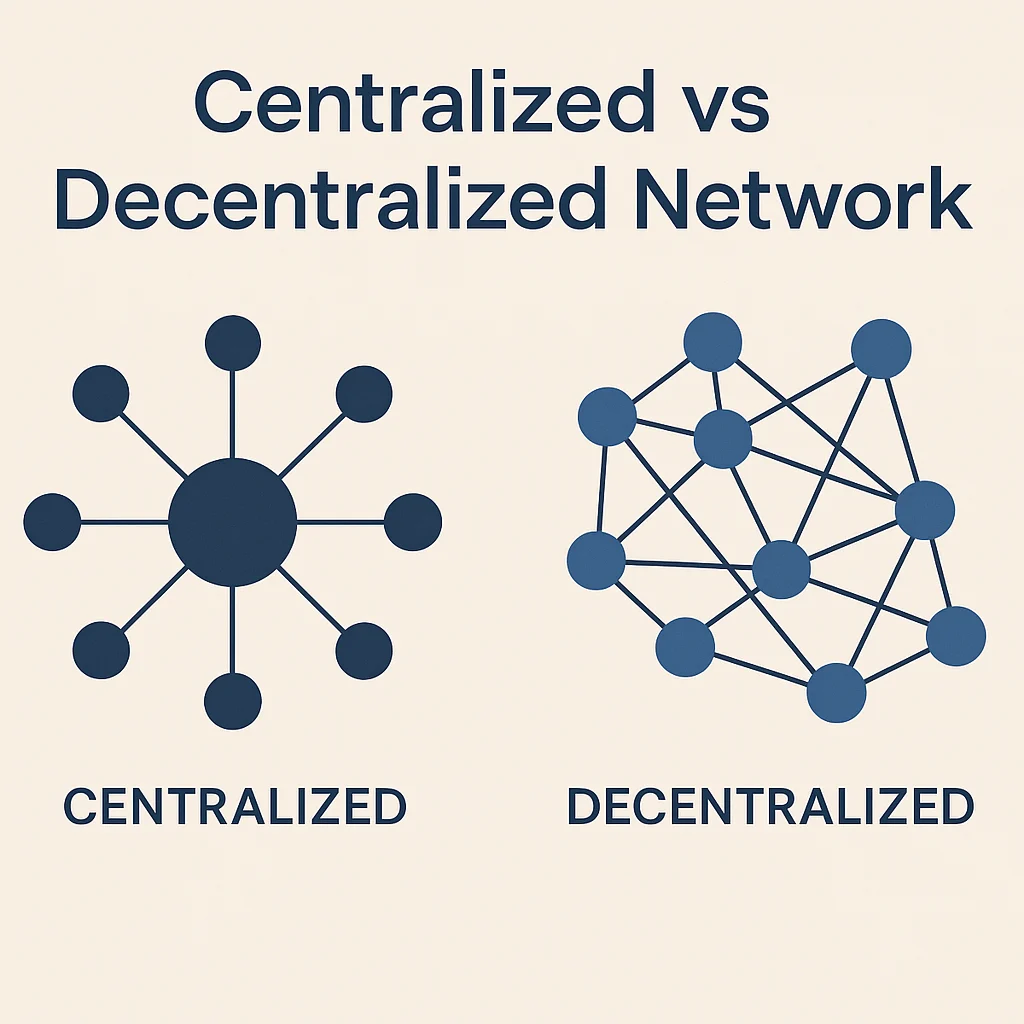
Infographic comparing centralized hub-and-spoke topology with a distributed mesh of interconnected nodes to illustrate decentralization

Real-World Examples

  • Bitcoin network operates through thousands of independent miners and nodes worldwide
  • Ethereum validators secure the network through distributed proof-of-stake consensus
  • Traditional internet vs decentralized protocols like IPFS for file storage

Why Beginners Should Care

Censorship resistance means decentralized networks can operate even when governments or corporations try to shut them down or restrict access.

Reduced single points of failure create more robust systems that continue operating even when some participants go offline or become unreliable.

Trade-off awareness as decentralization often means slower decision-making and coordination compared to centralized systems, but with greater resilience and fairness.

Related Terms: Consensus Mechanism, Node, Peer-to-Peer, Governance

Back to Crypto Glossary

Similar Posts

  • Capital Preservation

    Capital Preservation: Protecting Investment PrincipalCapital preservation focuses on protecting the original investment amount rather than maximizing returns. It's like choosing a safe over a lottery ticket for your money.Capital preservation is an investment strategy that prioritizes protecting the original principal amount over generating high returns. This conservative approach minimizes downside risk while accepting lower potential upside.How…

  • Yield Farming

    Yield Farming: Crypto’s High-Risk, High-Reward Game Yield farming is DeFi’s answer to traditional investing – except the yields are higher, the risks are bigger, and the game changes daily. Yield farming is the practice of lending, staking, or providing liquidity with your cryptocurrency to earn maximum returns across multiple DeFi protocols. It’s like playing musical…

  • Sandwich Attack

    Sandwich Attack: Extracting Value from Your Trades Sandwich attacks place trades before and after your transaction to manipulate prices and extract profit from your slippage. It’s like cutting in line twice – once in front of you and once behind you. A sandwich attack involves placing a buy order immediately before a victim’s trade and…

  • Compliance

    Compliance: Following Regulatory RequirementsCompliance involves adhering to laws, regulations, and industry standards that govern cryptocurrency activities. It's like following traffic laws, but for digital money and blockchain businesses.Compliance refers to conforming with applicable laws, regulations, licensing requirements, and industry standards for cryptocurrency operations. This includes financial regulations, tax obligations, and consumer protection measures.How Crypto Compliance WorksRegulatory…

  • Anonymity

    Anonymity: Hiding Identity in Digital TransactionsAnonymity in cryptocurrency refers to the ability to conduct transactions without revealing personal identity. It's like wearing a mask that completely hides who you are during financial transactions.Anonymity refers to the state of being unidentifiable in cryptocurrency transactions and blockchain interactions. True anonymity means that transaction participants cannot be linked to…

  • Supply Shock

    Supply Shock: Sudden Token Availability ChangesA supply shock occurs when cryptocurrency token supply changes dramatically and unexpectedly, often causing significant price volatility. It's like suddenly discovering a new oil field or losing access to existing reserves.A supply shock refers to a sudden, significant change in cryptocurrency token supply that disrupts market equilibrium and typically causes…