
DeFi Aggregator

DeFi Aggregator: Finding the Best Yields

DeFi aggregators automatically find the best rates across multiple protocols for lending, borrowing, or trading. They’re like Expedia for decentralized finance.

A DeFi aggregator is a platform that searches multiple protocols to find the best rates, yields, or liquidity for users’ specific needs. Instead of manually checking dozens of platforms, aggregators do the comparison shopping automatically.

How DeFi Aggregators Work

Rate comparison across lending protocols, DEXs, and yield farming opportunities to identify the highest returns or lowest costs for specific actions.

Smart routing splits large trades across multiple DEXs to minimize slippage and maximize execution efficiency compared to single-platform trades.

Yield optimization automatically moves funds between protocols as rates change, maintaining exposure to the highest available returns.
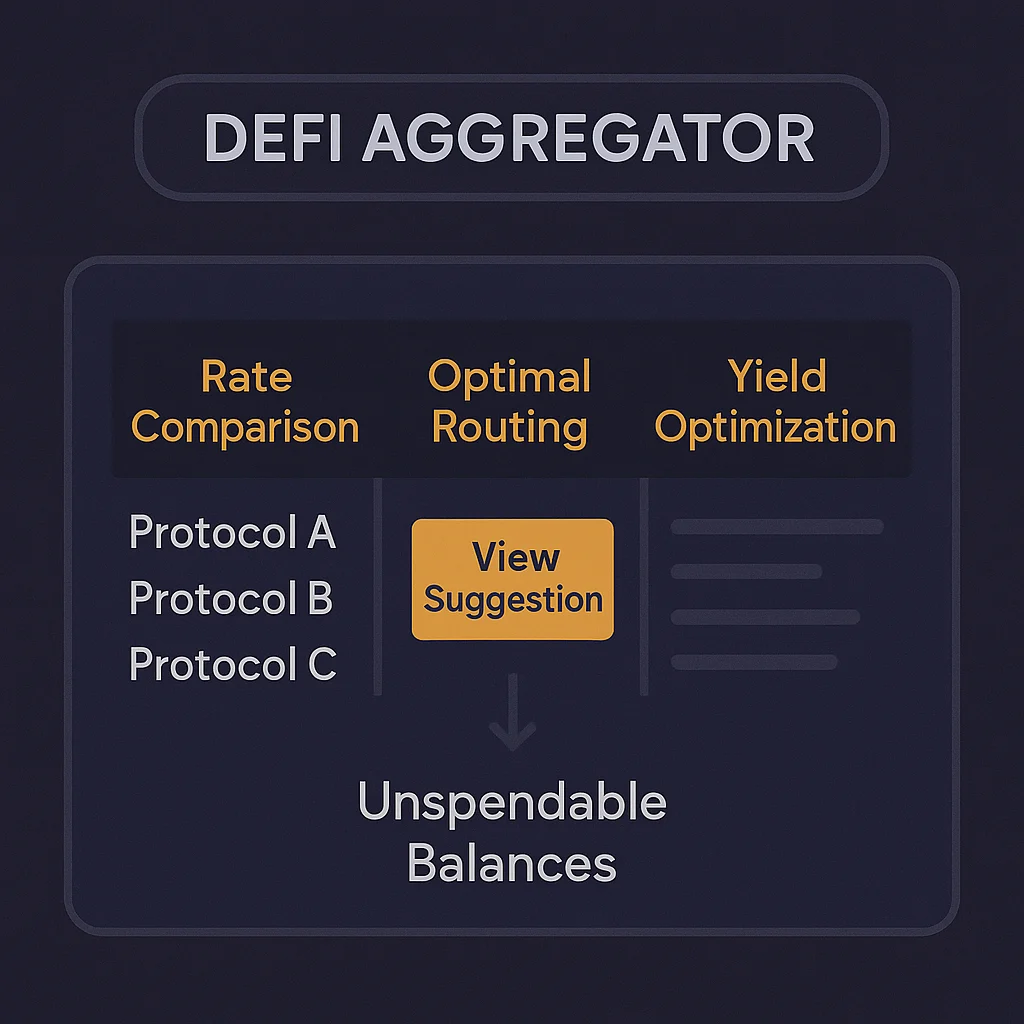
DeFi aggregator dashboard displaying rate comparisons, optimal routing suggestions, and yield optimization strategies across multiple protocols.

Real-World Examples

  • 1inch aggregates DEX liquidity to find best trading prices across multiple exchanges
  • Yearn Finance automatically moves deposited funds to highest-yielding opportunities
  • Zapper simplifies complex DeFi interactions through a single interface

Why Beginners Should Care

Time savings from aggregators eliminate the need to manually research and compare rates across dozens of constantly changing DeFi protocols.

Better execution through smart routing and yield optimization can significantly improve returns compared to single-protocol strategies.

Smart contract risk increases when aggregators interact with multiple protocols, as vulnerabilities in any connected platform could affect aggregator users.

Related Terms: Yield Farming, DEX, Slippage, Yield Optimization

Back to Crypto Glossary

Similar Posts

  • Fee Market

    Fee Market: Transaction Cost EconomicsA fee market determines transaction costs through supply and demand dynamics between users and network capacity. It's like surge pricing for blockchain transactions during busy periods.A fee market is an economic system where transaction fees are determined by competition between users for limited blockchain processing capacity. Higher demand relative to supply drives…

  • Compliance

    Compliance: Following Regulatory RequirementsCompliance involves adhering to laws, regulations, and industry standards that govern cryptocurrency activities. It's like following traffic laws, but for digital money and blockchain businesses.Compliance refers to conforming with applicable laws, regulations, licensing requirements, and industry standards for cryptocurrency operations. This includes financial regulations, tax obligations, and consumer protection measures.How Crypto Compliance WorksRegulatory…

  • Marketplace

    Marketplace: Digital Trading PlatformsMarketplaces are platforms where users can buy, sell, and trade digital assets like NFTs, tokens, or services. They're like eBay but for blockchain-based items.A marketplace is a platform that facilitates buying, selling, and trading of digital assets between users, typically including discovery, pricing, and transaction features. These platforms often specialize in specific asset…

  • DeFi Composability

    DeFi Composability: Building Block Finance DeFi composability allows protocols to integrate seamlessly, creating complex financial products by combining simpler components. It’s like financial Lego blocks that snap together perfectly. DeFi composability refers to the ability of decentralized finance protocols to interact and build upon each other, creating more complex financial products through modular integration. This…

  • DAO (Decentralized Autonomous Organization)

    DAO (Decentralized Autonomous Organization): Democracy Meets Code DAOs are how crypto communities govern themselves without traditional corporate structures. They’re experiments in digital democracy where token holders vote on everything. A Decentralized Autonomous Organization (DAO) is a community-governed entity where decisions are made collectively by token holders through blockchain-based voting. Smart contracts execute the community’s decisions…

  • Cross-Chain Bridge

    Cross-Chain Bridge: Connecting Blockchain Islands Cross-chain bridges move assets between different blockchains, connecting isolated cryptocurrency ecosystems. They’re the highways between blockchain cities, but sometimes the bridges collapse. A cross-chain bridge is a protocol that enables the transfer of tokens, data, or smart contract calls between different blockchain networks. Bridges solve blockchain interoperability by creating connections…