
Chain Reorg (Reorganization)

Chain Reorg (Reorganization): Blockchain History Changes

Chain reorgs occur when a blockchain adopts a different version of transaction history, potentially reversing confirmed transactions. It’s like time travel, but messier and more expensive.

A chain reorganization (reorg) happens when a blockchain network adopts an alternative chain of blocks as the canonical history, potentially reversing previously confirmed transactions. This can occur due to network splits, competing miners, or consensus failures.

How Chain Reorgs Work

Competing chains develop when different groups of miners or validators work on different versions of blockchain history simultaneously.

Longest chain rule (or other consensus mechanisms) eventually determines which chain becomes official, potentially orphaning blocks from the alternative chain.

Transaction reversal affects any transactions that were included in orphaned blocks, requiring them to be re-confirmed in the new canonical chain.
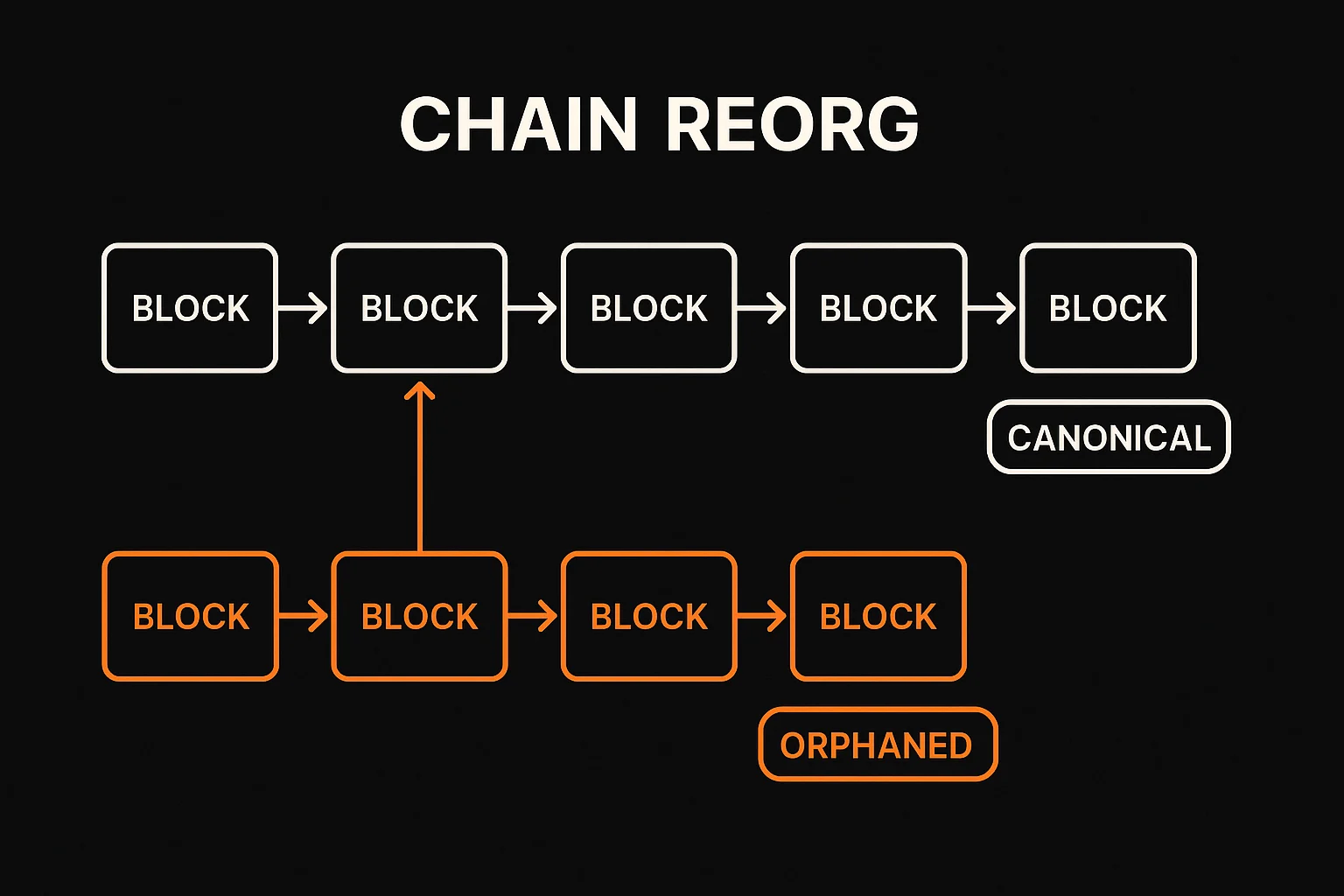
Chain reorganization diagram showing canonical blockchain branch versus orphaned competing branch

Real-World Examples

  • Ethereum Classic experienced deep reorgs during 51% attacks that reversed thousands of blocks
  • Bitcoin Cash has had several reorgs during periods of hash rate instability
  • Polygon faced a 157-block reorg in 2023 due to infrastructure issues

Why Beginners Should Care

Confirmation security requires waiting for multiple block confirmations to reduce the risk of transaction reversal from reorgs.

Exchange impacts as platforms may halt deposits/withdrawals during suspected reorgs to prevent double-spending attacks.

Network stability indicators include reorg frequency and depth, which signal overall blockchain health and security.

Related Terms: 51% Attack, Block Confirmation, Consensus Mechanism, Double Spending

Back to Crypto Glossary

Similar Posts

  • UTXO

    UTXO: Unspent Transaction OutputsUTXOs are like digital coins in your wallet that you haven't spent yet. Bitcoin tracks every unspent "coin" to prevent double-spending and maintain accurate balances.UTXO stands for Unspent Transaction Output – pieces of bitcoin that remain after a transaction and can be used as inputs for future transactions. Think of them as individual…

  • Sybil Attack

    Sybil Attack: Fake Identity Manipulation Sybil attacks involve creating multiple fake identities to gain disproportionate influence in networks that assume one person equals one vote. It’s like stuffing the ballot box with imaginary voters. A Sybil attack is when an individual or entity creates multiple fake identities to gain unfair influence over a network, voting…

  • Autonomous World (AW)

    Autonomous World (AW): Persistent Virtual Realities Autonomous worlds are persistent virtual environments that continue existing and evolving even when no players are actively participating. They’re like having a Minecraft world that keeps running and changing forever. An Autonomous World (AW) is a virtual environment that operates independently through blockchain infrastructure, maintaining state and enabling interactions…

  • Smart Contract Royalties

    Smart Contract Royalties: Automated Creator Payments Smart contract royalties automatically pay creators a percentage every time their NFTs are resold. It’s like having a永続 commission that follows your work forever. Smart contract royalties are automated payment mechanisms built into NFT contracts that send a percentage of each resale back to the original creator. These payments…

  • Atomic Swap

    Atomic Swap: Trustless Cross-Chain Trading Atomic swaps enable direct trading between different cryptocurrencies without exchanges or intermediaries. Either both trades complete successfully, or neither happens – no middle ground. An atomic swap is a smart contract technology that enables the exchange of cryptocurrencies from different blockchains without requiring a trusted third party. The swap either…

  • Capitulation

    Capitulation: Market Surrender and Mass SellingCapitulation occurs when investors give up hope and sell their holdings en masse, often marking market bottoms. It's like throwing in the towel when everything seems hopeless.Capitulation refers to the point where investors abandon hope and sell their cryptocurrency holdings in large volumes, typically occurring near market bottoms after prolonged…