
Decentralized Identity (DID)

Decentralized Identity (DID): Self-Sovereign Digital Identity

DIDs give users control over their digital identity without relying on centralized authorities like governments or tech companies. It’s like having a passport that you issue and control yourself.

Decentralized Identity (DID) is a digital identity framework that gives individuals control over their personal data and identity verification without central authorities. Users can prove who they are and what credentials they hold without depending on third-party identity providers.

How DIDs Work

Self-sovereign control means users generate and manage their own identity credentials rather than relying on institutions to vouch for their identity.

Cryptographic verification enables proving identity ownership through digital signatures without revealing underlying personal information.

Interoperability standards allow DID credentials to work across different platforms and services that support the decentralized identity framework.
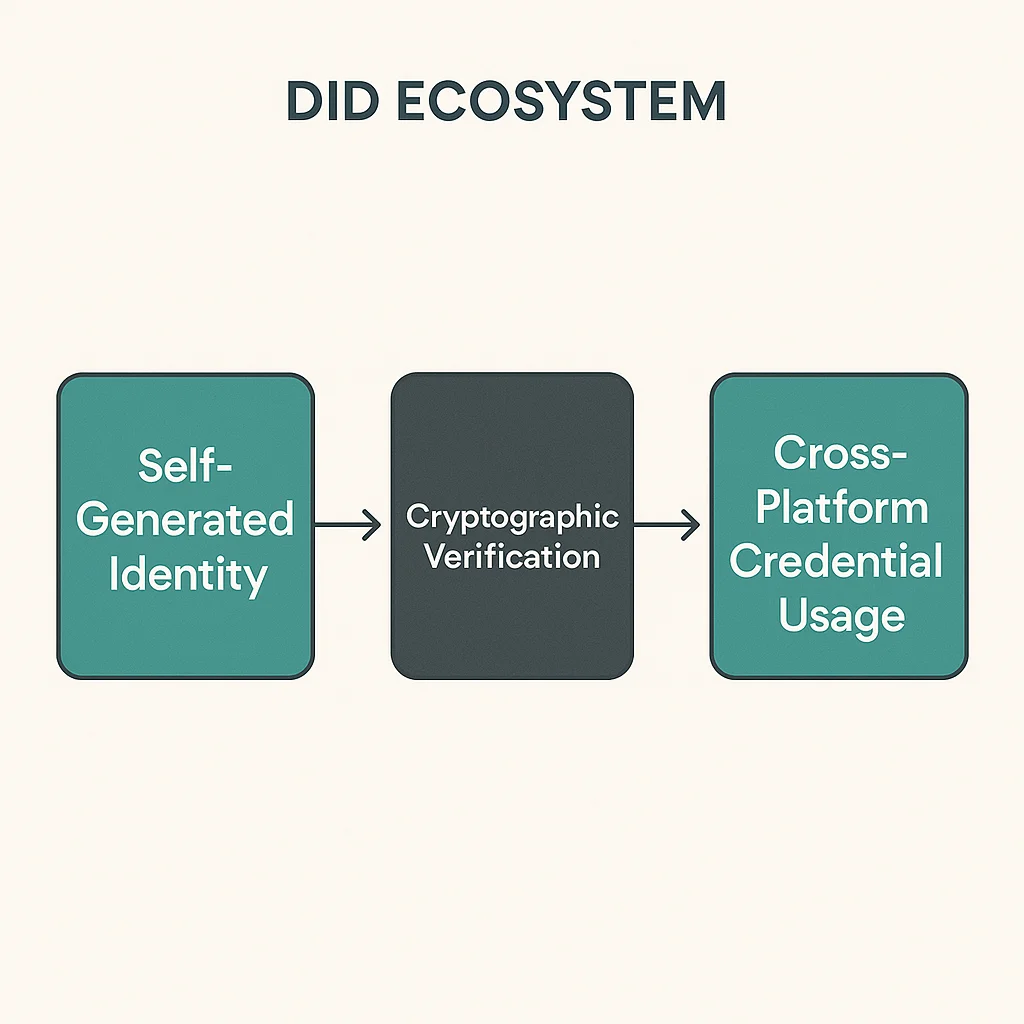
DID ecosystem diagram showing self-generated identity, cryptographic verification, and cross-platform credential usage in a decentralized framework.

Real-World Examples

  • ENS domains provide basic decentralized identity through blockchain-based naming
  • Ceramic Network enables composable identity and reputation across Web3 applications
  • Microsoft ION builds enterprise DID solutions on Bitcoin’s blockchain

Why Beginners Should Care

Privacy control over personal data sharing, allowing selective disclosure of only necessary information for specific use cases.

Reduced platform dependence eliminates risks of losing digital identity when centralized platforms ban accounts or shut down.

Credential portability enables taking verified achievements, reputation, and identity across different platforms and services.

Related Terms: Self-Sovereign Identity, ENS, Verifiable Credentials, Web3

Back to Crypto Glossary

Similar Posts

  • Permit (EIP-2612)

    Permit (EIP-2612): Gasless Approvals Permit functionality allows token approvals through signatures instead of transactions, enabling gasless user experiences for DeFi interactions. It’s like signing a check instead of going to the bank. Permit (EIP-2612) is a token standard that enables gasless approvals through cryptographic signatures rather than on-chain transactions. Users can authorize token spending without…

  • WAGMI (We’re All Gonna Make It)

    WAGMI: Crypto’s Battle Cry WAGMI (We’re All Gonna Make It) is crypto’s rallying cry during tough times. It represents community solidarity and shared optimism about long-term success. WAGMI stands for “We’re All Gonna Make It” – a popular crypto community phrase expressing collective optimism about future success despite current market conditions. It originated from bodybuilding…

  • Fair Distribution

    Fair Distribution: Equitable Token AllocationFair distribution refers to token allocation methods that avoid excessive concentration among founders, early investors, or privileged groups. It's like ensuring everyone gets an equal chance to participate in a community project rather than giving all the benefits to insiders.Fair distribution describes token allocation strategies that provide broad, equitable access to…

  • Private Mempool

    Private Mempool: Protected Transaction PoolsPrivate mempools keep pending transactions hidden from public view until they're included in blocks, preventing front-running and MEV extraction. It's like having a VIP lane that bots can't see.A private mempool is a non-public pool of pending transactions that are not visible to other network participants until they are included in…

  • Metadata

    Metadata: Data About DataMetadata provides information about other data, such as describing what an NFT represents, when it was created, or what properties it has. It's like the label on a file folder that tells you what's inside.Metadata refers to descriptive information about digital assets, transactions, or other data that provides context, properties, and characteristics…

  • Real Yield

    Real Yield: Sustainable Return GenerationReal yield refers to returns generated from actual economic activity and revenue rather than token emissions or inflationary rewards. It's like earning interest from a bank's profitable lending operations instead of them just printing more money to pay you.Real yield describes investment returns generated from genuine economic activity, protocol revenue, or…