
DeFi Aggregator

DeFi Aggregator: Finding the Best Yields

DeFi aggregators automatically find the best rates across multiple protocols for lending, borrowing, or trading. They’re like Expedia for decentralized finance.

A DeFi aggregator is a platform that searches multiple protocols to find the best rates, yields, or liquidity for users’ specific needs. Instead of manually checking dozens of platforms, aggregators do the comparison shopping automatically.

How DeFi Aggregators Work

Rate comparison across lending protocols, DEXs, and yield farming opportunities to identify the highest returns or lowest costs for specific actions.

Smart routing splits large trades across multiple DEXs to minimize slippage and maximize execution efficiency compared to single-platform trades.

Yield optimization automatically moves funds between protocols as rates change, maintaining exposure to the highest available returns.
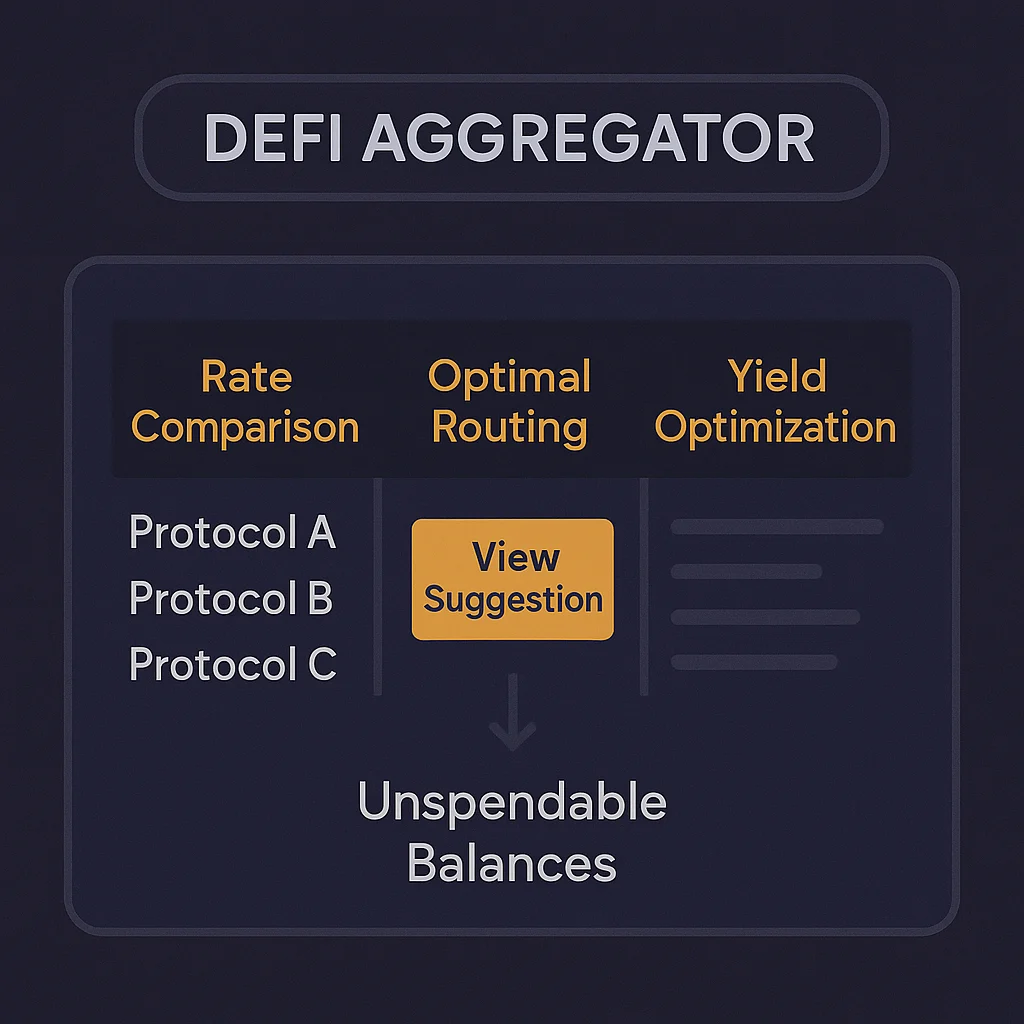
DeFi aggregator dashboard displaying rate comparisons, optimal routing suggestions, and yield optimization strategies across multiple protocols.

Real-World Examples

  • 1inch aggregates DEX liquidity to find best trading prices across multiple exchanges
  • Yearn Finance automatically moves deposited funds to highest-yielding opportunities
  • Zapper simplifies complex DeFi interactions through a single interface

Why Beginners Should Care

Time savings from aggregators eliminate the need to manually research and compare rates across dozens of constantly changing DeFi protocols.

Better execution through smart routing and yield optimization can significantly improve returns compared to single-protocol strategies.

Smart contract risk increases when aggregators interact with multiple protocols, as vulnerabilities in any connected platform could affect aggregator users.

Related Terms: Yield Farming, DEX, Slippage, Yield Optimization

Back to Crypto Glossary

Similar Posts

  • Wallet Security

    Wallet Security: Protecting Cryptocurrency AccessWallet security encompasses all measures taken to protect cryptocurrency wallets from theft, loss, or unauthorized access. It's like comprehensive security for your digital bank account.Wallet security refers to practices, technologies, and procedures used to protect cryptocurrency wallets and their contents from various threats including hacking, phishing, and user error. Proper security is…

  • Synthetic Asset

    Synthetic Asset: Creating Anything on Blockchain Synthetic assets are blockchain tokens that track the value of real-world assets like stocks, commodities, or currencies. They’re like financial derivatives but programmable and globally accessible. A synthetic asset is a tokenized derivative that tracks the price of an underlying asset without requiring direct ownership of that asset. Smart…

  • Price Stability

    Price Stability: Maintaining Consistent ValuePrice stability refers to maintaining consistent cryptocurrency values over time with minimal volatility. It enables practical use as medium of exchange and store of value.Price stability describes the characteristic of maintaining relatively constant value over time with limited price fluctuations. This stability is essential for practical cryptocurrency adoption in payments and savings.How…

  • Self-Sovereign Identity

    Self-Sovereign Identity: You Own Your Digital SelfSelf-sovereign identity puts you in complete control of your personal data and digital credentials. It's like having a passport that you issue and manage yourself, without needing government approval.Self-sovereign identity (SSI) is a digital identity model where individuals have complete control over their personal data, credentials, and identity verification…

  • |

    zkEVM

    zkEVM: Zero-Knowledge Ethereum Virtual Machine zkEVM provides Ethereum compatibility with zero-knowledge proof validation, enabling existing dApps to run on faster, cheaper networks while maintaining security. It’s like having Ethereum that’s been turbocharged with privacy and speed. zkEVM is a zero-knowledge virtual machine that executes Ethereum transactions and smart contracts while generating cryptographic proofs of correct…

  • Multi-Chain

    Multi-Chain: Using Multiple Blockchain Networks Multi-chain refers to applications, strategies, or ecosystems that operate across multiple different blockchain networks simultaneously. It’s like being multilingual in the blockchain world. Multi-chain describes systems that utilize multiple different blockchain networks rather than being limited to a single chain. This approach leverages the unique strengths of different blockchains while…