
Dynamic Gas Pricing
Dynamic Gas Pricing: Adaptive Fee Markets
Dynamic gas pricing automatically adjusts transaction fees based on network demand. It’s like surge pricing for blockchain transactions – pay more when everyone wants to transact.
Dynamic gas pricing is a mechanism that automatically adjusts transaction fees based on current network congestion and demand. This creates more efficient fee markets while maintaining network performance during high usage periods.
How Dynamic Gas Pricing Works
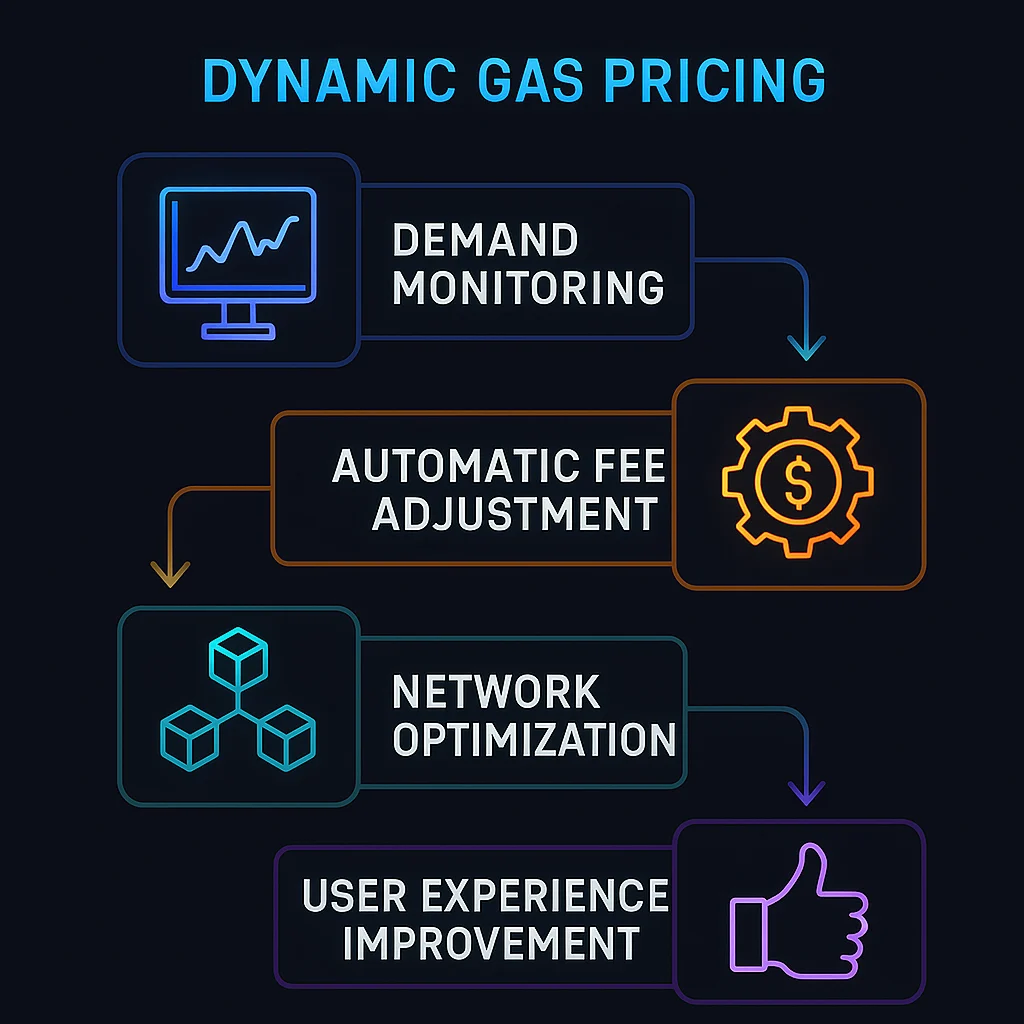
Demand monitoring tracks network usage and mempool congestion to determine appropriate fee levels that balance accessibility with spam prevention.
Automatic adjustment increases fees during high demand periods and decreases them when the network is less congested, creating responsive pricing.
User experience improvements through predictable fee estimation and reduced need for manual gas price optimization.
Real-World Examples
- EIP-1559 introduced dynamic base fees on Ethereum that burn with usage
- Polygon uses dynamic fee adjustment to maintain consistent block times
- Various Layer 2s implement dynamic pricing to optimize for their specific use cases
Why Beginners Should Care
Predictable costs as dynamic pricing provides better fee estimation and reduces the guesswork in transaction pricing.
Network efficiency through automatic congestion management that maintains performance without manual intervention.
Fair access as dynamic pricing prevents spam while ensuring legitimate users can always access the network by paying appropriate fees.
Related Terms: Gas Fees, EIP-1559, Network Congestion, Fee Market