
Encrypted Mempool

Encrypted Mempool: Private Transaction Pools

Encrypted mempools hide transaction details until inclusion in blocks, preventing front-running and MEV extraction. It’s like sending sealed bids instead of announcing your strategy publicly.

An encrypted mempool contains pending transactions that are cryptographically hidden from public view until block inclusion. This prevents sophisticated actors from front-running or extracting MEV from regular users’ transactions.

How Encrypted Mempools Work

Cryptographic hiding conceals transaction details like amounts, tokens, and intended actions until validators include them in blocks.

Commit-reveal schemes require users to first commit to encrypted transactions, then reveal details after inclusion to prevent front-running.

Threshold decryption may require multiple parties to collaborate in revealing transaction details, preventing single-party censorship.
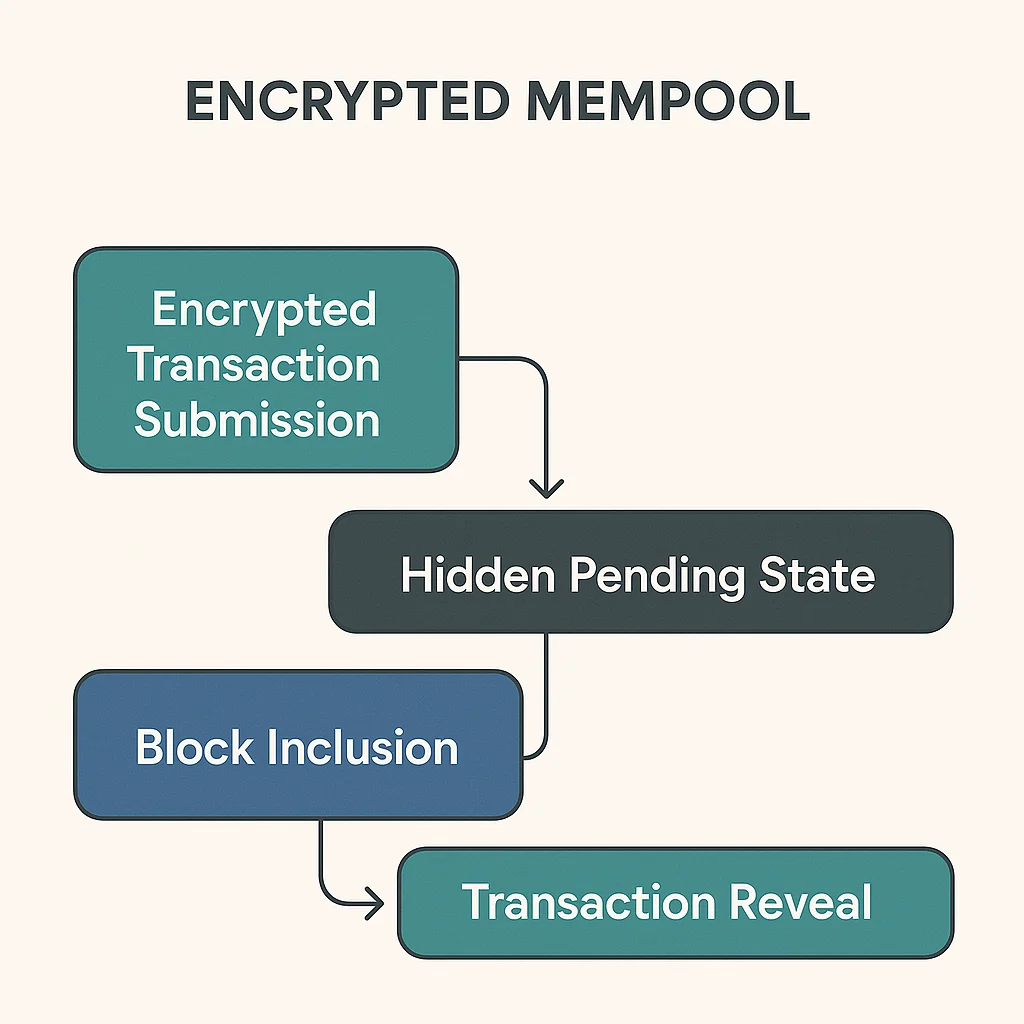
Encrypted mempool flow showing steps from encrypted transaction submission through hidden pending state to block inclusion and final transaction reveal.

Real-World Examples

  • Flashbots Protect provides MEV protection through private transaction pools
  • Shutter Network develops threshold encryption for Ethereum transactions
  • Aztec Network uses encrypted state for privacy-preserving smart contracts

Why Beginners Should Care

MEV protection significantly reduces the hidden tax on DeFi transactions that bots extract through front-running and sandwich attacks.

Fairer markets emerge when sophisticated actors can’t see pending transactions and position themselves advantageously.

Privacy enhancement protects trading strategies and financial information from public blockchain surveillance.

Related Terms: MEV, Front-Running, Private Mempool, Threshold Encryption

Back to Crypto Glossary

Similar Posts

  • Multi-Chain

    Multi-Chain: Using Multiple Blockchain Networks Multi-chain refers to applications, strategies, or ecosystems that operate across multiple different blockchain networks simultaneously. It’s like being multilingual in the blockchain world. Multi-chain describes systems that utilize multiple different blockchain networks rather than being limited to a single chain. This approach leverages the unique strengths of different blockchains while…

  • Custom Blockchain

    Custom Blockchain: Purpose-Built NetworksA custom blockchain is a network designed for specific use cases rather than general-purpose applications. It's like building a specialized tool for a particular job instead of using a multi-purpose tool.A custom blockchain is a purpose-built blockchain network designed to meet specific requirements for particular applications or use cases. These networks optimize for…

  • KYC (Know Your Customer)

    KYC (Know Your Customer): The Identity Check KYC is crypto’s concession to traditional finance. Exchanges collect your personal information to comply with government regulations and prevent money laundering. Know Your Customer (KYC) is the process of verifying customer identities through government-issued documents and personal information. Most regulated cryptocurrency exchanges require KYC before allowing significant trading…

  • Proof of History

    Proof of History: Solana’s Time Innovation Proof of History creates a cryptographic timestamp that proves events occurred in a specific sequence. It’s like having an unforgeable clock built into the blockchain. Proof of History (PoH) is a consensus mechanism that creates a historical record proving that events occurred at specific moments in time. It uses…

  • Inflation

    Inflation: Currency Value ErosionInflation in cryptocurrency refers to the decrease in purchasing power when token supply increases faster than demand. It's like having your slice of pizza get smaller when the pizza is cut into more pieces, even though the whole pizza stays the same size.Inflation describes the reduction in purchasing power of cryptocurrency tokens…

  • Wallet Drainer

    Wallet Drainer: Malicious Fund Extraction Wallet drainers are malicious smart contracts or applications designed to steal all assets from connected wallets through deceptive transaction approvals. They’re digital pickpockets with smart contract superpowers. A wallet drainer is malicious software that tricks users into signing transactions that grant unlimited access to their cryptocurrency holdings. These attacks often…