
Flashbots

Flashbots: MEV Infrastructure

Flashbots is a research and development organization that builds infrastructure to mitigate the negative externalities of MEV. They’re trying to make the blockchain economy more fair and transparent.

Flashbots develops tools and infrastructure to democratize MEV extraction and reduce its harmful effects on regular users. Their products include private mempools, MEV-protected transaction ordering, and research into fair value extraction mechanisms.

How Flashbots Works

Private mempools allow users to submit transactions without revealing them publicly until inclusion, preventing front-running and sandwich attacks.

MEV-Boost enables Ethereum validators to maximize their revenue from block production while maintaining network decentralization and censorship resistance.

Research initiatives study MEV’s impact on network security, user experience, and economic fairness to guide development of better solutions.
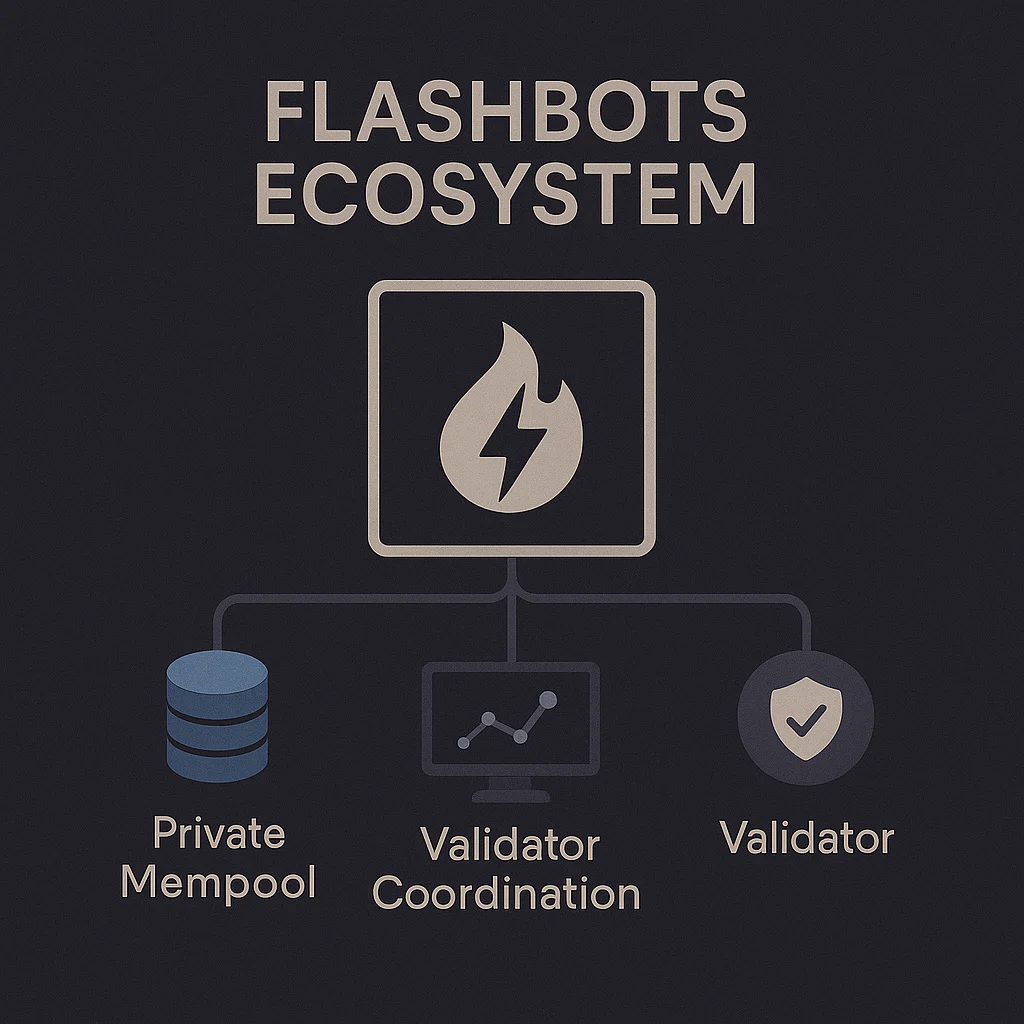
Flashbots ecosystem diagram showing private mempool, validator coordination, MEV protection, and research components.

Real-World Examples

  • Ethereum block building uses Flashbots infrastructure for over 90% of blocks since the Merge
  • MEV protection services route transactions through Flashbots to reduce user exploitation
  • Academic research on MEV economics and mitigation strategies guides protocol development

Why Beginners Should Care

User protection from Flashbots infrastructure reduces the hidden tax of MEV extraction that affects almost every DeFi transaction.

Democratization efforts aim to make MEV benefits available to regular users rather than only sophisticated bots and institutional actors.

Centralization concerns arise as Flashbots infrastructure becomes critical to Ethereum’s operation, raising questions about single points of failure.

Related Terms: MEV, Private Mempool, Block Building, Front-Running

Back to Crypto Glossary

Similar Posts

  • Intent-Based

    Intent-Based: Goal-Oriented Transaction DesignIntent-based systems allow users to specify desired outcomes rather than exact transaction steps, with the system automatically determining optimal execution paths. It's like telling a travel agent your destination and preferences, then letting them handle all the complex booking details and connections.Intent-based refers to blockchain systems where users express their desired outcomes…

  • Smart Contract Risk

    Smart Contract Risk: Code-Based VulnerabilitiesSmart contract risk encompasses all potential vulnerabilities and failures in automated blockchain programs. It's like the risk that the software controlling your digital money might have bugs or be exploited.Smart contract risk refers to potential losses from bugs, vulnerabilities, exploits, or unexpected behavior in smart contract code that controls cryptocurrency assets…

  • Liquid Staking

    Liquid Staking: Staking Without LockupsLiquid staking allows earning staking rewards while maintaining the ability to trade or use staked assets through tokenized representations. It's like having your cake and eating it too.Liquid staking enables users to stake cryptocurrency for rewards while receiving liquid tokens representing their staked position that can be traded or used in…

  • Token Launch

    Token Launch: Cryptocurrency Project DebutA token launch is the initial release of a new cryptocurrency token to the public market. It's like a product launch where a company introduces a new product, but for digital currencies instead of physical goods.Token launch refers to the process of introducing a new cryptocurrency token to the market, including…

  • Cross-Chain Messaging

    Cross-Chain Messaging: Inter-Blockchain Communication Cross-chain messaging enables smart contracts on different blockchains to communicate and trigger actions across networks. It’s like having a universal translator for blockchain conversations. Cross-chain messaging allows smart contracts on different blockchain networks to send data, trigger functions, and coordinate actions across multiple chains. This enables true interoperability beyond simple asset…

  • Restaking Slashing

    Restaking Slashing: Enhanced Penalty Risks Restaking slashing involves penalties from multiple protocols simultaneously, amplifying potential losses for validators who secure additional networks. It’s like being liable for multiple insurance policies with a single accident. Restaking slashing refers to the enhanced penalty mechanisms that apply when validators use restaked assets to secure multiple protocols, potentially facing…