
FUD (Fear, Uncertainty, Doubt)

FUD: Fear, Uncertainty, and Doubt

FUD is FOMO’s evil twin. While FOMO makes you buy at peaks, FUD makes you sell at bottoms. Understanding FUD helps you think clearly when markets panic.

FUD stands for Fear, Uncertainty, and Doubt – negative sentiment spread to influence crypto prices downward. Sometimes it’s legitimate concerns, often it’s manufactured panic designed to shake out weak hands.

How FUD Works

Legitimate FUD includes real threats like regulatory crackdowns, exchange hacks, or technical vulnerabilities. Smart investors pay attention to genuine risks.

Manufactured FUD comes from competitors, short sellers, or media seeking clicks. They amplify minor issues or spread misleading information to trigger panic selling.

Social media echo chambers amplify both types of FUD. One negative headline becomes a thousand panicked posts, creating self-reinforcing fear cycles.
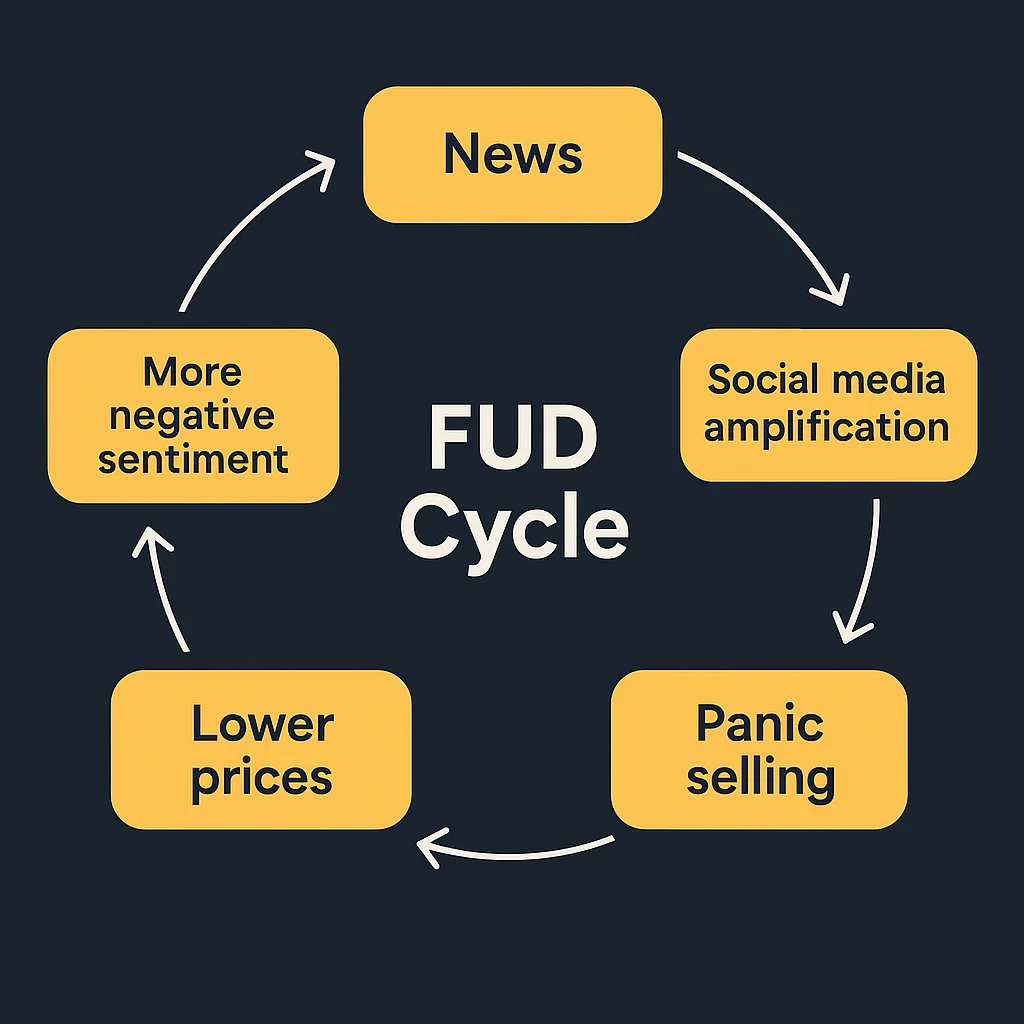
FUD cycle infographic showing news, social media amplification, panic selling, lower prices, and negative sentiment

Real-World Examples

  • China ban news – Recycled every few months, causes temporary price drops
  • Tether collapse fears – Persistent despite ongoing operations
  • Environmental concerns – Bitcoin mining energy usage criticism

Why Beginners Should Care

Learning to distinguish between legitimate concerns and manufactured FUD is crucial for long-term success. Markets overreact to both positive and negative news.

Real risks deserve attention – regulatory changes, technical vulnerabilities, and macroeconomic factors matter. But temporary news cycles often create buying opportunities for patient investors.

Related Terms: FOMO, Bear Market, Paper Hands, Market Manipulation

Back to Crypto Glossary

Similar Posts

  • Liquidity Sniping

    Liquidity Sniping: Front-Running New Pools Liquidity sniping involves immediately buying tokens when new liquidity pools are created, often using bots to front-run regular users. It’s like cutting in line at the grand opening sale. Liquidity sniping is the practice of using automated systems to immediately purchase tokens as soon as new liquidity pools go live,…

  • Secure Element

    Secure Element: Hardware Security ChipA secure element is a tamper-resistant hardware chip designed to store sensitive information like private keys. It's like having a tiny vault built into your device that's extremely difficult to break into.A secure element is a specialized hardware component designed to provide isolated, tamper-resistant storage and processing for sensitive data such…

  • Persistence

    Persistence: Maintaining Data Across TimePersistence refers to data storage that survives system restarts, crashes, or power failures. In blockchain, it ensures transaction history remains permanently accessible and unalterable.Persistence describes the characteristic of data storage systems that maintain information across system interruptions, ensuring data survives restarts, failures, or other disruptions. Blockchain networks achieve persistence through distributed storage…

  • Full Node

    Full Node: Complete Blockchain ParticipantA full node maintains a complete copy of the blockchain and validates all transactions independently. It's like having the complete library instead of just borrowing books when you need them.A full node is a computer that downloads, stores, and validates the complete blockchain history while participating in network consensus and transaction…

  • Market Manipulation

    Market Manipulation: Artificial Price ControlMarket manipulation involves artificially influencing cryptocurrency prices through coordinated trading, false information, or abusive practices. It's financial fraud adapted for the digital age.Market manipulation refers to illegal or unethical activities designed to artificially inflate or deflate cryptocurrency prices for personal gain. These activities harm other investors and distort natural price discovery mechanisms.How…

  • Bagholder

    Bagholder: Stuck with Worthless Tokens A bagholder is someone stuck holding cryptocurrency that has lost most of its value with little hope of recovery. It’s crypto’s version of being left holding the bag. A bagholder is an investor who continues holding a cryptocurrency that has significantly decreased in value, often because they’re unable or unwilling…