
Launchpad

Launchpad: The Crypto Startup Accelerator

Launchpads are platforms that help new crypto projects raise funds and launch tokens. They’re like Kickstarter for cryptocurrencies, but with more speculation and less product delivery.

A launchpad is a platform that facilitates fundraising and token launches for new cryptocurrency projects. They provide infrastructure, marketing, and community access to help projects raise capital and distribute tokens to early supporters.

How Launchpads Work

Project vetting screens potential launches for legitimacy, though quality varies significantly between different launchpad platforms and market conditions.

Token sales occur through various mechanisms like fixed prices, bonding curves, or Dutch auctions, often with whitelisting requirements or lottery systems for popular projects.

Community building helps projects gain exposure to existing investor communities who are actively seeking new investment opportunities in early-stage crypto projects.
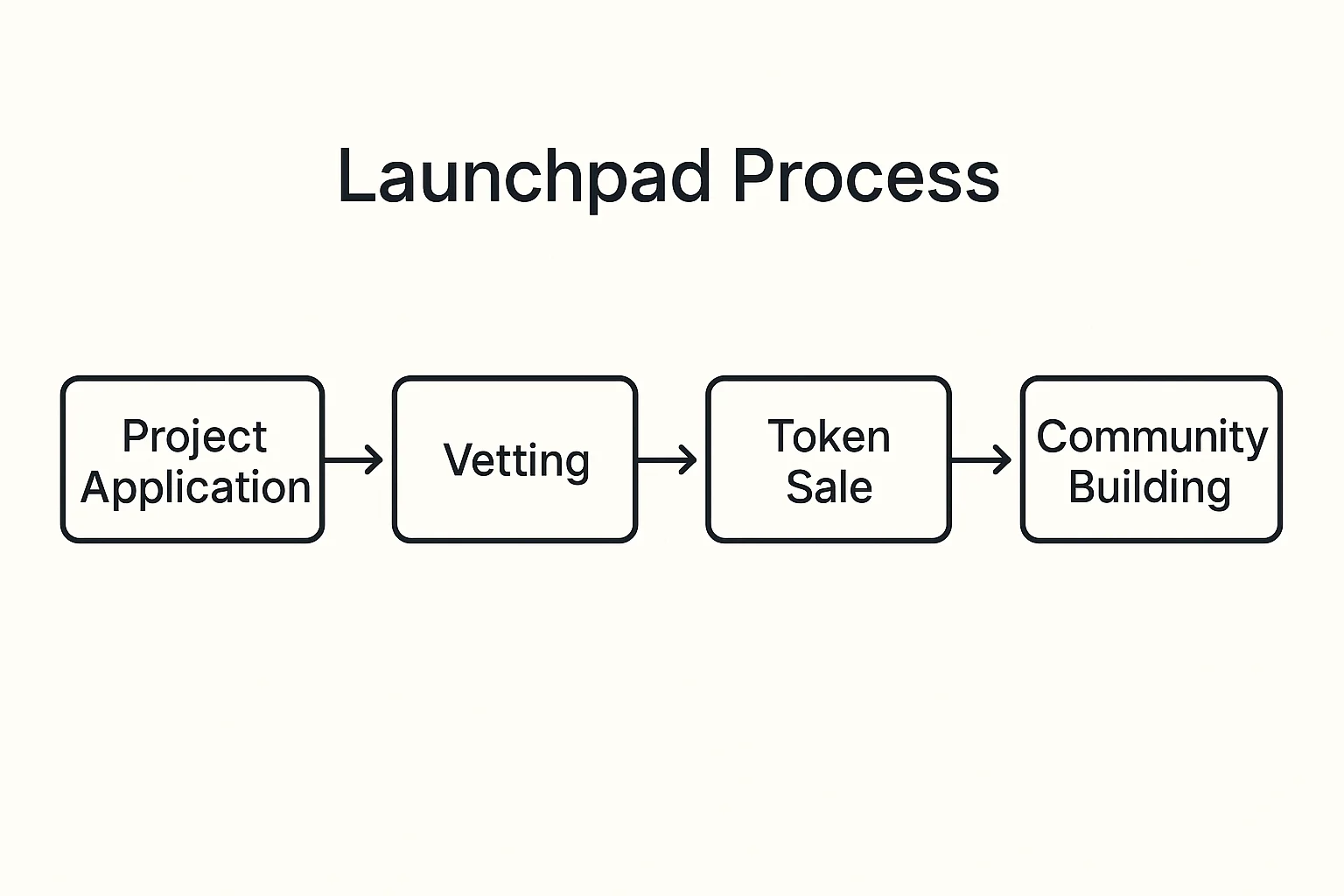
Launchpad process flowchart showing steps from project application to vetting, token sale, and community building.

Real-World Examples

  • Binance Launchpad has launched major projects like Polygon (MATIC) and Sandbox (SAND)
  • Polkastarter focuses on cross-chain token launches and DeFi projects
  • DAO Maker combines launchpad services with community-driven project incubation

Why Beginners Should Care

Early access to new projects can provide significant returns, but most launchpad projects fail or lose value after initial hype subsides.

High risk exists since many projects are experimental or lack working products, making launchpad investing closer to speculation than traditional investment.

FOMO marketing creates artificial urgency around launches, often leading to poor investment decisions based on fear of missing out rather than fundamental analysis.

Related Terms: Token Sale, ICO, Whitelist, Project Vetting

Back to Crypto Glossary

Similar Posts

  • Buyback

    Buyback: Token Repurchase ProgramsBuyback refers to projects repurchasing their own tokens from the open market, often to reduce supply or return value to token holders. It's like a company buying back its own stock to increase the value of remaining shares.Buyback describes the process where cryptocurrency projects repurchase their own tokens from the open market…

  • Transaction Privacy

    Transaction Privacy: Protecting Financial InformationTransaction privacy involves keeping cryptocurrency transaction details confidential while maintaining network security and functionality. It's like having a private bank account in a transparent financial system.Transaction privacy refers to techniques and technologies that protect the confidentiality of cryptocurrency transaction details including amounts, participants, and transaction history. This enables financial privacy while maintaining…

  • Synthetic Asset

    Synthetic Asset: Creating Anything on Blockchain Synthetic assets are blockchain tokens that track the value of real-world assets like stocks, commodities, or currencies. They’re like financial derivatives but programmable and globally accessible. A synthetic asset is a tokenized derivative that tracks the price of an underlying asset without requiring direct ownership of that asset. Smart…

  • Sanctions

    Sanctions: Government Financial RestrictionsCryptocurrency sanctions involve government restrictions on specific addresses, entities, or services to prevent them from accessing financial systems. They're economic weapons adapted for the digital age.Sanctions refer to government-imposed restrictions that prohibit individuals, entities, or services from accessing financial systems or conducting specific activities. In crypto, this includes blocking addresses and restricting access…

  • EVM Compatibility

    EVM Compatibility: Ethereum Code EverywhereEVM compatibility allows blockchain networks to run Ethereum applications without modification. It's like having different computers that can all run the same software.EVM compatibility refers to blockchain networks that can execute Ethereum smart contracts and support Ethereum-based applications without requiring code changes. This enables easy migration and cross-deployment of Ethereum applications.How EVM…

  • Stable Yield

    Stable Yield: Predictable DeFi Returns Stable yield refers to DeFi strategies that provide consistent returns with lower volatility than traditional yield farming. It’s like finding the boring but reliable investment in a casino full of slot machines. Stable yield strategies focus on generating consistent returns from DeFi protocols with lower risk and volatility than high-APY…