
Play-to-Earn (P2E)

Play-to-Earn (P2E): Gaming Meets Income

Play-to-earn games let players earn cryptocurrency and NFTs through gameplay. It’s turned gaming from entertainment expense into potential income source for millions worldwide.

Play-to-earn (P2E) is a gaming model where players earn cryptocurrency tokens, NFTs, or other digital assets with real-world value through gameplay activities. Players own in-game assets that can be traded or sold outside the game.

How Play-to-Earn Works

Blockchain integration records game assets as NFTs and tracks token rewards on public ledgers. This gives players true ownership of items that persist even if the game company disappears.

Earning mechanisms include completing quests, winning battles, breeding creatures, or providing value to other players through crafting or services within the game economy.

Scholarship programs allow players without startup capital to borrow expensive NFT characters from investors, splitting earnings between player labor and investor capital.
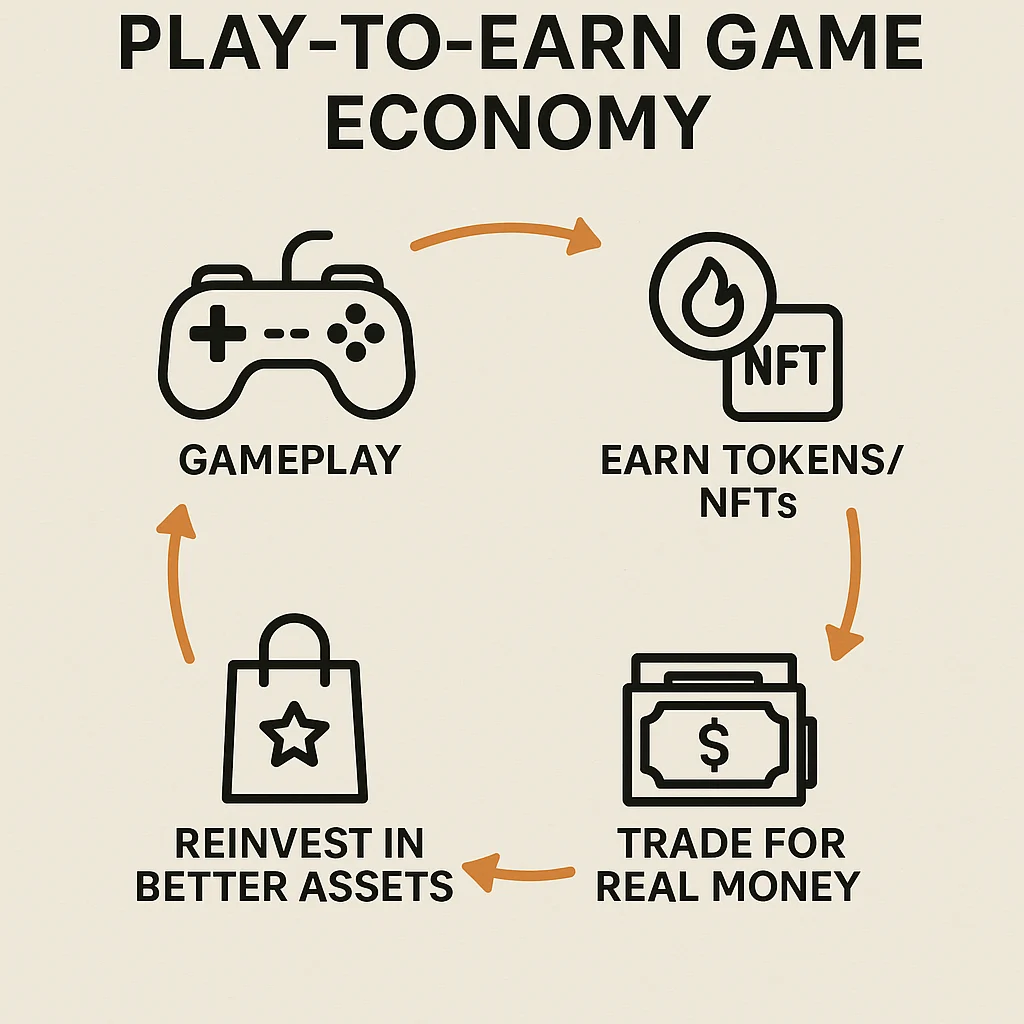
Infographic showing play-to-earn game economy cycle from gameplay to earning tokens/NFTs, trading for money, and reinvesting in assets

Real-World Examples

  • Axie Infinity – Players earned thousands monthly during peak, especially in Philippines and Venezuela
  • Splinterlands – Card-based battles with tradeable NFT cards and daily token rewards
  • STEPN – Move-to-earn app rewarding users for walking and running

Why Beginners Should Care

P2E can provide real income in countries with lower living costs, but earnings have crashed dramatically from 2021-2022 peaks as token prices fell and player bases saturated.

High upfront costs often required to start playing – quality NFT characters can cost hundreds or thousands of dollars before earning anything.

Sustainability questions remain about whether P2E economies can maintain high earning rates as player bases grow and token inflation increases.

Related Terms: NFT, Gaming Token, Metaverse, Scholarship

Back to Crypto Glossary

Similar Posts

  • L2 Sequencer

    L2 Sequencer: Transaction Ordering Engine L2 sequencers determine transaction order on Layer 2 networks, controlling which transactions get included and how they’re arranged. They’re like traffic controllers for blockchain highways. An L2 sequencer is a specialized node that collects, orders, and batches transactions for Layer 2 networks before submitting them to the main blockchain. Sequencers…

  • Token Approval

    Token Approval: Granting Spending PermissionToken approval allows smart contracts to spend tokens on behalf of users through explicit permission mechanisms. It's like giving someone permission to use your credit card with specific spending limits.Token approval is a mechanism that grants smart contracts permission to transfer specific amounts of tokens from user wallets without requiring signatures…

  • Rehypothecation

    Rehypothecation: Reusing Collateral Multiple Times Rehypothecation involves using the same collateral to back multiple obligations simultaneously. It’s like using your house as collateral for three different loans at the same time. Rehypothecation is the practice of using customer assets as collateral for the institution’s own borrowing or trading activities. In DeFi, this creates leverage and…

  • Fractional Ownership

    Fractional Ownership: Shared Asset OwnershipFractional ownership enables multiple people to own portions of expensive assets that would be difficult to purchase individually. It's like buying a slice of expensive real estate instead of the whole property.Fractional ownership refers to dividing ownership of assets into smaller portions that can be owned by multiple parties, typically enabled…

  • Slippage

    Slippage: The Cost of Market Impact Slippage is the difference between expected and actual trade prices. It’s the tax you pay for moving markets when your trade is large relative to available liquidity. Slippage occurs when the execution price of a trade differs from the expected price due to market movement or insufficient liquidity. Large…

  • Block Building

    Block Building: Transaction Assembly ProcessBlock building is the process of selecting and organizing transactions into blocks that will be added to the blockchain. It's like a chef choosing ingredients and assembling them into a complete meal that satisfies both taste and nutritional requirements.Block building refers to the process where miners or validators select, order, and…