
Rehypothecation

Rehypothecation: Reusing Collateral Multiple Times

Rehypothecation involves using the same collateral to back multiple obligations simultaneously. It’s like using your house as collateral for three different loans at the same time.

Rehypothecation is the practice of using customer assets as collateral for the institution’s own borrowing or trading activities. In DeFi, this creates leverage and capital efficiency but increases systemic risk.

How Rehypothecation Works

Collateral reuse allows deposited assets to be lent out or used as backing for additional positions, creating multiple claims on the same underlying assets.

Leverage amplification enables institutions to take larger positions than their actual capital would normally allow through reusing customer deposits.

Chain reactions can occur when asset values decline, triggering margin calls across multiple positions backed by the same underlying collateral.
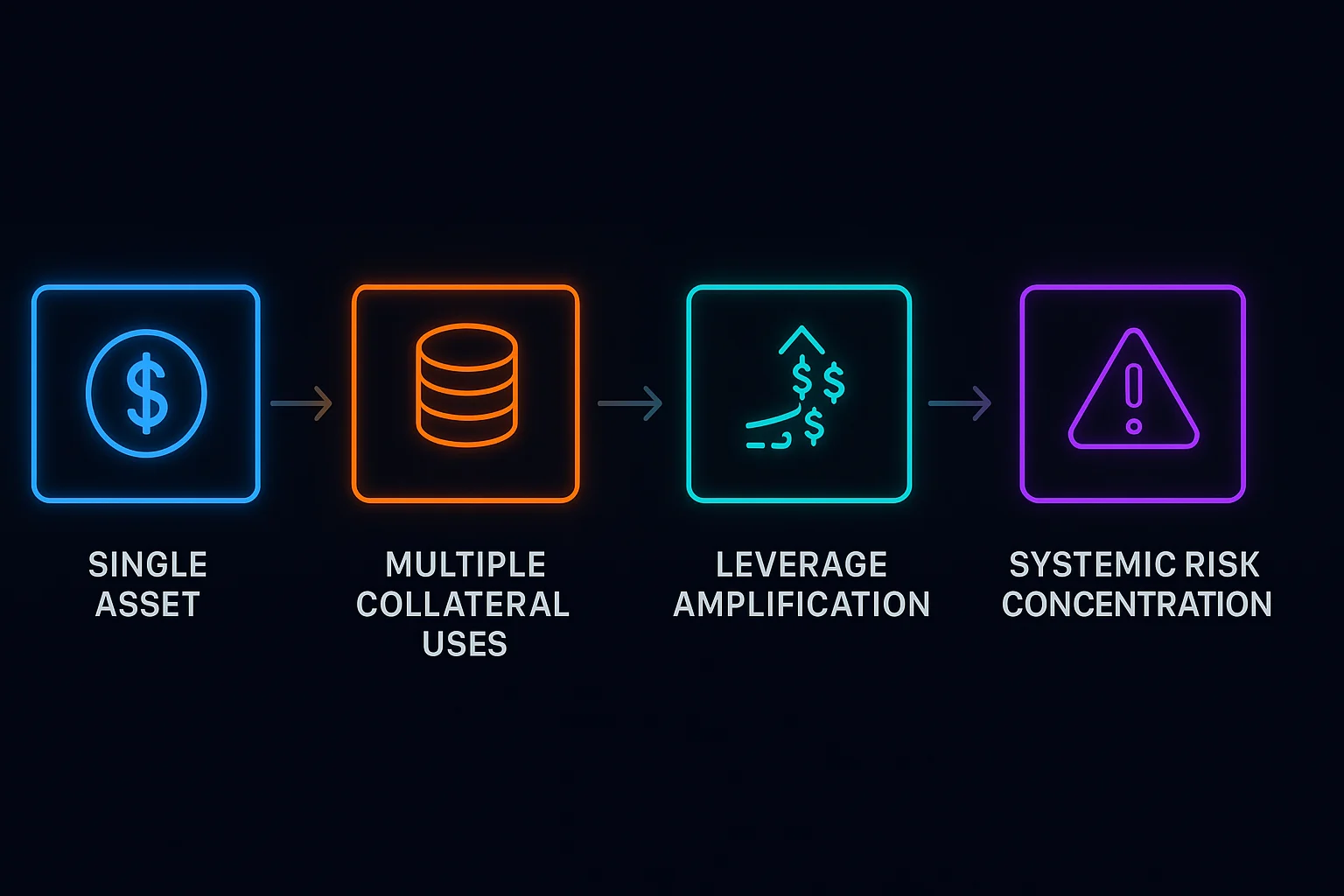
Rehypothecation chain showing single asset, multiple collateral uses, leverage amplification, and systemic risk concentration

Real-World Examples

  • Celsius allegedly rehypothecated customer deposits for high-risk trading activities before bankruptcy
  • Traditional finance has used rehypothecation extensively, contributing to the 2008 financial crisis
  • Some DeFi protocols enable rehypothecation-like mechanics through recursive borrowing

Why Beginners Should Care

Hidden leverage in the system that may not be apparent until market stress reveals the extent of rehypothecation.

Counterparty risk increases when your deposits are being used to back other people’s risky positions without your knowledge.

Regulatory attention as rehypothecation practices often violate customer protection laws in traditional finance.

Related Terms: Leverage, Counterparty Risk, Systemic Risk, Asset Rehypothecation

Back to Crypto Glossary

Similar Posts

  • Economic Security

    Economic Security: Financial Incentive ProtectionEconomic security refers to protection mechanisms that use financial incentives and penalties to secure blockchain networks and protocols. It's like having a security system where guards are paid well for protecting property and fined heavily for allowing break-ins.Economic security describes protection mechanisms that use financial incentives, stake requirements, and economic penalties…

  • Token Supply

    Token Supply: Digital Asset QuantityToken supply refers to the total number of cryptocurrency tokens that exist, will exist, or are available for trading. It's a fundamental factor in determining token economics and value.Token supply encompasses the total quantity of cryptocurrency tokens in existence, including circulating supply available for trading and total supply that will ever…

  • Regulation

    Regulation: Government Rules for CryptoCryptocurrency regulation involves government rules and oversight for digital assets, exchanges, and blockchain businesses. It's the ongoing battle between innovation and compliance.Regulation refers to government laws, rules, and oversight mechanisms that govern cryptocurrency activities, including trading, taxation, anti-money laundering compliance, and consumer protection. Regulatory approaches vary significantly between jurisdictions.How Crypto Regulation WorksLicensing…

  • Front Running

    Front Running: Trading Ahead of OthersFront running involves placing trades ahead of known pending transactions to profit from anticipated price movements. It's like cutting in line when you know someone behind you will move the market.Front running is the practice of placing trades based on advance knowledge of pending transactions that will likely affect asset…

  • zk-SNARKs

    zk-SNARKs: Zero-Knowledge Proof Technologyzk-SNARKs are cryptographic proofs that verify information without revealing the underlying data. They're like proving you know a secret without telling anyone what the secret actually is.zk-SNARKs (Zero-Knowledge Succinct Non-Interactive Arguments of Knowledge) are cryptographic proofs that allow verification of computations without revealing the inputs or intermediate steps. This enables privacy and scalability…

  • Collateral Ratio

    Collateral Ratio: Loan Security MeasurementCollateral ratio measures the value of assets securing a loan compared to the loan amount. It's like the down payment percentage when buying a house with a mortgage.Collateral ratio is the percentage relationship between the value of collateral assets and the amount borrowed against them. Higher ratios provide more security for lenders…