
State Channel

State Channel: Off-Chain Interaction Highways

State channels enable instant, low-cost transactions between parties by moving interactions off-chain while maintaining blockchain security. It’s like having a private highway between two cities.

A state channel is a two-way communication channel between blockchain users that enables off-chain transactions with on-chain security guarantees. Participants can transact instantly and cheaply, settling final balances on the main blockchain.

How State Channels Work

Channel opening requires both parties to lock funds in a smart contract that enforces the rules smart contract rfor off-chain state updates.

Off-chain updates happen instantly between parties without broadcasting to the blockchain, enabling real-time interactions with minimal costs.

Dispute resolution mechanisms allow either party to challenge invalid state updates by submitting proofs to the on-chain contract.
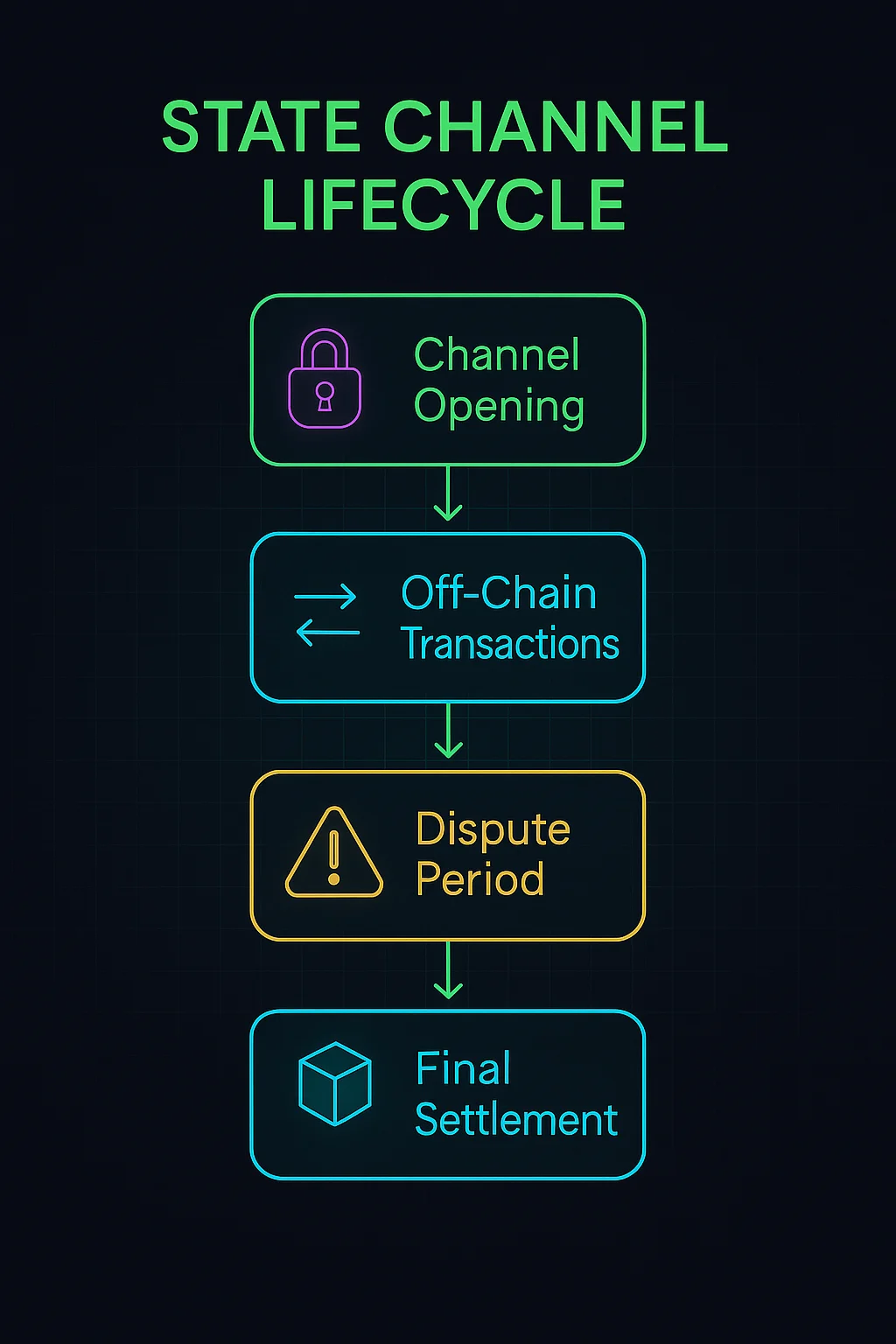
Infographic showing the state channel lifecycle: channel opening, off-chain transactions, dispute period, and final settlement

Real-World Examples

  • Lightning Network enables instant Bitcoin payments through payment channels
  • Connext provides Ethereum state channels for fast, cheap transfers
  • Gaming applications use state channels for real-time multiplayer interactions

Why Beginners Should Care

Instant finality for payments and interactions without waiting for blockchain confirmation times.

Low costs since only channel opening and closing require on-chain transactions regardless of off-chain activity volume.

Complexity requirements for channel management, dispute handling, and liquidity routing that limit mainstream adoption.

Related Terms: Lightning Network, Payment Channel, Layer 2, Dispute Resolution

Back to Crypto Glossary

Similar Posts

  • Gas Optimization

    Gas Optimization: Reducing Transaction CostsGas optimization involves techniques to minimize the computational cost of blockchain transactions and smart contracts. It's like finding the most fuel-efficient route for your digital transactions.Gas optimization refers to practices and techniques used to reduce the gas consumption of blockchain transactions and smart contract operations. This minimizes transaction costs and improves application…

  • Bonding Curve

    Bonding Curve: Algorithmic Token Pricing Bonding curves use mathematical formulas to automatically price tokens based on supply. As more tokens get bought, prices increase predictably according to the curve’s formula. A bonding curve is an algorithmic pricing mechanism that determines token price based on token supply through a mathematical function. Prices increase as supply grows…

  • Gas Token

    Gas Token: Optimizing Transaction Costs Gas tokens store cheap gas for later use when network fees are high. It’s like buying gasoline when prices are low and using it when prices spike. A gas token is a cryptocurrency designed to optimize transaction costs by storing cheap gas during low-demand periods for use when fees are…

  • Minting

    Minting: Creating New Tokens or NFTs Minting is the moment digital assets come into existence. Whether it’s new cryptocurrency tokens or unique NFTs, minting transforms code into valuable digital property. Minting is the process of creating new tokens or NFTs by executing a smart contract function that adds them to a blockchain. It’s like printing…

  • Node Operator

    Node Operator: Network Infrastructure Providers Node operators run the computers that power blockchain networks. They’re the internet service providers of crypto – invisible but essential infrastructure. A node operator is an individual or organization that runs blockchain network infrastructure by maintaining nodes that validate transactions, store data, and relay information. They provide the computational backbone…

  • Market Cycle

    Market Cycle: Recurring Price PatternsMarket cycles are recurring patterns of price movements in cryptocurrency markets driven by investor psychology and market dynamics. They're like seasons that markets go through repeatedly over time.Market cycles refer to recurring patterns of price appreciation and depreciation in cryptocurrency markets driven by alternating periods of optimism and pessimism among investors. These…