
Synthetic Asset

Synthetic Asset: Creating Anything on Blockchain

Synthetic assets are blockchain tokens that track the value of real-world assets like stocks, commodities, or currencies. They’re like financial derivatives but programmable and globally accessible.

A synthetic asset is a tokenized derivative that tracks the price of an underlying asset without requiring direct ownership of that asset. Smart contracts use price feeds to maintain the synthetic’s value relative to its underlying reference.

How Synthetic Assets Work

Price oracles provide real-time data about underlying assets, enabling smart contracts to maintain accurate pegs between synthetics and their targets.

Collateralization backs synthetic assets with cryptocurrency deposits, often over-collateralized to account for price volatility and ensure redemption capability.

Liquidation mechanisms protect the system when collateral values fall too low, automatically selling collateral to maintain backing ratios.
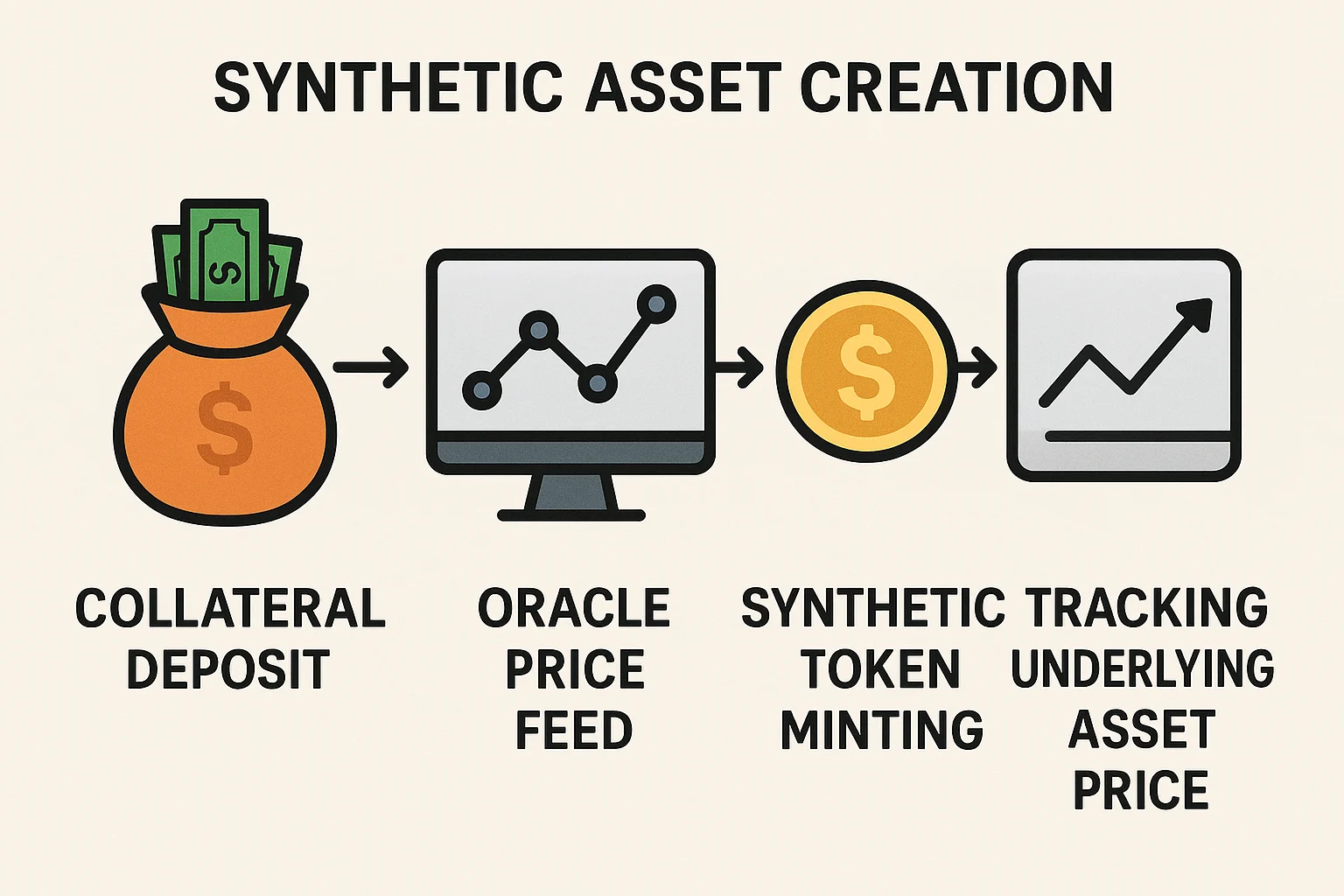
"Diagram showing the synthetic asset creation process: collateral deposit, oracle price feed, synthetic token minting, and asset price tracking."

Real-World Examples

  • Synthetix creates synthetic stocks, commodities, and currencies backed by SNX token collateral
  • Mirror Protocol offers synthetic U.S. stocks accessible globally without traditional brokerage accounts
  • UMA enables creation of custom synthetic assets for any trackable data feed

Why Beginners Should Care

Global access to traditional assets through synthetics bypasses geographic restrictions and traditional financial gatekeepers that limit investment options.

24/7 trading of synthetic stocks and commodities provides constant market access unlike traditional markets with limited hours and holidays.

Regulatory uncertainty surrounds synthetic assets as they may be classified as securities in some jurisdictions, affecting their availability and legal status.

Related Terms: Oracle, Collateral, Price Feed, Derivatives

Back to Crypto Glossary

Similar Posts

  • Ledger

    Ledger: Hardware Wallet Security Leader Ledger is a leading hardware wallet company that provides secure offline storage for cryptocurrency private keys. They’re like the Fort Knox of crypto storage devices. Ledger is a hardware wallet manufacturer that creates secure devices for storing cryptocurrency private keys offline, protecting them from online threats and hacking attempts. These…

  • Omnichain

    Omnichain: Universal Blockchain ConnectivityOmnichain refers to applications and protocols that operate seamlessly across multiple blockchain networks as if they were a single unified system. It's like having apps that work on every phone brand without modification.Omnichain describes systems that can operate across multiple blockchain networks simultaneously, providing unified functionality and user experiences regardless of which…

  • Node

    Node: The Network’s Backbone Nodes are individual computers that maintain copies of the blockchain and enforce network rules. They’re the distributed infrastructure that makes cryptocurrency possible. A node is a computer that participates in a blockchain network by maintaining a copy of the distributed ledger and relaying transactions. Nodes validate transactions, store blockchain history, and…

  • Node Operator

    Node Operator: Network Infrastructure Providers Node operators run the computers that power blockchain networks. They’re the internet service providers of crypto – invisible but essential infrastructure. A node operator is an individual or organization that runs blockchain network infrastructure by maintaining nodes that validate transactions, store data, and relay information. They provide the computational backbone…

  • Gwei

    Gwei: Ethereum’s Gas Price Unit Gwei is the denomination used for Ethereum gas prices. Understanding gwei helps you avoid overpaying for transactions when the network gets congested. Gwei (gigawei) is a unit of Ethereum’s native currency equal to one billionth of an ETH (10^-9 ETH). It’s the standard unit for expressing gas prices, making it…

  • KYC (Know Your Customer)

    KYC (Know Your Customer): The Identity Check KYC is crypto’s concession to traditional finance. Exchanges collect your personal information to comply with government regulations and prevent money laundering. Know Your Customer (KYC) is the process of verifying customer identities through government-issued documents and personal information. Most regulated cryptocurrency exchanges require KYC before allowing significant trading…