
Web3

Web3: The Decentralized Internet Dream

Web3 promises an internet where users own their data, identity, and digital assets instead of tech giants controlling everything. It’s part vision, part reality, part marketing buzzword.

Web3 refers to a decentralized version of the internet built on blockchain technology where users control their own data, identity, and assets rather than relying on centralized platforms. It aims to replace Web2’s platform monopolies with user-owned networks.

How Web3 Works

Decentralized applications (dApps) run on blockchain networks instead of centralized servers, making them censorship-resistant and user-controlled rather than platform-controlled.

Self-sovereign identity lets users control their digital identity across platforms without relying on Google, Facebook, or other centralized identity providers.

Token-based incentives align user and network interests by giving users ownership stakes in the platforms they use, rather than just being unpaid data sources.
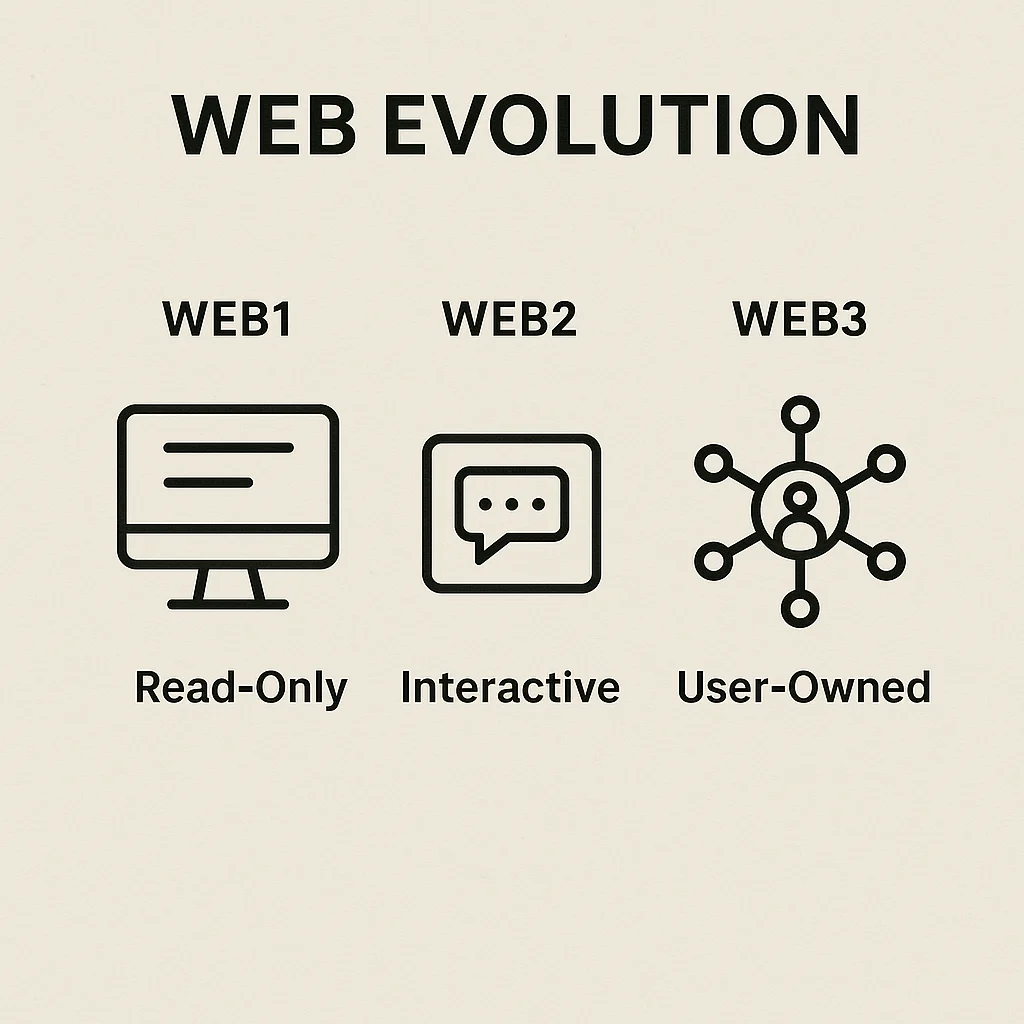
Infographic comparing Web1, Web2, and Web3 with icons and descriptions: read-only, interactive, and user-owned

Real-World Examples

  • ENS domains (.eth addresses) provide decentralized, user-owned website and identity systems
  • IPFS storage offers decentralized file storage resistant to censorship and platform shutdowns
  • DeFi protocols enable financial services without traditional banking intermediaries

Why Beginners Should Care

Web3 adoption remains early-stage with significant user experience challenges compared to polished Web2 applications. Most users aren’t ready to manage private keys for every online interaction.

Decentralization benefits include censorship resistance, platform independence, and user ownership of data and assets created online.

Investment opportunities exist in Web3 infrastructure, but many projects are experimental with uncertain long-term viability and regulatory challenges.

Related Terms: dApp, Decentralization, Self-Sovereign Identity, Token Economy

Back to Crypto Glossary

Similar Posts

  • Ring Signatures

    Ring Signatures: Anonymous Signatures in Groups Ring signatures let any member of a group sign a message without revealing which specific member created the signature. It’s like having a family photo where you know someone took it, but can’t tell who. A ring signature is a cryptographic signature scheme where any member of a group…

  • Due Diligence

    Due Diligence: Research Before InvestmentDue diligence involves thoroughly researching and evaluating cryptocurrency projects before investing. It's like test driving a car and checking its history before buying.Due diligence refers to the comprehensive investigation and analysis of cryptocurrency projects, including technology, team, tokenomics, and market factors before making investment decisions. Proper due diligence helps identify opportunities and…

  • Cross Chain Communication

    Cross Chain Communication: Blockchain Network MessagingCross-chain communication enables different blockchain networks to exchange information and coordinate actions. It's like having universal translators that help different blockchain languages understand each other.Cross-chain communication refers to protocols and technologies that enable different blockchain networks to exchange data, verify states, and coordinate actions across network boundaries. This enables interoperability and…

  • Stealth Address

    Stealth Address: Private Payment DestinationsStealth addresses create unique, one-time addresses for each transaction to enhance privacy by breaking the link between payments and recipient identities. They're like using a different PO box for every package delivery so no one can track all your mail to the same location.Stealth addresses are unique, one-time payment destinations generated…

  • Social Recovery

    Social Recovery: Community-Based Account RecoverySocial recovery allows regaining access to cryptocurrency accounts through trusted contacts rather than relying solely on seed phrases. It's like having friends hold spare keys to your house.Social recovery is a wallet security mechanism that enables account recovery through a network of trusted contacts rather than requiring users to manage seed…

  • Address Clustering

    Address Clustering: Connecting Wallet IdentitiesAddress clustering analyzes blockchain transactions to identify which addresses likely belong to the same user or entity. It's like detective work for digital money trails.Address clustering is a blockchain analysis technique that groups cryptocurrency addresses believed to belong to the same user or entity based on transaction patterns and shared inputs. This…