
ZK-EVM

ZK-EVM: Zero-Knowledge Ethereum Compatibility

ZK-EVM provides Ethereum compatibility while using zero-knowledge proofs for scalability and privacy. It’s like having Ethereum that’s faster, cheaper, and more private.

ZK-EVM is a zero-knowledge rollup that maintains full compatibility with Ethereum’s execution environment while using ZK proofs for validation. This enables existing Ethereum applications to run without modification while benefiting from ZK scalability.

How ZK-EVM Works

EVM compatibility ensures existing smart contracts, tools, and applications work without changes, providing seamless migration from Ethereum.

Zero-knowledge proofs validate transaction execution without revealing details, enabling both scalability and privacy simultaneously.

Bytecode execution processes Ethereum transactions and smart contracts identically to mainnet while generating cryptographic proofs of correctness.
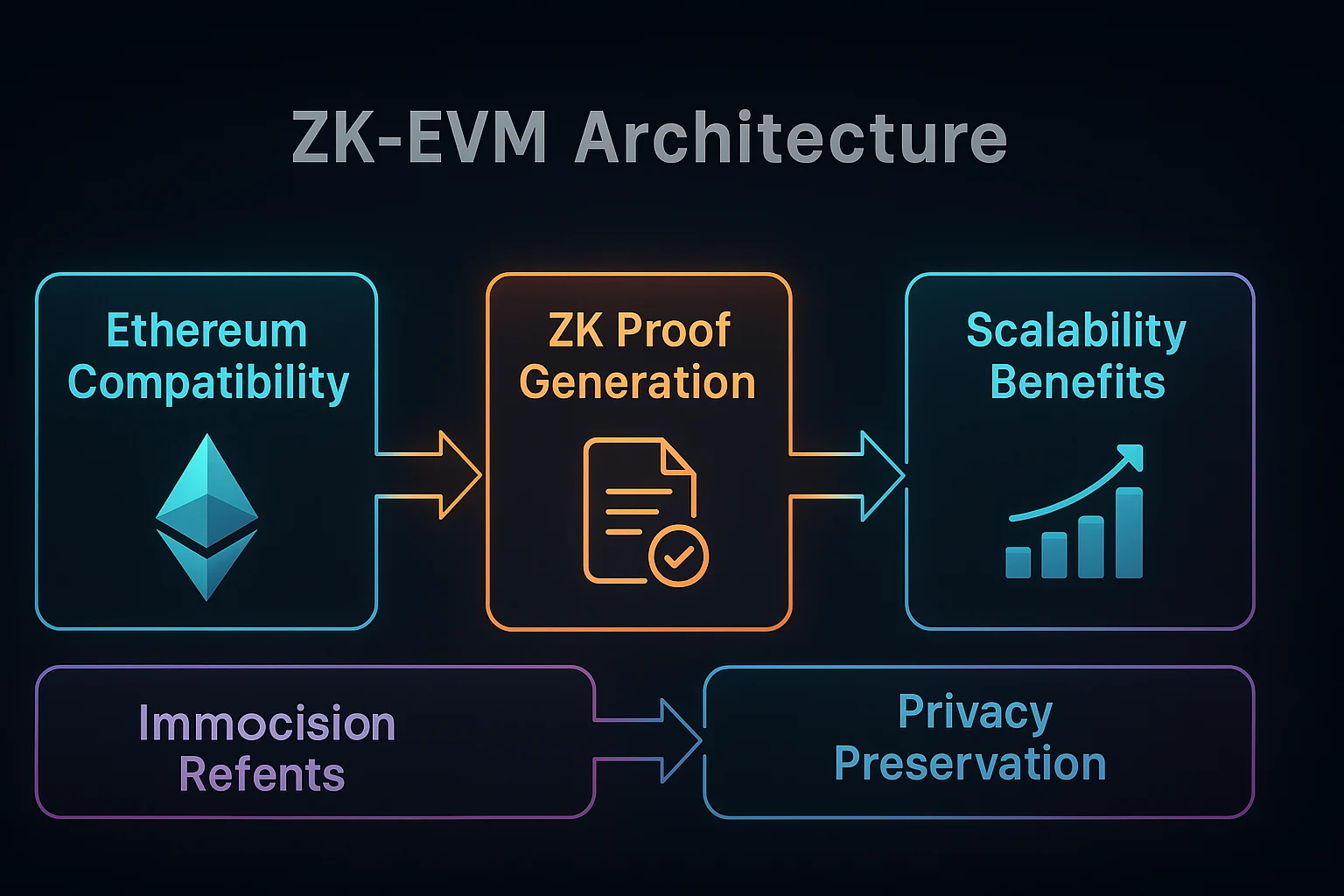
ZK-EVM architecture showing Ethereum compatibility, ZK proof generation, scalability benefits, and privacy preservation

Real-World Examples

  • Polygon zkEVM provides full Ethereum compatibility with ZK proof validation
  • Scroll implements native zkEVM with focus on maintaining exact Ethereum behavior
  • Linea (ConsenSys) offers enterprise-focused zkEVM infrastructure

Why Beginners Should Care

Best of both worlds combining Ethereum’s mature ecosystem with ZK rollup benefits of speed, cost, and privacy.

Developer experience remains identical to Ethereum, enabling easy migration of existing applications and tools.

Technical complexity in ZK proof generation creates different trade-offs compared to optimistic rollups in terms of finality and computational requirements.

Related Terms: Zero-Knowledge Proof, EVM, Layer 2, Smart Contract Compatibility

Back to Crypto Glossary

Similar Posts

  • Web3

    Web3: The Decentralized Internet Dream Web3 promises an internet where users own their data, identity, and digital assets instead of tech giants controlling everything. It’s part vision, part reality, part marketing buzzword. Web3 refers to a decentralized version of the internet built on blockchain technology where users control their own data, identity, and assets rather…

  • Economic Security

    Economic Security: Financial Incentive ProtectionEconomic security refers to protection mechanisms that use financial incentives and penalties to secure blockchain networks and protocols. It's like having a security system where guards are paid well for protecting property and fined heavily for allowing break-ins.Economic security describes protection mechanisms that use financial incentives, stake requirements, and economic penalties…

  • EigenLayer

    EigenLayer: Ethereum Restaking ProtocolEigenLayer enables Ethereum validators to restake their ETH to secure additional protocols and earn extra rewards. It's like using the same security deposit to protect multiple different services simultaneously.EigenLayer is a protocol that allows Ethereum validators to restake their staked ETH to provide security for additional protocols and services beyond Ethereum itself. This…

  • Reputation System

    Reputation System: Building Digital TrustReputation systems track and score user behavior to enable trust and coordination in decentralized environments. They're like credit scores but for overall trustworthiness and competence.A reputation system records and evaluates user actions, contributions, and behavior to create trustworthiness scores that enable cooperation in decentralized systems. These systems help identify reliable participants without…

  • Dynamic NFTs (dNFTs)

    Dynamic NFTs (dNFTs): Evolving Digital Assets Dynamic NFTs can change their metadata, appearance, or properties based on external data or on-chain events. They’re like digital collectibles that grow and evolve over time. Dynamic NFTs (dNFTs) are non-fungible tokens that can modify their metadata, attributes, or visual appearance in response to external data feeds, user actions,…

  • Native Interop

    Native Interop: Built-in Cross-Chain CommunicationNative interoperability refers to blockchain networks designed from the ground up to communicate with other chains without requiring external bridges or intermediaries. It's like speaking multiple languages fluently.Native interoperability describes blockchain architectures that include cross-chain communication capabilities as core features rather than external additions. These systems can interact with other networks through…