
ZK Proof Aggregation

ZK Proof Aggregation: Scaling Zero-Knowledge Systems

ZK proof aggregation combines multiple zero-knowledge proofs into single, more efficient proofs. It’s like having one master key that proves you have access to multiple locked boxes.

ZK proof aggregation is a technique that combines multiple zero-knowledge proofs into a single proof that verifies all the original statements simultaneously. This dramatically reduces verification costs and blockchain storage requirements.

How ZK Proof Aggregation Works

Batch verification processes multiple proofs together rather than verifying each one individually, reducing computational overhead significantly.

Recursive composition enables proofs about proofs, where one ZK proof can verify that other ZK proofs are valid without revealing their contents.

Cost amortization spreads verification costs across many transactions, making ZK systems economically viable for smaller value transactions.
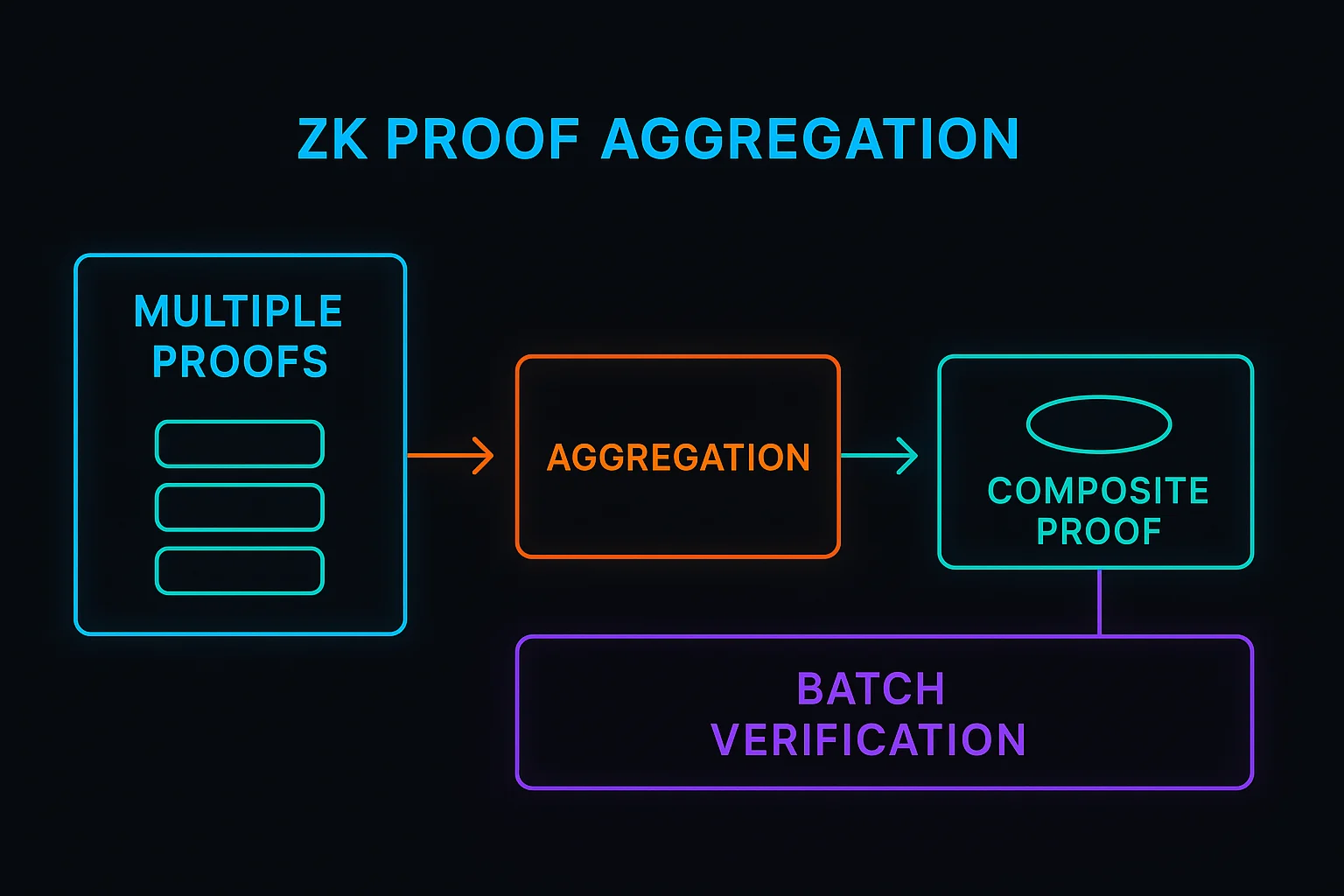
ZK proof aggregation flowchart showing multiple proofs, aggregation process, composite proof, and batch verification

Real-World Examples

  • StarkNet uses STARK proof aggregation for scalable transaction processing
  • Polygon Hermez combines multiple transaction proofs into batches for Ethereum submission
  • Mina Protocol uses recursive zk-SNARKs to maintain constant blockchain size

Why Beginners Should Care

Scalability improvements enable ZK systems to handle transaction volumes comparable to traditional centralized systems.

Cost reduction makes ZK privacy and verification accessible for everyday transactions rather than only high-value use cases.

Technical complexity requires sophisticated cryptographic infrastructure that few teams can implement correctly.

Related Terms: Zero-Knowledge Proof, Recursive Proofs, Batch Verification, Scalability

Back to Crypto Glossary

Similar Posts

  • Algorithmic Stablecoin

    Algorithmic Stablecoin: Code-Controlled Price StabilityAlgorithmic stablecoins maintain price stability through automated mechanisms rather than asset backing. They're like self-driving cars for currency stability – controlled by code instead of human intervention.An algorithmic stablecoin is a cryptocurrency that maintains price stability through automated protocols and market mechanisms rather than collateral backing. These systems use smart contracts to…

  • Total Value Locked (TVL)

    Total Value Locked (TVL): DeFi’s Scorecard TVL measures how much money is deposited in DeFi protocols. It’s like measuring the size of a bank by its total deposits – bigger usually means more trust and activity. Total Value Locked (TVL) is the aggregate value of all assets deposited in a DeFi protocol or across the…

  • HODL

    HODL: The Art of Doing Nothing HODL started as a typo but became crypto’s most important investment strategy. Sometimes the best move is not moving at all. HODL means holding cryptocurrency long-term regardless of short-term price volatility, derived from a misspelled “hold” in a 2013 Bitcoin forum post. It represents the strategy of buying and…

  • Digital Signature

    Digital Signature: Cryptographic Identity ProofDigital signatures provide mathematical proof of message authenticity and sender identity using cryptographic techniques. They're like unforgeable electronic signatures that prove who sent what.A digital signature is a cryptographic mechanism that verifies the authenticity of digital messages or documents and confirms the identity of the sender. Digital signatures are fundamental to blockchain…

  • Verifiable Randomness

    Verifiable Randomness: Provably Fair Random NumbersVerifiable randomness provides cryptographically secure random numbers that can be independently verified for fairness. It's like having dice that everyone can mathematically confirm are not loaded.Verifiable randomness refers to random number generation systems that produce unpredictable outputs while providing cryptographic proofs that the randomness is fair and unbiased. This enables trustless…

  • Liquidity Pool

    Liquidity Pool: The Fuel That Powers DEX Trading Liquidity pools are why decentralized exchanges work. They’re shared pots of tokens that enable trading without traditional buyers and sellers. A liquidity pool is a collection of tokens locked in a smart contract that provides liquidity for decentralized trading. Instead of matching buy and sell orders, traders…