
Ledger

Ledger: Hardware Wallet Security Leader

Ledger is a leading hardware wallet company that provides secure offline storage for cryptocurrency private keys. They’re like the Fort Knox of crypto storage devices.

Ledger is a hardware wallet manufacturer that creates secure devices for storing cryptocurrency private keys offline, protecting them from online threats and hacking attempts. These devices enable secure transaction signing without exposing sensitive information.

How Ledger Devices Work

Secure element chips store private keys in tamper-resistant hardware that prevents extraction even with physical access to the device.

Offline transaction signing enables authorizing cryptocurrency transactions without connecting private keys to internet-connected computers.

Recovery mechanisms through seed phrases allow restoring wallet access if the hardware device is lost, stolen, or damaged.
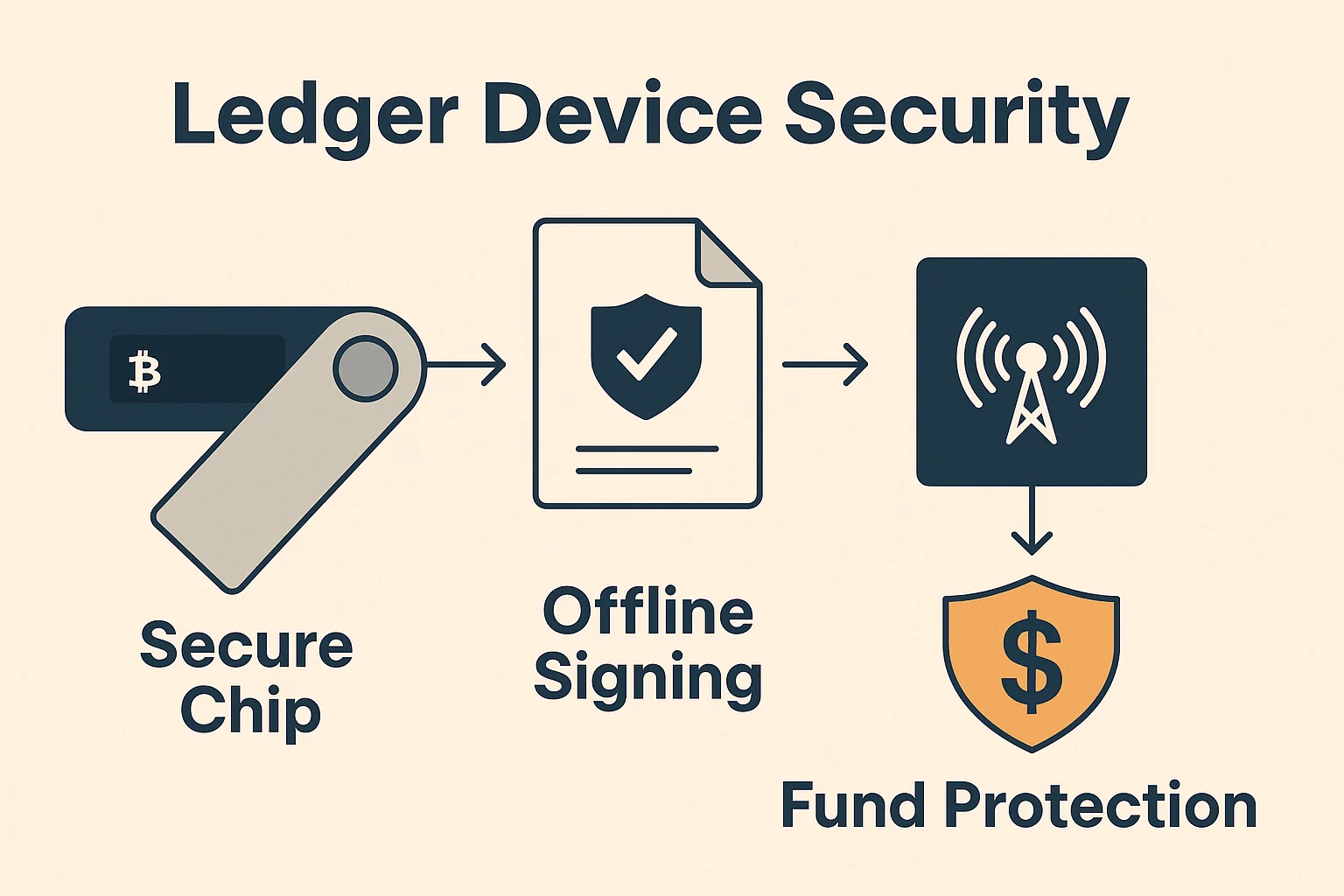
Infographic showing Ledger device flow: secure chip, offline signing, transaction broadcast, and fund protection

Real-World Examples

  • Ledger Nano S Plus provides affordable cold storage for multiple cryptocurrencies
  • Ledger Nano X offers Bluetooth connectivity for mobile device integration
  • Ledger Stax features advanced display and user interface capabilities

Why Beginners Should Care

Security enhancement over software wallets by keeping private keys offline and away from potential malware or hacking attempts.

Multi-currency support enables storing various cryptocurrencies on a single device with official wallet applications.

Industry reputation as Ledger devices are widely trusted by both beginners and institutional users for secure cryptocurrency storage.

Related Terms: Hardware Wallet, Cold Storage, Private Key, Secure Element

Back to Crypto Glossary

Similar Posts

  • VPN

    VPN: Virtual Private Network for Crypto PrivacyA VPN creates secure, encrypted connections between your device and the internet to protect privacy and bypass restrictions. It's like having a private tunnel through the public internet highway.A Virtual Private Network (VPN) encrypts internet traffic and routes it through remote servers to hide user location and protect online…

  • Gas Fees

    Gas Fees: The Cost of Using Ethereum Gas fees are the tolls you pay to use Ethereum. Sometimes they’re pennies, sometimes they’re hundreds of dollars. Welcome to decentralized computing. Gas fees are transaction costs paid to miners or validators for processing transactions on blockchain networks. Think of gas as the fuel needed to power your…

  • zk-SNARKs

    zk-SNARKs: Zero-Knowledge Proof Technologyzk-SNARKs are cryptographic proofs that verify information without revealing the underlying data. They're like proving you know a secret without telling anyone what the secret actually is.zk-SNARKs (Zero-Knowledge Succinct Non-Interactive Arguments of Knowledge) are cryptographic proofs that allow verification of computations without revealing the inputs or intermediate steps. This enables privacy and scalability…

  • MetaMask

    MetaMask: Your Gateway to Web3 MetaMask is the browser extension wallet that connects you to the decentralized web. It’s like having a crypto wallet built into your browser that talks to every DeFi protocol. MetaMask is a browser extension and mobile wallet that enables interaction with Ethereum-based applications directly through web browsers. It manages private…

  • Price Stability

    Price Stability: Maintaining Consistent ValuePrice stability refers to maintaining consistent cryptocurrency values over time with minimal volatility. It enables practical use as medium of exchange and store of value.Price stability describes the characteristic of maintaining relatively constant value over time with limited price fluctuations. This stability is essential for practical cryptocurrency adoption in payments and savings.How…

  • Minting

    Minting: Creating New Tokens or NFTs Minting is the moment digital assets come into existence. Whether it’s new cryptocurrency tokens or unique NFTs, minting transforms code into valuable digital property. Minting is the process of creating new tokens or NFTs by executing a smart contract function that adds them to a blockchain. It’s like printing…