
Gwei

Gwei: Ethereum’s Gas Price Unit

Gwei is the denomination used for Ethereum gas prices. Understanding gwei helps you avoid overpaying for transactions when the network gets congested.

Gwei (gigawei) is a unit of Ethereum’s native currency equal to one billionth of an ETH (10^-9 ETH). It’s the standard unit for expressing gas prices, making it easier to work with small fractions than using full ETH amounts.

How Gwei Works

Gas price measurement in gwei determines how much you pay per unit of computational work. Higher gwei prices get faster transaction confirmation during network congestion.

Fee calculation multiplies gas limit by gas price in gwei to determine total transaction cost. A 21,000 gas transfer at 20 gwei costs 420,000 gwei (0.00042 ETH).

Market dynamics drive gwei prices up during high network usage and down during quiet periods, creating variable transaction costs.
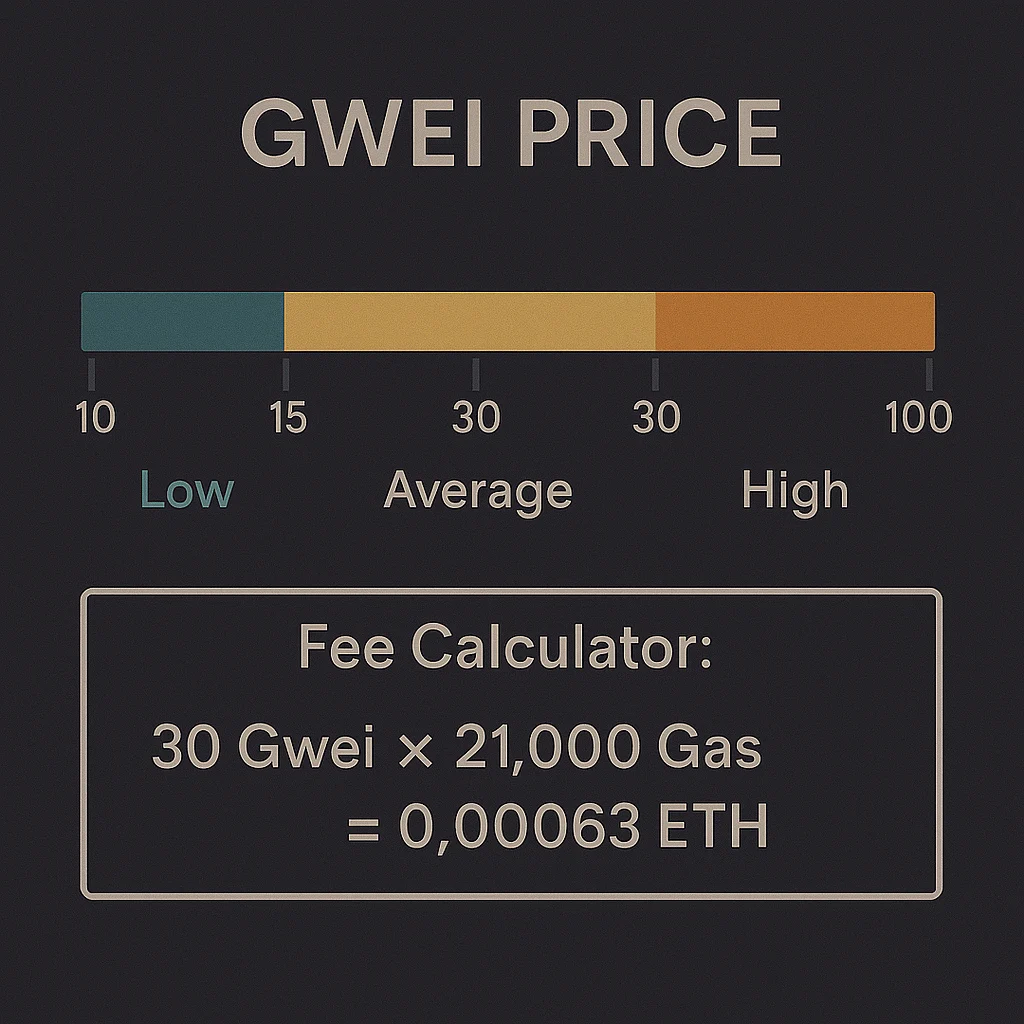
Gwei price chart showing typical low, average, and high ranges during network activity with a sample Ethereum fee calculation.

Real-World Examples

  • Normal periods typically see 15-30 gwei gas prices for standard transaction speed
  • Network congestion can push gas prices to 100-500+ gwei during high demand
  • Overnight hours often offer sub-10 gwei prices for patient users

Why Beginners Should Care

Cost optimization through gwei monitoring can save significant money on transaction fees, especially for frequent DeFi users.

Transaction timing becomes important when gwei prices fluctuate dramatically based on network usage patterns and major events.

Fee estimation tools use gwei prices to predict transaction costs and suggest appropriate gas prices for desired confirmation speeds.

Related Terms: Gas Fees, Gas Price, Gas Limit, Wei

Back to Crypto Glossary

Similar Posts

  • Block Reward

    Block Reward: Miner and Validator Compensation Block rewards are the cryptocurrency payments that miners and validators receive for successfully adding new blocks to the blockchain. It’s how networks incentivize security without charging transaction fees. Block reward is the amount of cryptocurrency awarded to miners or validators for successfully creating and validating a new block on…

  • Over-Collateralization

    Over-Collateralization: Excess Security DepositsOver-collateralization requires borrowers to deposit assets worth more than their loan amount as security against default. It's like putting down a $15,000 deposit to borrow $10,000, ensuring the lender is protected even if asset values decline.Over-collateralization refers to requiring collateral deposits that exceed the value of loans or borrowed assets, providing additional…

  • L2 Sequencer

    L2 Sequencer: Transaction Ordering Engine L2 sequencers determine transaction order on Layer 2 networks, controlling which transactions get included and how they’re arranged. They’re like traffic controllers for blockchain highways. An L2 sequencer is a specialized node that collects, orders, and batches transactions for Layer 2 networks before submitting them to the main blockchain. Sequencers…

  • Smart Contract Risk

    Smart Contract Risk: Code-Based VulnerabilitiesSmart contract risk encompasses all potential vulnerabilities and failures in automated blockchain programs. It's like the risk that the software controlling your digital money might have bugs or be exploited.Smart contract risk refers to potential losses from bugs, vulnerabilities, exploits, or unexpected behavior in smart contract code that controls cryptocurrency assets…

  • Network Congestion

    Network Congestion: Blockchain Traffic JamsNetwork congestion occurs when cryptocurrency networks become overloaded with transaction requests, causing delays and increased fees. It's like rush hour traffic that slows everyone down and costs more to navigate.Network congestion refers to periods when cryptocurrency networks receive more transaction requests than they can process efficiently, resulting in delayed confirmations and…

  • Sanctions

    Sanctions: Government Financial RestrictionsCryptocurrency sanctions involve government restrictions on specific addresses, entities, or services to prevent them from accessing financial systems. They're economic weapons adapted for the digital age.Sanctions refer to government-imposed restrictions that prohibit individuals, entities, or services from accessing financial systems or conducting specific activities. In crypto, this includes blocking addresses and restricting access…