
LayerZero

LayerZero: Omnichain Interoperability Protocol

LayerZero is an interoperability protocol that enables applications to send messages and transfer assets across different blockchains. It’s like having a universal translator for blockchain networks.

LayerZero is a cross-chain communication protocol that enables decentralized applications to operate across multiple blockchains seamlessly. It provides infrastructure for omnichain applications that can access liquidity and users across different networks.

How LayerZero Works

Message passing enables smart contracts on different chains to communicate and trigger actions without requiring users to manually bridge assets.

Ultra Light Nodes provide security verification with minimal overhead by using oracle and relayer networks rather than running full nodes for each supported chain.

Omnichain applications can deploy across multiple networks while maintaining unified state and user experience through LayerZero’s messaging infrastructure.
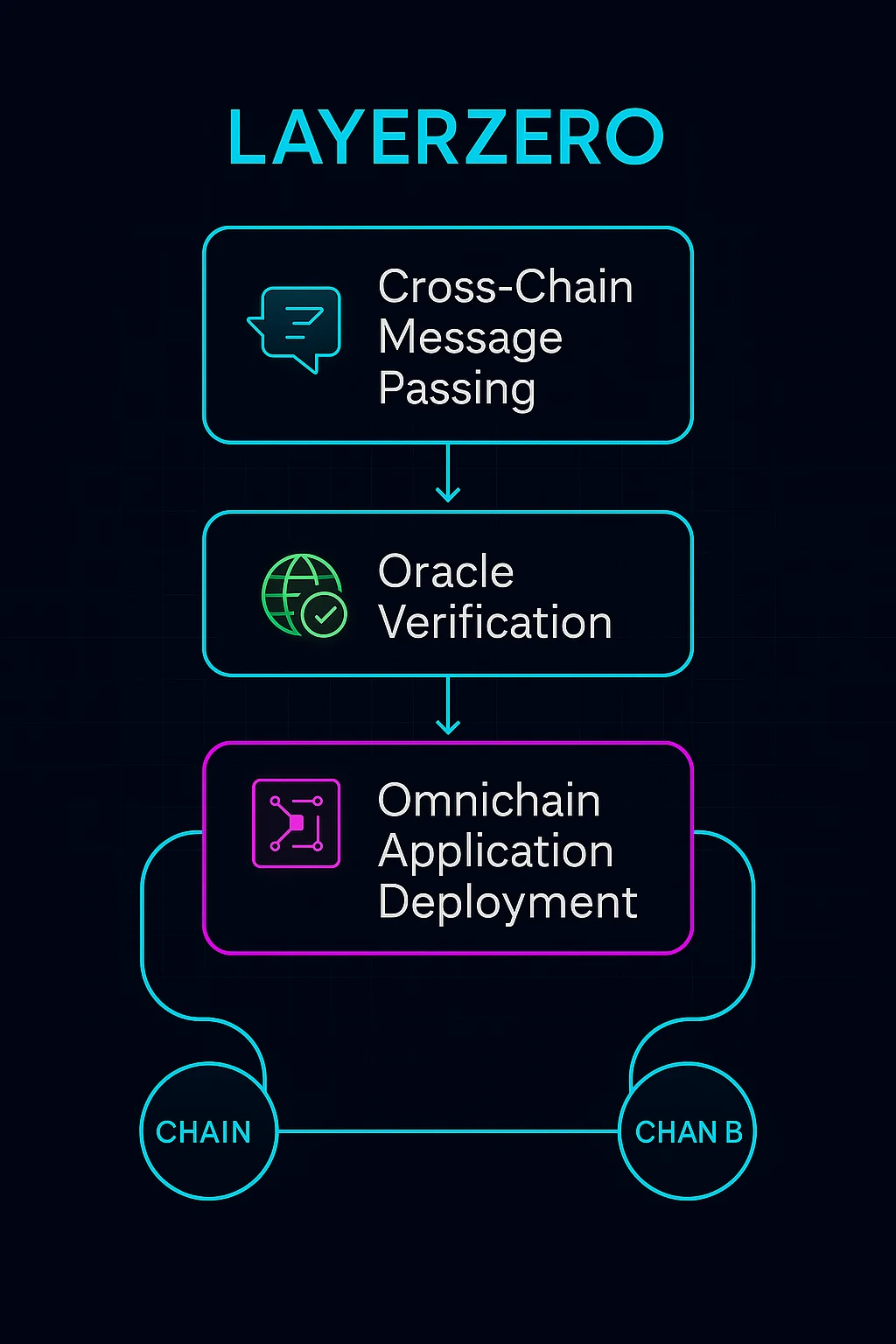
LayerZero architecture diagram showing cross-chain message passing, oracle validation, and omnichain app deployment

Real-World Examples

  • Stargate Finance provides unified liquidity across chains using LayerZero messaging
  • Radiant Capital creates omnichain lending markets through LayerZero infrastructure
  • Various DeFi protocols use LayerZero for cross-chain governance and treasury management

Why Beginners Should Care

Simplified user experience for accessing multi-chain applications without manual bridging or managing assets across different networks.

Infrastructure dependency creates centralization risks if LayerZero experiences outages or technical problems affecting dependent applications.

Expanding ecosystem enables new types of applications that weren’t possible with single-chain limitations or manual bridging requirements.

Related Terms: Cross-Chain Protocol, Omnichain, Message Passing, Interoperability

Back to Crypto Glossary

Similar Posts

  • Blockchain Oracle Network

    Blockchain Oracle Network: Decentralized Data Feeds Blockchain oracle networks provide external data to smart contracts through decentralized systems rather than single data sources. It’s like having multiple weather stations instead of relying on one thermometer. A blockchain oracle network is a decentralized system of nodes that collectively provide external data to blockchain networks, reducing single…

  • Play-to-Earn (P2E)

    Play-to-Earn (P2E): Gaming Meets Income Play-to-earn games let players earn cryptocurrency and NFTs through gameplay. It’s turned gaming from entertainment expense into potential income source for millions worldwide. Play-to-earn (P2E) is a gaming model where players earn cryptocurrency tokens, NFTs, or other digital assets with real-world value through gameplay activities. Players own in-game assets that…

  • Wallet Drainer

    Wallet Drainer: Malicious Fund Extraction Wallet drainers are malicious smart contracts or applications designed to steal all assets from connected wallets through deceptive transaction approvals. They’re digital pickpockets with smart contract superpowers. A wallet drainer is malicious software that tricks users into signing transactions that grant unlimited access to their cryptocurrency holdings. These attacks often…

  • Layer 2

    Layer 2: Scaling Solutions for Expensive Blockchains Layer 2 networks solve Ethereum’s biggest problem – ridiculous gas fees. They process transactions cheaply and quickly while inheriting Ethereum’s security. Layer 2 is a separate blockchain or protocol built on top of a main blockchain (Layer 1) to improve scalability and reduce transaction costs. These solutions handle…

  • Yield Optimization

    Yield Optimization: Maximizing Investment ReturnsYield optimization involves strategically managing cryptocurrency investments to maximize returns through automated rebalancing and strategy switching. It's like having a financial advisor that works 24/7 to find the best returns.Yield optimization refers to automated strategies and protocols that maximize returns on cryptocurrency investments by continuously monitoring and switching between different yield-generating…

  • Structured Products

    Structured Products: Complex Financial InstrumentsStructured products combine multiple financial instruments to create customized risk-return profiles for specific investment objectives. They're like elaborate recipe combinations that mix different financial ingredients to create unique investment flavors tailored to particular tastes.Structured products are complex financial instruments that combine derivatives, traditional assets, or cryptocurrencies to create customized investment products…