
Mixing Service

Mixing Service: Shuffling Coins for Privacy

Mixing services (or tumblers) pool cryptocurrencies from multiple users then redistribute different coins to break transaction links. It’s like exchanging your marked bills for unmarked ones.

A mixing service is a privacy tool that pools cryptocurrencies from multiple users and redistributes them to break the link between sending and receiving addresses. Users deposit coins and receive different coins of equal value, obscuring transaction histories.

How Mixing Services Work

Pooling deposits from multiple users creates a large pool of mixed funds where individual contributions become indistinguishable from each other.

Random delays and amount splitting prevent timing analysis or amount correlation that could be used to link deposits with withdrawals.

Fresh outputs come from different sources than inputs, making it difficult for blockchain analysts to trace funds through the mixing process.
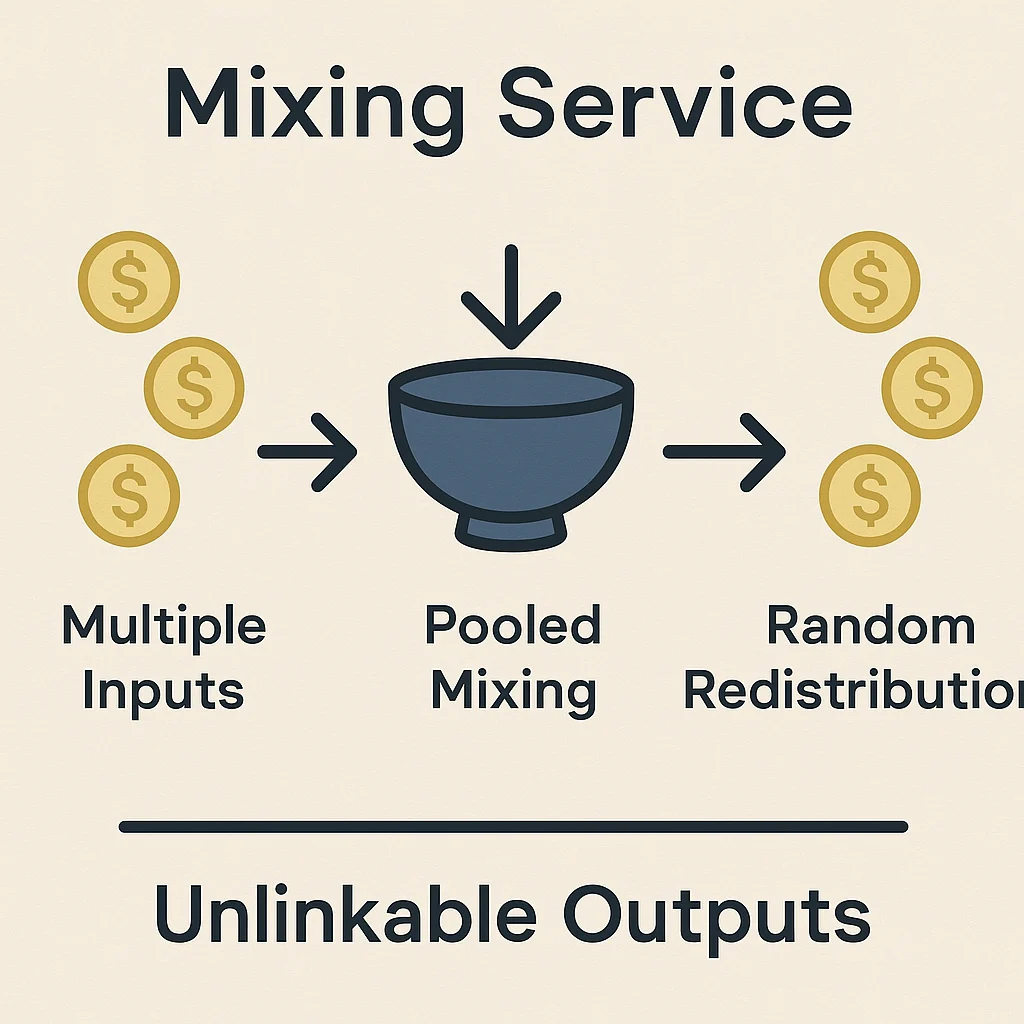
Infographic showing cryptocurrency mixing service with multiple inputs, pooled mixing, random redistribution, and unlinkable outputs

Real-World Examples

  • Tornado Cash – Ethereum mixing protocol using zero-knowledge proofs for enhanced privacy
  • CoinJoin – Bitcoin mixing technique that combines multiple users’ transactions
  • Wasabi Wallet – Bitcoin wallet with built-in CoinJoin mixing functionality

Why Beginners Should Care

Privacy protection helps prevent transaction surveillance and protects users from targeted attacks based on blockchain analysis of their spending patterns.

Regulatory scrutiny has led to sanctions against some mixing services and exchange policies against mixed funds, limiting practical utility.

Legitimate uses include protecting business privacy, preventing targeted theft, and maintaining financial confidentiality that most people expect from traditional banking.

Related Terms: Privacy Coin, CoinJoin, Tornado Cash, Transaction Privacy

Back to Crypto Glossary

Similar Posts

  • Gasless Transactions

    Gasless Transactions: Fee-Free User Experience Gasless transactions eliminate the need for users to hold native tokens for transaction fees by having third parties sponsor the gas costs. It’s like having someone else pay for your Uber rides. Gasless transactions enable users to interact with blockchain applications without holding native tokens for gas fees. Third parties,…

  • Native Interop

    Native Interop: Built-in Cross-Chain CommunicationNative interoperability refers to blockchain networks designed from the ground up to communicate with other chains without requiring external bridges or intermediaries. It's like speaking multiple languages fluently.Native interoperability describes blockchain architectures that include cross-chain communication capabilities as core features rather than external additions. These systems can interact with other networks through…

  • Encrypted Mempool

    Encrypted Mempool: Private Transaction Pools Encrypted mempools hide transaction details until inclusion in blocks, preventing front-running and MEV extraction. It’s like sending sealed bids instead of announcing your strategy publicly. An encrypted mempool contains pending transactions that are cryptographically hidden from public view until block inclusion. This prevents sophisticated actors from front-running or extracting MEV…

  • Liquidity Sniping

    Liquidity Sniping: Front-Running New Pools Liquidity sniping involves immediately buying tokens when new liquidity pools are created, often using bots to front-run regular users. It’s like cutting in line at the grand opening sale. Liquidity sniping is the practice of using automated systems to immediately purchase tokens as soon as new liquidity pools go live,…

  • Governance Token

    Governance Token: Voting Rights in CryptoGovernance tokens provide holders with voting rights in decentralized protocols and organizations. They're like shares in a company, but for decentralized projects where the community makes decisions.A governance token is a cryptocurrency that grants holders voting rights over protocol changes, treasury allocation, and other governance decisions in decentralized projects. These tokens…

  • Conservative Investing

    Conservative Investing: Low-Risk Investment ApproachConservative investing prioritizes capital preservation and steady returns over high-risk, high-reward strategies. It's like choosing the scenic route that takes longer but is much safer than the dangerous mountain pass.Conservative investing refers to investment strategies that prioritize capital preservation and risk reduction over maximum returns, typically focusing on established assets and…