
Multisig Recovery

Multisig Recovery: Getting Back Lost Access

Multisig recovery helps regain access to multi-signature wallets when some keys are lost or compromised. It’s like having spare keys for your house, but with cryptographic mathematics.

Multisig recovery refers to mechanisms that restore access to multi-signature wallets when the required number of signatures is no longer available due to lost keys, compromised devices, or unavailable signers. Recovery methods must balance security with accessibility.

How Multisig Recovery Works

Threshold adjustment may allow reducing signature requirements during recovery procedures, typically requiring unanimous consent from remaining key holders.

Timelock recovery enables predetermined recovery procedures that activate after extended periods of inactivity, allowing backup methods to restore access.

Social recovery involves trusted contacts who can collectively restore access through predetermined procedures when primary key holders are unavailable.
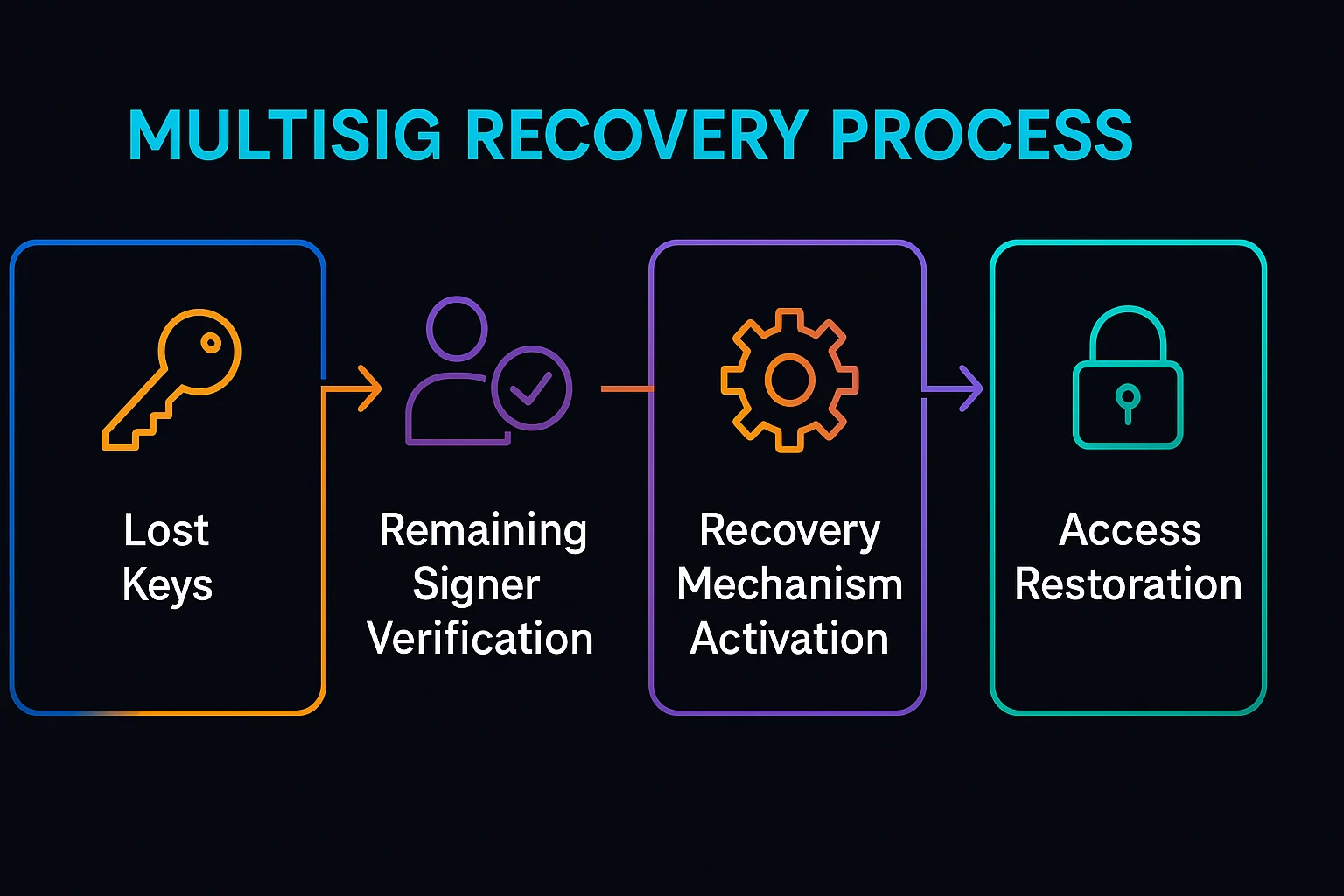
Multisig recovery process showing lost keys, remaining signer verification, recovery mechanism activation, and access restoration

Real-World Examples

  • Gnosis Safe recovery modules enable timelock-based recovery procedures for multi-signature wallets
  • Argent wallets use social recovery with trusted guardians to restore access
  • Corporate treasury recovery procedures for when key employees leave or become unavailable

Why Beginners Should Care

Access preservation prevents permanent loss of funds when multisig signers become unavailable due to device loss, death, or other circumstances.

Security trade-offs as recovery mechanisms can potentially be exploited if not designed carefully, creating new attack vectors.

Planning importance requires establishing recovery procedures before they’re needed, when all parties are available to configure them properly.

Related Terms: Multi-Signature, Social Recovery, Timelock, Wallet Security

Back to Crypto Glossary

Similar Posts

  • Cross-Chain Communication

    Cross-Chain Communication: Blockchain InteroperabilityCross-chain communication enables different blockchain networks to exchange information and coordinate actions seamlessly. It's like having universal translators that allow people speaking completely different languages to have detailed conversations and work together on complex projects.Cross-chain communication refers to protocols and technologies that enable different blockchain networks to share data, transfer assets, and…

  • Gaming Token

    Gaming Token: In-Game Digital CurrencyGaming tokens are cryptocurrencies designed specifically for use within video games and virtual worlds. They enable player ownership, trading, and monetization of in-game assets and achievements.Gaming tokens are cryptocurrencies created for specific video games or gaming ecosystems, enabling player ownership of in-game assets, rewards, and economic participation. These tokens bridge traditional gaming…

  • Governance Token

    Governance Token: Voting Rights in CryptoGovernance tokens provide holders with voting rights in decentralized protocols and organizations. They're like shares in a company, but for decentralized projects where the community makes decisions.A governance token is a cryptocurrency that grants holders voting rights over protocol changes, treasury allocation, and other governance decisions in decentralized projects. These tokens…

  • Circulating Supply

    Circulating Supply: Tokens Available for TradingCirculating supply represents the number of cryptocurrency tokens currently available for public trading and use. It's like counting how much money is actually in circulation versus locked away.Circulating supply refers to the number of cryptocurrency tokens that are publicly available and actively trading in the market. This excludes tokens that are…

  • Bonding Curve

    Bonding Curve: Algorithmic Token Pricing Bonding curves use mathematical formulas to automatically price tokens based on supply. As more tokens get bought, prices increase predictably according to the curve’s formula. A bonding curve is an algorithmic pricing mechanism that determines token price based on token supply through a mathematical function. Prices increase as supply grows…

  • Intent-Centric Protocols

    Intent-Centric Protocols: What You Want, Not How Intent-centric protocols let users specify desired outcomes while the system figures out how to achieve them. Instead of manually executing swap steps, you just say “I want USDC” and the protocol handles everything. Intent-centric protocols allow users to express desired end states rather than specific transaction sequences. Users…