
Node

Node: The Network’s Backbone

Nodes are individual computers that maintain copies of the blockchain and enforce network rules. They’re the distributed infrastructure that makes cryptocurrency possible.

A node is a computer that participates in a blockchain network by maintaining a copy of the distributed ledger and relaying transactions. Nodes validate transactions, store blockchain history, and help maintain network decentralization.

How Nodes Work

Full nodes download and validate every transaction and block in the blockchain’s history, ensuring all network rules are followed. They can independently verify the entire network state.

Light nodes (or SPV nodes) download only block headers and specific transactions they need, relying on full nodes for complete validation while using less storage and bandwidth.

Network communication happens through peer-to-peer connections where nodes share new transactions and blocks with their connected peers, propagating information across the entire network.
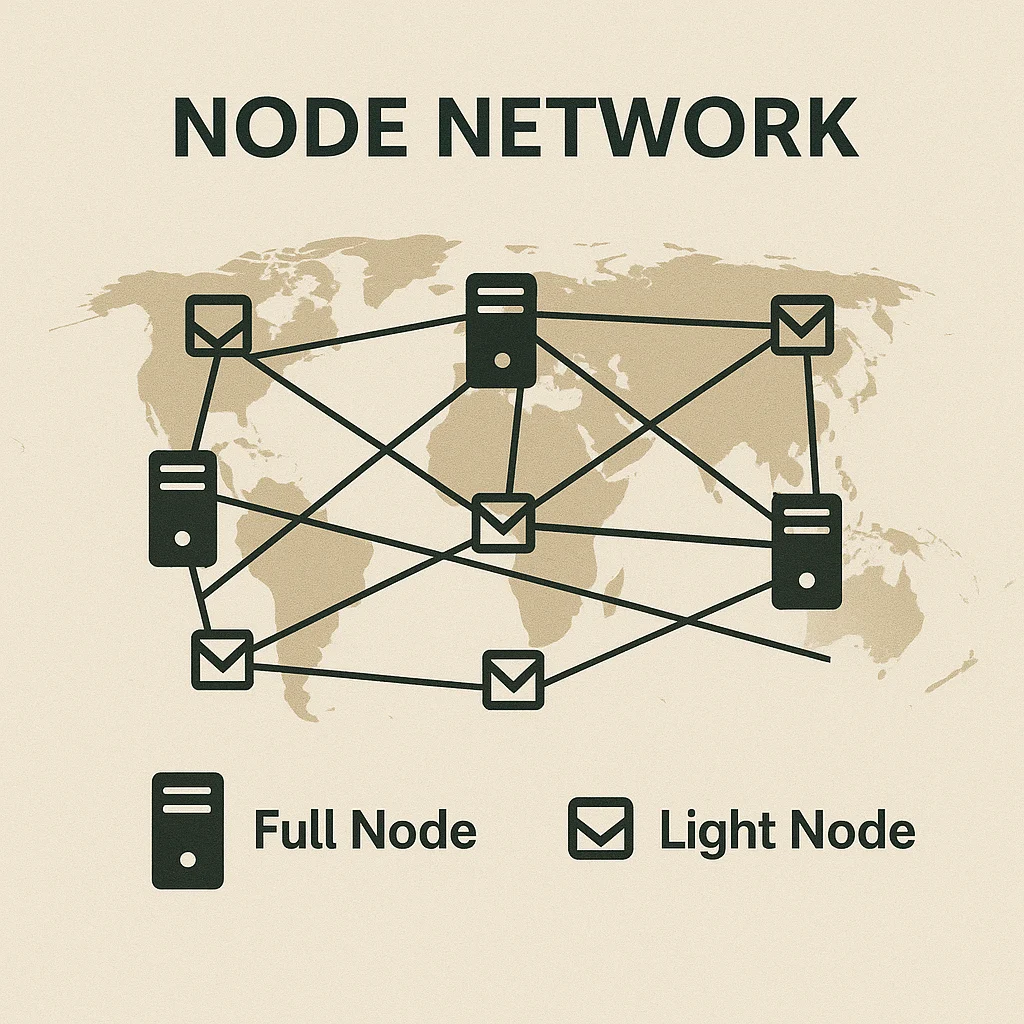
Infographic showing a global node network with full nodes and light nodes connected peer-to-peer across a world map

Real-World Examples

  • Bitcoin Core – Reference implementation running on thousands of full nodes worldwide
  • Ethereum Geth – Popular Ethereum node software maintaining network state
  • Raspberry Pi nodes – Affordable home setups contributing to network decentralization

Why Beginners Should Care

Node diversity strengthens network decentralization and censorship resistance. More independent node operators mean less reliance on centralized infrastructure providers.

Running a node gives you direct access to the blockchain without trusting third parties like exchanges or wallet providers to give you accurate information.

Technical requirements include reliable internet, adequate storage (500GB+ for Bitcoin), and basic technical knowledge for setup and maintenance.

Related Terms: Full Node, Light Node, Peer-to-Peer, Decentralization

Back to Crypto Glossary

Similar Posts

  • Liquidation Bot

    Liquidation Bot: Automated Debt Collection Liquidation bots monitor lending protocols for undercollateralized positions and automatically liquidate them for profit. They’re like repo men but for DeFi loans. A liquidation bot is an automated program that monitors DeFi lending protocols for loans that fall below required collateral ratios and triggers liquidations to earn rewards. These bots…

  • Counterparty Risk

    Counterparty Risk: Trusting Others with Your MoneyCounterparty risk is the chance that the other party in a financial transaction won't fulfill their obligations. In crypto, it's the difference between self-custody and hoping someone else doesn't lose your money.Counterparty risk refers to the probability that the other party in a financial transaction will default on their…

  • Full Node

    Full Node: Complete Blockchain ParticipantA full node maintains a complete copy of the blockchain and validates all transactions independently. It's like having the complete library instead of just borrowing books when you need them.A full node is a computer that downloads, stores, and validates the complete blockchain history while participating in network consensus and transaction…

  • Gwei

    Gwei: Ethereum’s Gas Price Unit Gwei is the denomination used for Ethereum gas prices. Understanding gwei helps you avoid overpaying for transactions when the network gets congested. Gwei (gigawei) is a unit of Ethereum’s native currency equal to one billionth of an ETH (10^-9 ETH). It’s the standard unit for expressing gas prices, making it…

  • EigenLayer

    EigenLayer: Ethereum Restaking ProtocolEigenLayer enables Ethereum validators to restake their ETH to secure additional protocols and earn extra rewards. It's like using the same security deposit to protect multiple different services simultaneously.EigenLayer is a protocol that allows Ethereum validators to restake their staked ETH to provide security for additional protocols and services beyond Ethereum itself. This…

  • Resistance

    Resistance: Technical Analysis Price BarriersResistance refers to price levels where cryptocurrency faces selling pressure that prevents further upward movement. It's like hitting an invisible ceiling where the price bounces back down, as if there's a barrier preventing it from going higher.Resistance describes price levels where selling pressure consistently prevents cryptocurrency prices from rising further, creating…