
Peer-to-Peer (P2P)

Peer-to-Peer (P2P): Direct Network Communication

Peer-to-peer networks enable direct communication between participants without central intermediaries. It’s like having a telephone system where everyone connects directly instead of going through switchboard operators.

Peer-to-peer (P2P) refers to network architectures where participants communicate directly with each other rather than through centralized servers or intermediaries. This creates decentralized systems that are more resistant to censorship and single points of failure.

How P2P Networks Work

Direct connections enable participants to communicate, share data, and transact directly without requiring permission from central authorities.

Distributed architecture spreads network functions across many participants rather than concentrating them in centralized infrastructure.

Redundancy benefits ensure network operation continues even if some participants go offline, creating robust and resilient systems.
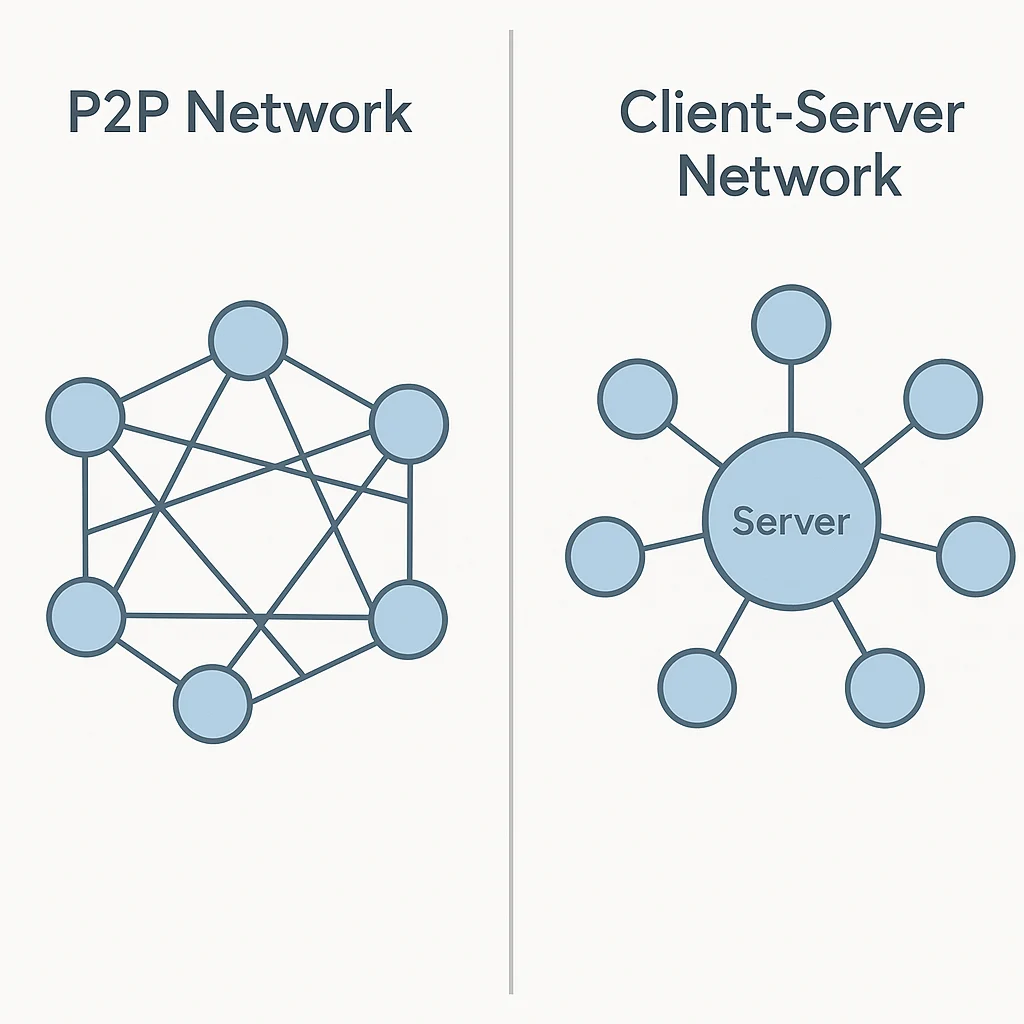
Side-by-side diagram comparing peer-to-peer network and centralized client-server model

Real-World Examples

  • Bitcoin network uses P2P architecture for transaction broadcasting and block propagation
  • BitTorrent enables file sharing through direct connections between users
  • Lightning Network creates P2P payment channels for instant Bitcoin transactions

Why Beginners Should Care

Censorship resistance as P2P networks can operate without central authorities that could block or restrict access.

Reduced dependencies on centralized infrastructure that could fail, be shut down, or impose restrictions on users.

Privacy benefits from direct communication that doesn’t require revealing activity to central monitoring systems.

Related Terms: Decentralization, Node,

Back to Crypto Glossary

Similar Posts

  • Asset Backing

    Asset Backing: Value Foundation for TokensAsset backing refers to reserves of real-world assets that support the value of cryptocurrency tokens. It's like having gold in a vault to back paper money.Asset backing involves holding reserves of traditional assets like cash, bonds, commodities, or real estate to support the value and redemption of cryptocurrency tokens. This creates…

  • Transaction Analysis

    Transaction Analysis: Blockchain Data InvestigationTransaction analysis involves examining blockchain data to understand patterns, track funds, and investigate suspicious activities. It's like being a detective who follows money trails in the digital world.Transaction analysis refers to the systematic examination of blockchain transaction data to identify patterns, trace fund flows, and investigate potential illegal or suspicious activities. This…

  • Total Value Locked (TVL)

    Total Value Locked (TVL): DeFi’s Scorecard TVL measures how much money is deposited in DeFi protocols. It’s like measuring the size of a bank by its total deposits – bigger usually means more trust and activity. Total Value Locked (TVL) is the aggregate value of all assets deposited in a DeFi protocol or across the…

  • Order Flow

    Order Flow: Transaction Request RoutingOrder flow refers to the stream of buy and sell orders flowing through trading systems and how they're routed to different execution venues. It's like watching the flow of cars through different highway lanes to see which routes get the best traffic conditions.Order flow encompasses the path that trading orders take…

  • Dust

    Dust: Tiny Amounts That Clog Networks Dust refers to cryptocurrency amounts so small they’re not economically viable to spend due to transaction fees exceeding their value. It’s like having pennies that cost dollars to use. Dust consists of very small amounts of cryptocurrency that cost more in transaction fees to send than their actual value….

  • Cross-Chain Communication

    Cross-Chain Communication: Blockchain InteroperabilityCross-chain communication enables different blockchain networks to exchange information and coordinate actions seamlessly. It's like having universal translators that allow people speaking completely different languages to have detailed conversations and work together on complex projects.Cross-chain communication refers to protocols and technologies that enable different blockchain networks to share data, transfer assets, and…