
Proof of Stake (PoS)

Proof of Stake (PoS): Energy-Efficient Consensus

Proof of Stake secures blockchain networks through economic staking rather than energy-intensive mining. It’s like replacing a gold rush with a security deposit system.

Proof of Stake (PoS) is a consensus mechanism where validators are chosen to create new blocks based on their stake in the network rather than computational power. Validators put up cryptocurrency as collateral and earn rewards for honest participation.

How Proof of Stake Works

Stake-based selection chooses validators to propose and validate blocks based on the amount of cryptocurrency they’ve locked up as collateral.

Economic security aligns validator incentives through rewards for honest behavior and penalties (slashing) for malicious actions or poor performance.

Energy efficiency eliminates the need for energy-intensive mining since validators are selected through economic mechanisms rather than computational competition.
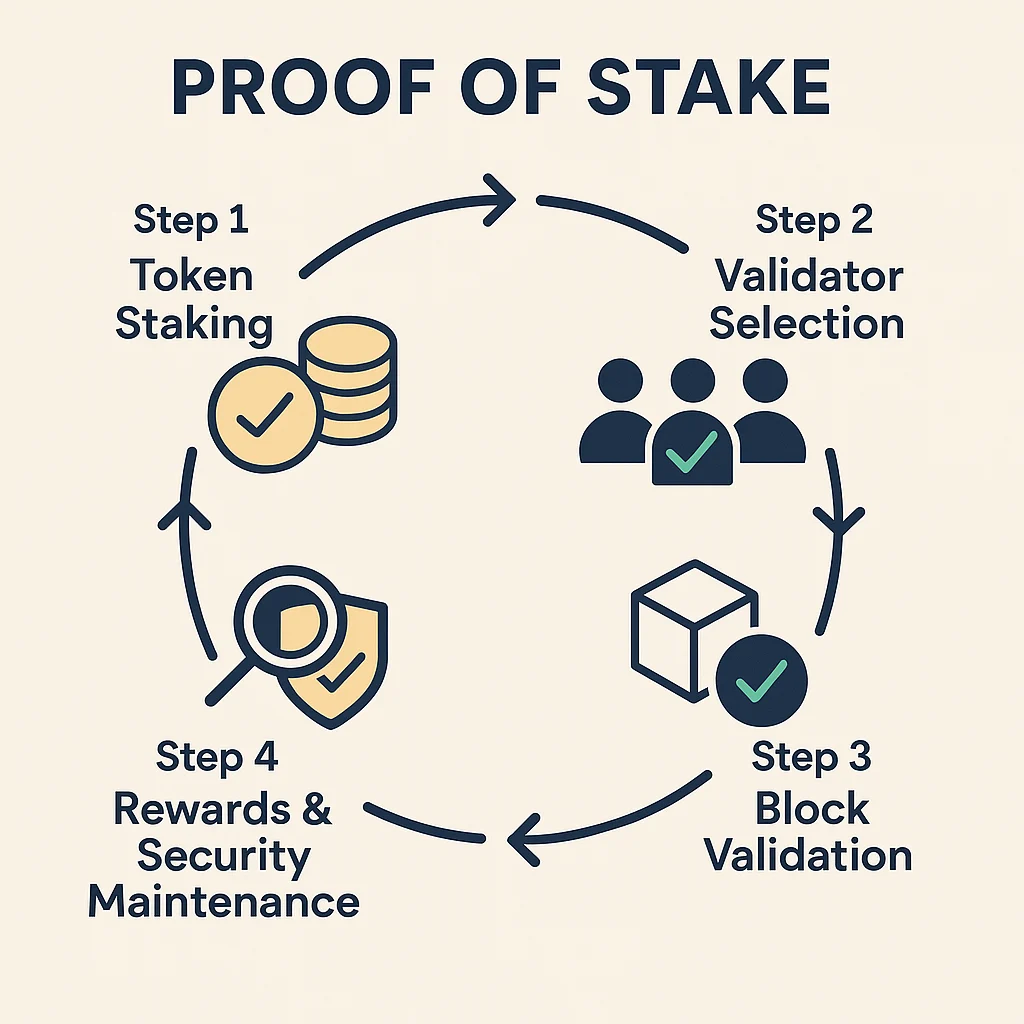
Infographic showing the Proof of Stake cycle: token staking, validator selection, block validation, rewards distribution, and security maintenance

Real-World Examples

  • Ethereum 2.0 transitioned from Proof of Work to Proof of Stake in 2022, reducing energy consumption by 99%+
  • Cardano built on Proof of Stake from launch with focus on peer-reviewed development
  • Polkadot uses nominated Proof of Stake with delegation to professional validators

Why Beginners Should Care

Environmental benefits make PoS networks much more sustainable than energy-intensive Proof of Work mining.

Participation opportunities allow token holders to earn staking rewards by helping secure networks without specialized mining hardware.

Different trade-offs compared to Proof of Work in terms of decentralization, security assumptions, and wealth concentration dynamics.

Related Terms: Staking, Validator, Slashing, Proof of Work

Back to Crypto Glossary

Similar Posts

  • Governance Token

    Governance Token: Voting Rights in CryptoGovernance tokens provide holders with voting rights in decentralized protocols and organizations. They're like shares in a company, but for decentralized projects where the community makes decisions.A governance token is a cryptocurrency that grants holders voting rights over protocol changes, treasury allocation, and other governance decisions in decentralized projects. These tokens…

  • Multisig Recovery

    Multisig Recovery: Getting Back Lost Access Multisig recovery helps regain access to multi-signature wallets when some keys are lost or compromised. It’s like having spare keys for your house, but with cryptographic mathematics. Multisig recovery refers to mechanisms that restore access to multi-signature wallets when the required number of signatures is no longer available due…

  • On-Chain Reputation

    On-Chain Reputation: Verifiable Digital Standing On-chain reputation tracks user behavior and achievements through permanent blockchain records. It’s like having a credit score built from your entire crypto transaction history. On-chain reputation systems create verifiable records of user behavior, achievements, and interactions that persist across applications and can’t be faked or manipulated. These systems enable trust…

  • Front Running

    Front Running: Trading Ahead of OthersFront running involves placing trades ahead of known pending transactions to profit from anticipated price movements. It's like cutting in line when you know someone behind you will move the market.Front running is the practice of placing trades based on advance knowledge of pending transactions that will likely affect asset…

  • Transaction Privacy

    Transaction Privacy: Protecting Financial InformationTransaction privacy involves keeping cryptocurrency transaction details confidential while maintaining network security and functionality. It's like having a private bank account in a transparent financial system.Transaction privacy refers to techniques and technologies that protect the confidentiality of cryptocurrency transaction details including amounts, participants, and transaction history. This enables financial privacy while maintaining…

  • Token Burn

    Token Burn: Destroying Supply for Value Token burns permanently remove cryptocurrency from circulation by sending it to addresses where it can never be recovered. It’s digital deflation in action. Token burn is the permanent removal of cryptocurrency tokens from circulation by sending them to an unusable address or smart contract that destroys them. This reduces…