
Proof of Work (PoW)

Proof of Work (PoW): Bitcoin’s Security Model

Proof of Work is how Bitcoin solves the double-spending problem without trusted authorities. It’s energy-intensive by design – that’s a feature, not a bug.

Proof of Work is a consensus mechanism where miners compete to solve computationally difficult puzzles to validate transactions and create new blocks. The winning miner earns newly created cryptocurrency plus transaction fees.

How Proof of Work Functions

Miners race to find a nonce (random number) that, when hashed with block data, produces a result starting with a specific number of zeros. This requires enormous computational power but is easy to verify.

Network difficulty adjusts automatically to maintain consistent block times regardless of total mining power. More miners join, difficulty increases. Miners leave, difficulty decreases.

Economic security comes from the cost of attacking the network. To control Bitcoin, you’d need 51% of global hash rate – requiring billions in mining equipment and ongoing electricity costs.
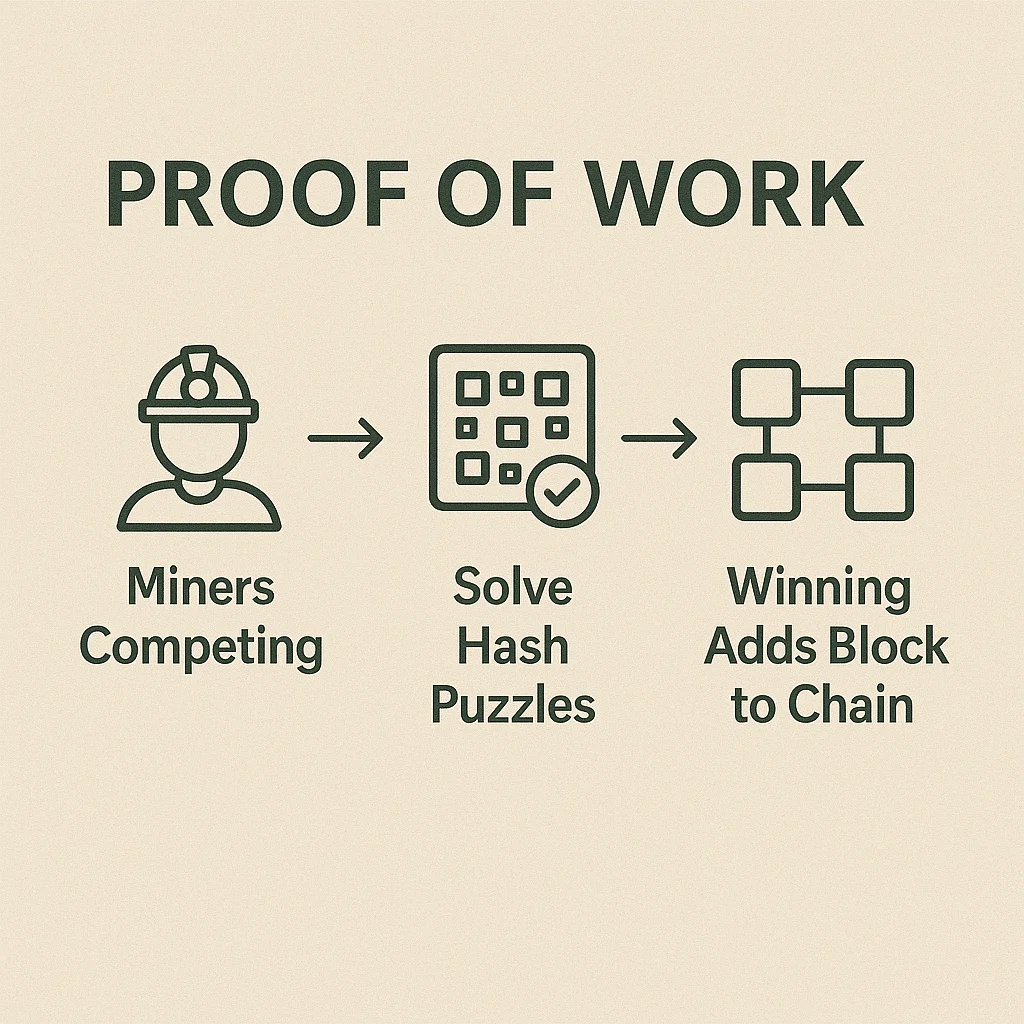
Infographic showing the Proof of Work process: miners competing, solving hash puzzles, and adding a block to the blockchain

Real-World Examples

  • Bitcoin uses SHA-256 hashing algorithm with ~10-minute block times
  • Litecoin uses Scrypt algorithm designed to be ASIC-resistant (though ASICs eventually emerged)
  • Monero regularly changes algorithms to maintain CPU/GPU mining accessibility

Why Beginners Should Care

Proof of Work provides proven security through economic incentives rather than trust in authorities. Bitcoin’s PoW has operated continuously for 15+ years without successful attacks.

Energy consumption is controversial but provides real security. The electricity cost makes attacks expensive while securing hundreds of billions in value.

Alternative consensus mechanisms like Proof of Stake are newer and less battle-tested, though they consume much less energy.

Related Terms: Mining, Hash Rate, Proof of Stake, 51% Attack

Back to Crypto Glossary

Similar Posts

  • EIP-1559

    EIP-1559: Ethereum's Fee ReformEIP-1559 reformed Ethereum's fee structure by introducing base fees that get burned and optional tips for miners. It's like switching from auction-based pricing to more predictable fee markets.EIP-1559 (Ethereum Improvement Proposal 1559) changed how Ethereum calculates and processes transaction fees by introducing a base fee that gets burned and making fee estimation…

  • Private Mempool

    Private Mempool: Protected Transaction PoolsPrivate mempools keep pending transactions hidden from public view until they're included in blocks, preventing front-running and MEV extraction. It's like having a VIP lane that bots can't see.A private mempool is a non-public pool of pending transactions that are not visible to other network participants until they are included in…

  • DeFi Insurance

    DeFi Insurance: Protecting Against Smart Contract Risk DeFi insurance provides coverage against smart contract failures, hacks, and protocol exploits. It’s like buying fire insurance for your digital assets in experimental financial protocols. DeFi insurance offers protection against losses from smart contract bugs, hacks, oracle failures, and other technical risks in decentralized finance protocols. Users pay…

  • Chainlink

    Chainlink: Decentralized Oracle NetworkChainlink is a decentralized oracle network that connects blockchains to external data sources and APIs. It's like a bridge that brings real-world information into smart contracts.Chainlink is a decentralized oracle network that provides reliable, tamper-proof data feeds to smart contracts on various blockchain networks. It solves the oracle problem by aggregating data from…

  • Diamond Hands

    Diamond Hands: Unshakeable Conviction Diamond hands represent the ultimate HODLer mentality – holding through extreme volatility without selling. It’s a badge of honor in crypto communities. Diamond hands refers to the unwavering determination to hold cryptocurrency positions through significant price volatility and market stress. It celebrates investors who resist selling during crashes or euphoric peaks….

  • Paper Hands

    Paper Hands: Quick to Sell, Quick to Regret Paper hands describes investors who sell at the first sign of trouble or take profits too early. It’s crypto’s version of weak stomach syndrome. Paper hands refers to investors who sell their cryptocurrency holdings quickly due to fear, panic, or impatience rather than holding through volatility. The…