
Rebase Token

Rebase Token: Algorithmic Supply Adjustment

Rebase tokens automatically adjust their total supply to maintain target prices or economic conditions. It’s like having money that multiplies or divides to keep its buying power constant.

A rebase token automatically increases or decreases the total token supply held by all users proportionally to achieve specific economic targets like price stability or inflation tracking. Supply changes affect all wallets simultaneously.

How Rebase Tokens Work

Supply adjustment happens automatically based on predetermined algorithms that respond to price deviations, time periods, or other triggers.

Proportional changes affect all token holders equally, maintaining their percentage ownership while changing absolute token amounts.

Target maintenance uses supply expansion or contraction to influence token price toward desired levels or economic conditions.
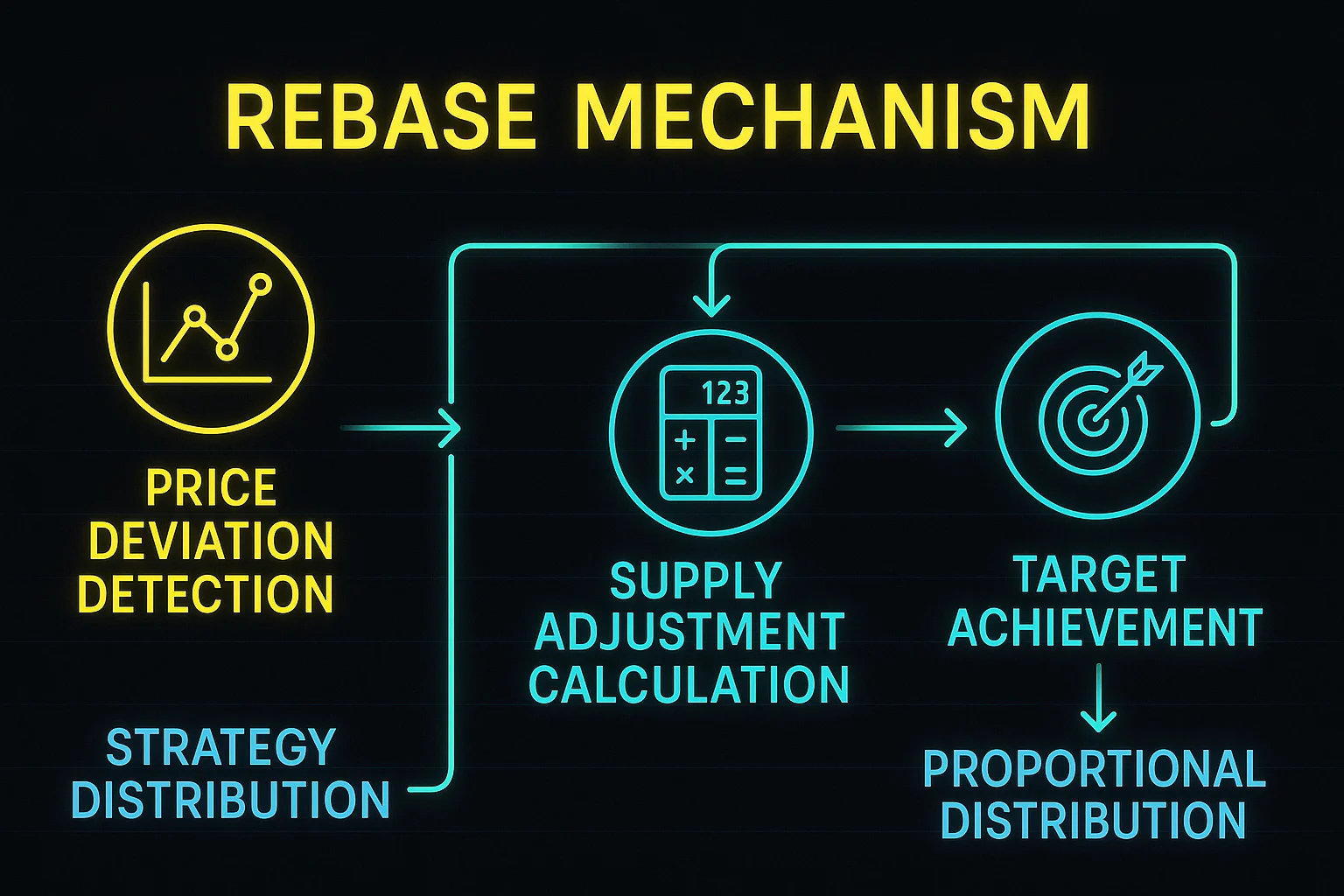
Rebase mechanism showing price deviation detection, supply adjustment calculation, proportional distribution, and target achievement

Real-World Examples

  • Ampleforth (AMPL) adjusts supply daily to maintain purchasing power parity
  • Base Protocol rebases to track the total market cap of cryptocurrencies
  • Olympus DAO used rebasing mechanisms to incentivize staking and protocol growth

Why Beginners Should Care

Wallet surprises as token balances change automatically without any action from holders, which can be confusing for new users.

Price dynamics work differently than normal tokens since supply changes affect price relationships and market behavior.

Tax implications may be complex since supply changes could be treated as taxable events in some jurisdictions.

Related Terms: Algorithmic Stablecoin, Token Supply, Price Stability, Monetary Policy

Back to Crypto Glossary

Similar Posts

  • Token Supply

    Token Supply: Digital Asset QuantityToken supply refers to the total number of cryptocurrency tokens that exist, will exist, or are available for trading. It's a fundamental factor in determining token economics and value.Token supply encompasses the total quantity of cryptocurrency tokens in existence, including circulating supply available for trading and total supply that will ever…

  • Difficulty

    Difficulty: Mining Competition AdjustmentDifficulty refers to how hard it is to mine new blocks in proof-of-work cryptocurrencies, automatically adjusting to maintain consistent block times. It's like a video game that gets harder when you're doing too well and easier when you're struggling.Difficulty describes the measure of how computationally challenging it is to find valid proof-of-work…

  • Single-Sided Staking

    Single-Sided Staking: Simplified Yield Farming Single-sided staking lets you earn yield on individual tokens without providing liquidity pairs or facing impermanent loss. It’s like earning interest on a savings account without loan risk. Single-sided staking allows users to stake individual tokens to earn rewards without needing to provide paired assets or manage liquidity pool positions….

  • Market Stability

    Market Stability: Reducing Price VolatilityMarket stability refers to conditions where asset prices experience relatively small fluctuations over time. It's like having calm seas instead of stormy waters for your investments.Market stability describes market conditions characterized by relatively low volatility, predictable price movements, and reduced extreme fluctuations. Stable markets enable better planning and reduce risks for participants.How…

  • Proof of Burn

    Proof of Burn: Destroying Value for Consensus Proof of Burn requires destroying cryptocurrency to participate in consensus or gain network benefits. It’s like burning money to prove you’re serious about network security. Proof of Burn is a consensus mechanism where participants destroy cryptocurrency by sending it to unrecoverable addresses to gain mining rights or network…

  • Liquidity Bootstrapping

    Liquidity Bootstrapping: Fair Token Launch Mechanism Liquidity bootstrapping uses gradually declining prices to enable fair token distribution while building trading liquidity. It’s like having a reverse auction that creates a fair market price. Liquidity bootstrapping is a token launch mechanism that starts with high prices that gradually decrease over time, allowing market forces to discover…