
Restaking

Restaking: Double-Duty for Staked Assets

Restaking allows already-staked cryptocurrency to secure additional networks and earn extra rewards. It’s like getting paid twice for the same job, but with twice the risk.

Restaking is a mechanism that allows staked cryptocurrency to simultaneously secure multiple networks or protocols, earning additional rewards beyond the base staking yield. Validators can opt into additional services while their stake continues securing the original network.

How Restaking Works

Dual security provisions enable staked assets to validate transactions on the primary network while also securing additional protocols or middleware services.

Slashing multiplication means validators face penalties from multiple sources if they misbehave, creating stronger incentives for honest behavior but higher risk exposure.

Reward stacking allows earning base staking rewards plus additional compensation from each extra service the validator provides to the ecosystem.
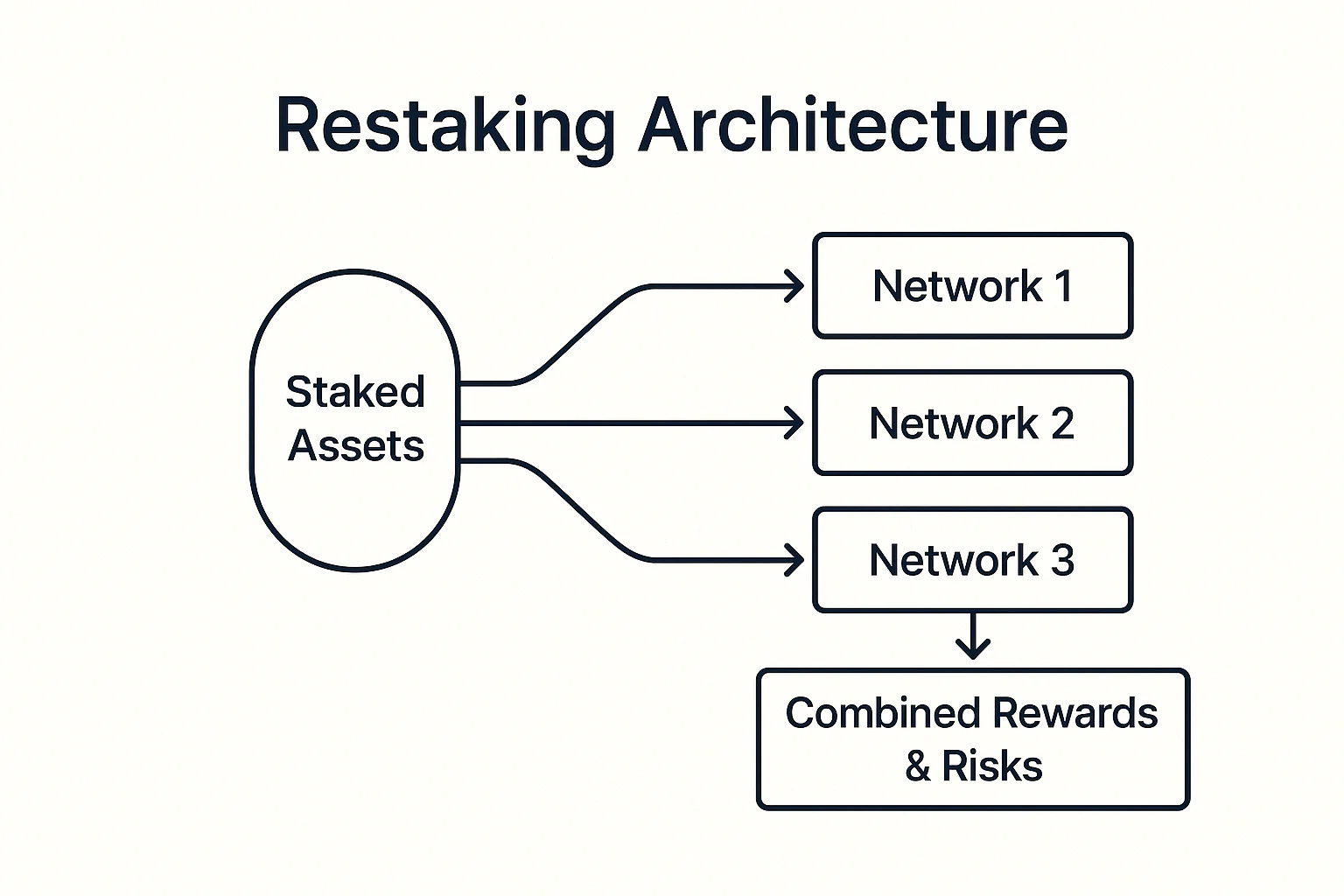
Restaking architecture diagram showing staked assets securing multiple networks with combined rewards and risks.

Real-World Examples

  • EigenLayer enables Ethereum validators to restake ETH for securing additional protocols
  • Babylon allows Bitcoin holders to stake their BTC for securing Proof-of-Stake networks
  • Middleware protocols use restaking to bootstrap security from established validator sets

Why Beginners Should Care

Higher yields from restaking can significantly improve returns on staked assets, but come with proportionally increased risk of slashing penalties.

Complexity increases with multiple slashing conditions and service requirements that validators must understand and manage properly.

Early experimentation makes restaking protocols less proven than traditional staking, requiring careful risk assessment before committing significant funds.

Related Terms: Staking, Slashing, Validator, Yield Stacking

Back to Crypto Glossary

Similar Posts

  • Protocol Security

    Protocol Security: Protecting Blockchain InfrastructureProtocol security involves designing and maintaining blockchain networks to resist attacks, prevent exploits, and ensure reliable operation. It's like building a fortress with multiple defensive layers.Protocol security encompasses all measures taken to protect blockchain networks from technical attacks, economic manipulation, and operational failures. This includes consensus security, smart contract auditing, and network…

  • Back Running

    Back Running: Following Profitable TransactionsBack running involves placing transactions immediately after profitable transactions to capture secondary opportunities. It's like following successful traders to pick up the crumbs they leave behind.Back running is a MEV extraction strategy where bots place transactions immediately after profitable transactions to capture residual value or secondary opportunities. This technique exploits the predictable…

  • Block Reward

    Block Reward: Miner and Validator Compensation Block rewards are the cryptocurrency payments that miners and validators receive for successfully adding new blocks to the blockchain. It’s how networks incentivize security without charging transaction fees. Block reward is the amount of cryptocurrency awarded to miners or validators for successfully creating and validating a new block on…

  • Order Flow

    Order Flow: Transaction Request RoutingOrder flow refers to the stream of buy and sell orders flowing through trading systems and how they're routed to different execution venues. It's like watching the flow of cars through different highway lanes to see which routes get the best traffic conditions.Order flow encompasses the path that trading orders take…

  • Risk Management

    Risk Management: Protecting Your InvestmentsRisk management involves identifying, assessing, and controlling potential losses in cryptocurrency investments and activities. It's like wearing a seatbelt while driving through volatile markets.Risk management encompasses strategies and practices used to minimize potential losses and protect capital while participating in cryptocurrency markets. Effective risk management balances potential returns with acceptable loss levels.How…

  • Capital Preservation

    Capital Preservation: Protecting Investment PrincipalCapital preservation focuses on protecting the original investment amount rather than maximizing returns. It's like choosing a safe over a lottery ticket for your money.Capital preservation is an investment strategy that prioritizes protecting the original principal amount over generating high returns. This conservative approach minimizes downside risk while accepting lower potential upside.How…