
Staking

Staking: Earning Rewards by Holding Crypto

Staking turns your crypto into a money-making machine. Hold tokens, earn more tokens – it’s that simple. But the devil’s in the details.

Staking is the process of locking up cryptocurrency tokens to support a blockchain network’s operations and earning rewards in return. Think of it as earning interest on your crypto savings account, except the “bank” is a decentralized network.

How Staking Works

Proof-of-Stake blockchains use staking instead of energy-intensive mining. Token holders lock up their coins as collateral to validate transactions and secure the network.

The network randomly selects validators to create new blocks based on their stake size. Bigger stakes mean more chances to be chosen and earn rewards.

Staking rewards come from transaction fees and newly minted tokens. Annual yields typically range from 5-20% depending on the network and how many people are staking.
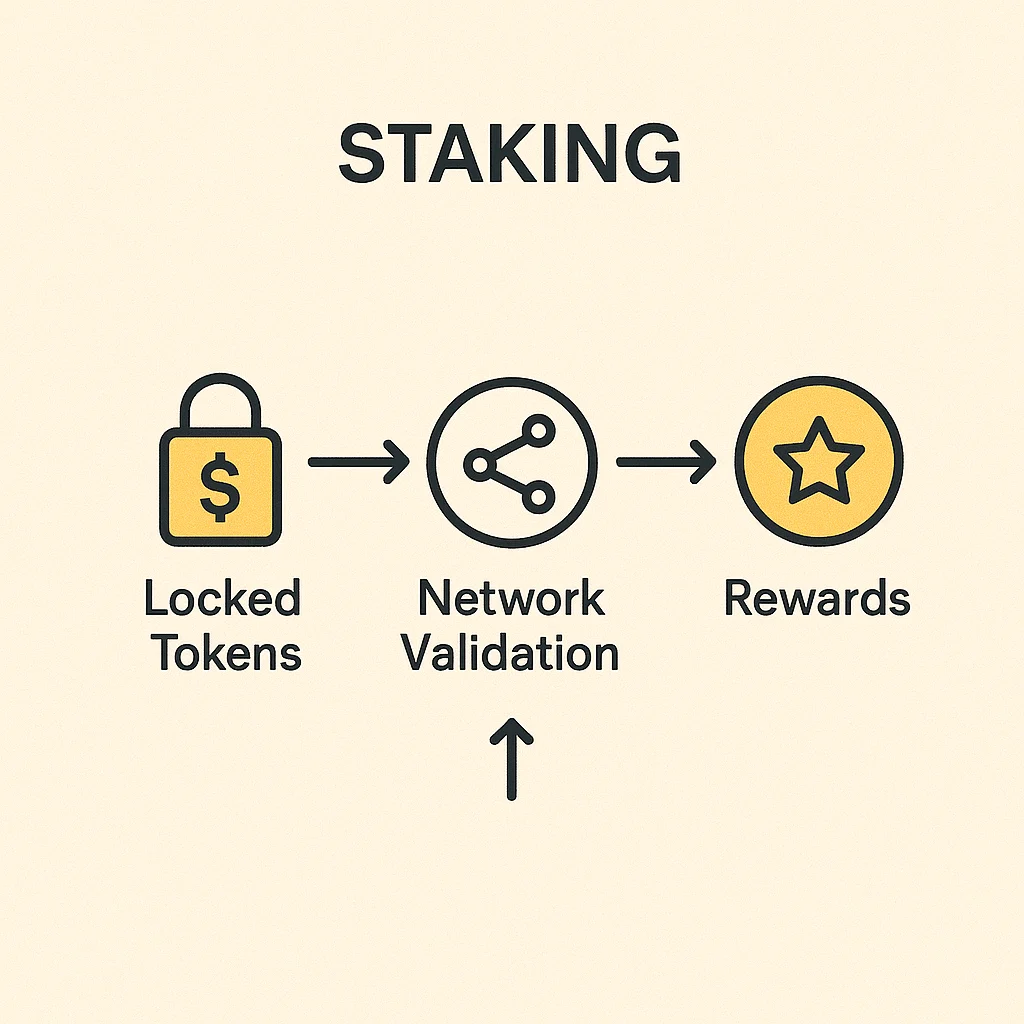
Infographic showing the staking process with locked tokens, network validation, and reward distribution

Real-World Examples

  • Ethereum 2.0 – Stake 32 ETH to run a validator node, earn ~5% annually
  • Cardano (ADA) – Delegate stake to pools, earn ~4-6% with no lockup period
  • Solana (SOL) – Stake with validators for ~6-8% rewards

Why Beginners Should Care

Staking lets your crypto work for you instead of sitting idle. It’s generally safer than yield farming because you’re supporting established networks rather than experimental protocols.

Some platforms offer liquid staking, giving you tokens representing your staked position that you can trade or use in DeFi while still earning staking rewards.

Related Terms: Proof of Stake, Validator, Yield Farming, Liquid Staking

Back to Crypto Glossary

Similar Posts

  • Secure Element

    Secure Element: Hardware Security ChipA secure element is a tamper-resistant hardware chip designed to store sensitive information like private keys. It's like having a tiny vault built into your device that's extremely difficult to break into.A secure element is a specialized hardware component designed to provide isolated, tamper-resistant storage and processing for sensitive data such…

  • Private Key

    Private Key: Your Crypto’s Secret Password Your private key is the most important thing you’ll ever own in crypto. Lose it, and your money’s gone forever. No customer service number to call. A private key is a secret code that proves you own your cryptocurrency and allows you to spend it. It’s like the combination…

  • Leverage

    Leverage: Borrowing Money to Amplify TradesLeverage lets you control larger positions than your actual capital by borrowing funds from exchanges or platforms. It's like using a lever to lift heavy objects – small movements create big effects.Leverage in cryptocurrency trading allows borrowing funds to increase position sizes beyond available capital, amplifying both potential profits and…

  • Buyback

    Buyback: Token Repurchase ProgramsBuyback refers to projects repurchasing their own tokens from the open market, often to reduce supply or return value to token holders. It's like a company buying back its own stock to increase the value of remaining shares.Buyback describes the process where cryptocurrency projects repurchase their own tokens from the open market…

  • Price Feed

    Price Feed: Real-Time Market DataPrice feeds provide real-time cryptocurrency market data to applications and smart contracts that need current asset values. They're like financial news tickers that continuously update with the latest stock prices, but for digital assets and automated systems.Price feed refers to continuous streams of current market prices and trading data that supply…

  • Layer 2

    Layer 2: Scaling Solutions for Expensive Blockchains Layer 2 networks solve Ethereum’s biggest problem – ridiculous gas fees. They process transactions cheaply and quickly while inheriting Ethereum’s security. Layer 2 is a separate blockchain or protocol built on top of a main blockchain (Layer 1) to improve scalability and reduce transaction costs. These solutions handle…