
Token Lockup

Token Lockup: Preventing Early Selling

Token lockups prevent allocated tokens from being sold or transferred for specific time periods. It’s like putting your poker winnings in a time-locked safe to prevent impulse spending.

Token lockup is a mechanism that prevents token holders from selling, transferring, or accessing their tokens until predetermined conditions are met. Lockups typically use smart contracts to enforce restrictions automatically.

How Token Lockups Work

Smart contract enforcement makes lockup periods technically immutable, preventing even token holders from accessing funds before unlock conditions are satisfied.

Various trigger types include time-based unlocks, milestone achievements, governance votes, or other on-chain events that automatically release tokens.

Gradual release options may unlock tokens in tranches rather than all at once, smoothing potential market impact from large sales.
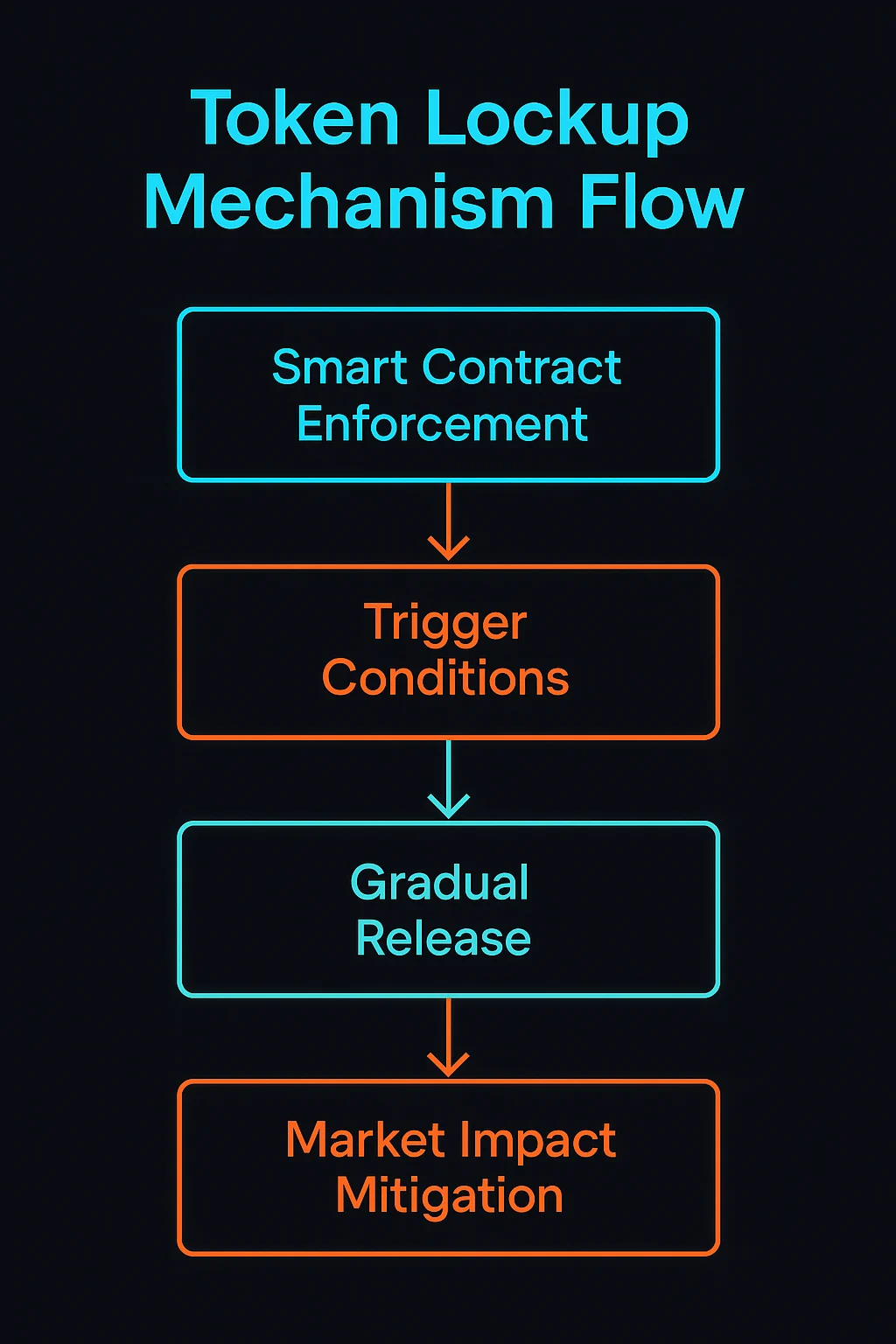
Token lockup flowchart showing smart contract enforcement, trigger conditions, gradual token release, and market impact mitigation

Real-World Examples

  • Team token lockups prevent founders from immediately selling allocations after public token launches
  • Liquidity provider rewards often have lockup periods to ensure continued platform participation
  • Investor protections through lockups that prevent early whale dumping on retail buyers

Why Beginners Should Care

Price stability benefits from lockups that prevent large holders from immediately dumping tokens and crashing prices after launches.

Commitment signaling as teams and investors willing to accept lockups demonstrate confidence in long-term project success.

Unlock events create predictable supply increases that may pressure prices, requiring investors to monitor lockup expiration schedules.

Related Terms: Vesting Schedule, Smart Contract, Supply Shock, Market Stability

Back to Crypto Glossary

Similar Posts

  • Arbitrage

    Arbitrage: Risk-Free Profit from Price DifferencesArbitrage involves simultaneously buying and selling the same asset on different markets to profit from price differences. It's like buying wholesale and selling retail, but happening instantly.Arbitrage is the practice of taking advantage of price differences for the same asset across different markets or exchanges to generate risk-free profits. This activity…

  • AML (Anti-Money Laundering)

    AML (Anti-Money Laundering): Fighting Financial Crime AML regulations force crypto businesses to monitor and report suspicious activities. It’s the government’s attempt to prevent crypto from becoming a money laundering paradise. Anti-Money Laundering (AML) refers to laws, regulations, and procedures designed to prevent criminals from disguising illegally obtained funds as legitimate income. Crypto exchanges and businesses…

  • DEX Aggregator

    DEX Aggregator: Optimal Trading Route FinderDEX aggregators find the best prices across multiple decentralized exchanges for cryptocurrency trades. They're like price comparison websites that automatically execute trades at the best available rates.A DEX aggregator is a service that compares prices and liquidity across multiple decentralized exchanges to find optimal trading routes for cryptocurrency swaps. These platforms…

  • Transaction Approval

    Transaction Approval: Authorizing Blockchain ActionsTransaction approval is the process of authorizing blockchain operations through wallet signatures or smart contract permissions. It's like signing checks, but with permanent consequences.Transaction approval involves granting permission for blockchain operations through cryptographic signatures, smart contract interactions, or delegation mechanisms. These approvals authorize spending, contract execution, or account access.How Transaction Approval WorksSignature…

  • DCA

    DCA: Dollar Cost Averaging Investment StrategyDCA (Dollar Cost Averaging) involves making regular purchases of cryptocurrency regardless of price to reduce timing risk. It's like buying groceries on the same day each week instead of trying to predict when prices will be lowest.Dollar Cost Averaging (DCA) is an investment strategy that involves purchasing cryptocurrency at regular…

  • ZK-EVM

    ZK-EVM: Zero-Knowledge Ethereum Compatibility ZK-EVM provides Ethereum compatibility while using zero-knowledge proofs for scalability and privacy. It’s like having Ethereum that’s faster, cheaper, and more private. ZK-EVM is a zero-knowledge rollup that maintains full compatibility with Ethereum’s execution environment while using ZK proofs for validation. This enables existing Ethereum applications to run without modification while…