
Two-Factor Authentication (2FA)

Two-Factor Authentication (2FA): Your Crypto’s Second Lock

2FA is the minimum security standard for any crypto account worth protecting. If you’re not using it, you’re basically leaving your front door unlocked.

Two-factor authentication (2FA) requires two different verification methods to access your account – typically something you know (password) plus something you have (phone or hardware token). It dramatically reduces the risk of account takeovers even if your password is compromised.

How 2FA Works

SMS 2FA sends codes to your phone, but this method is vulnerable to SIM swapping attacks where scammers take control of your phone number.

Authenticator apps like Google Authenticator or Authy generate time-based codes that change every 30 seconds. These are much more secure than SMS since they don’t rely on phone networks.

Hardware tokens like YubiKey provide the highest security by requiring physical possession of the device to generate authentication codes.
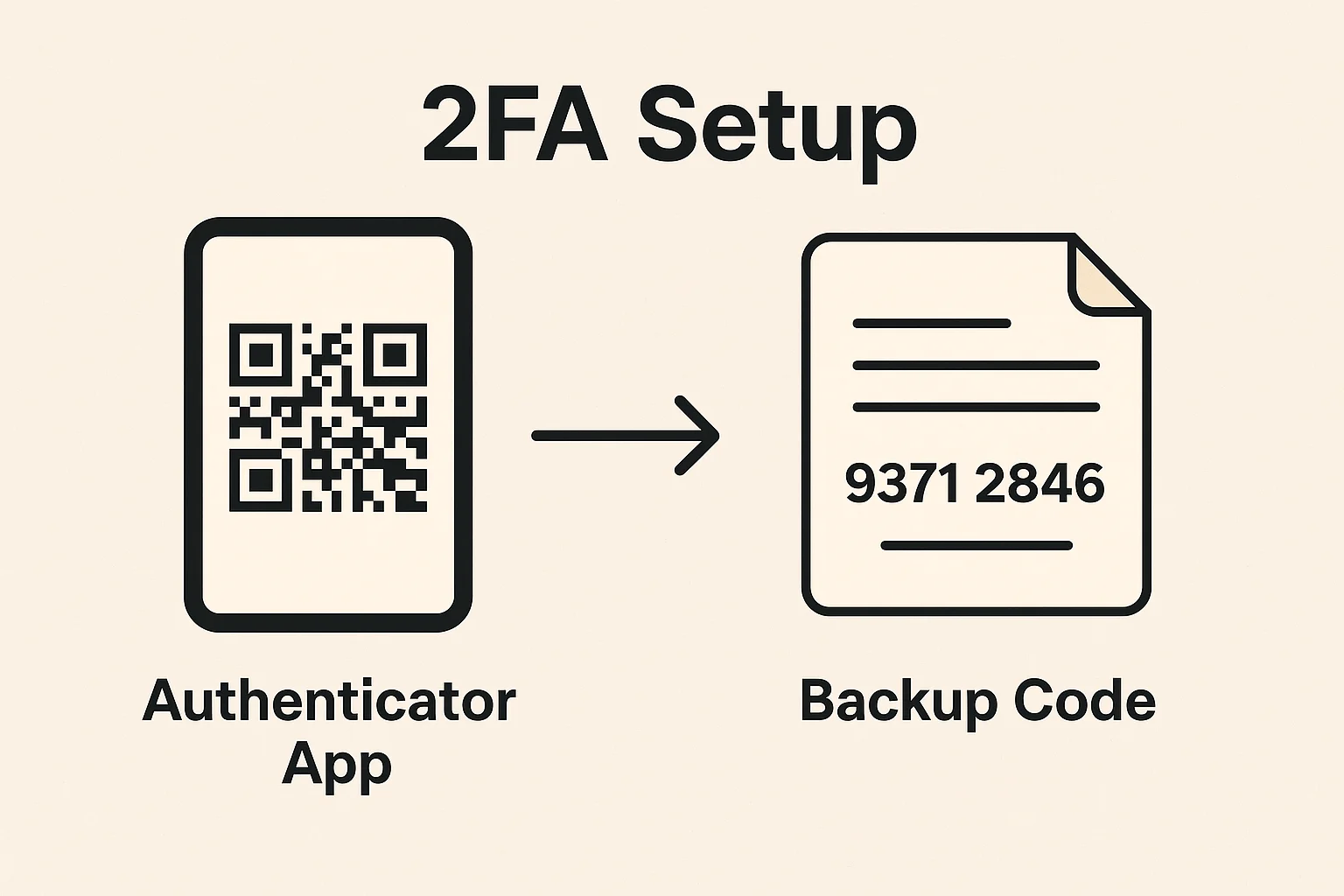
Infographic showing the 2FA setup process with a QR code scanned by an authenticator app and generation of a backup code

Real-World Examples

  • Exchange accounts – Kraken, Coinbase, and Binance all support multiple 2FA methods
  • Wallet apps – MetaMask and other wallets offer 2FA for additional protection
  • DeFi platforms – Some protocols now support 2FA for administrative functions

Why Beginners Should Care

Password breaches happen constantly. If your exchange password gets leaked and you don’t have 2FA enabled, scammers can drain your account in minutes.

Use authenticator apps instead of SMS whenever possible. For high-value accounts, consider hardware keys like YubiKey for maximum security.

Always save your 2FA backup codes in a secure location – if you lose your phone without backups, you could be permanently locked out of your accounts.

Related Terms: Phishing Attack, Hardware Wallet, Exchange, Security

Back to Crypto Glossary

Similar Posts

  • Impermanent Loss

    Impermanent Loss: The Hidden Cost of Liquidity Providing Impermanent loss is the sneaky tax on liquidity providers. Your tokens can lose value even when the pool is profitable. It’s math, not magic – but it feels like getting robbed. Impermanent loss occurs when the price ratio of tokens in a liquidity pool changes compared to…

  • Back Running

    Back Running: Following Profitable TransactionsBack running involves placing transactions immediately after profitable transactions to capture secondary opportunities. It's like following successful traders to pick up the crumbs they leave behind.Back running is a MEV extraction strategy where bots place transactions immediately after profitable transactions to capture residual value or secondary opportunities. This technique exploits the predictable…

  • Fractional Ownership

    Fractional Ownership: Shared Asset OwnershipFractional ownership enables multiple people to own portions of expensive assets that would be difficult to purchase individually. It's like buying a slice of expensive real estate instead of the whole property.Fractional ownership refers to dividing ownership of assets into smaller portions that can be owned by multiple parties, typically enabled…

  • Sharding

    Sharding: Splitting Networks for Speed Sharding divides blockchain networks into smaller pieces that process transactions in parallel. It’s like adding more checkout lanes at the grocery store – same capacity, faster service. Sharding is a scaling technique that splits a blockchain network into smaller, parallel chains called shards that process transactions independently. Each shard handles…

  • Monero

    Monero: Privacy-Focused CryptocurrencyMonero is a privacy-focused cryptocurrency that hides transaction details by default. It's like having a completely private bank account where no one can see your balance or transaction history.Monero is a privacy-focused cryptocurrency that uses advanced cryptographic techniques to hide transaction amounts, sender addresses, and recipient addresses by default. This provides strong financial privacy…

  • Wallet Security

    Wallet Security: Protecting Cryptocurrency AccessWallet security encompasses all measures taken to protect cryptocurrency wallets from theft, loss, or unauthorized access. It's like comprehensive security for your digital bank account.Wallet security refers to practices, technologies, and procedures used to protect cryptocurrency wallets and their contents from various threats including hacking, phishing, and user error. Proper security is…