
Validator Jailing

Validator Jailing: Temporary Network Punishment

Validator jailing temporarily removes misbehaving validators from consensus participation while allowing them to return after penalties. It’s like being sent to the penalty box in hockey.

Validator jailing is a punishment mechanism that temporarily excludes validators from consensus participation and rewards due to violations like extended downtime or rule infractions. Jailed validators can typically return after meeting specific conditions.

How Validator Jailing Works

Automated enforcement detects violations like missing too many blocks, extended offline periods, or consensus rule violations that trigger jailing procedures.

Temporary exclusion removes jailed validators from the active set, preventing them from earning rewards or participating in consensus until released.

Release conditions may require waiting periods, paying penalties, or demonstrating corrected behavior before validators can rejoin the active set.
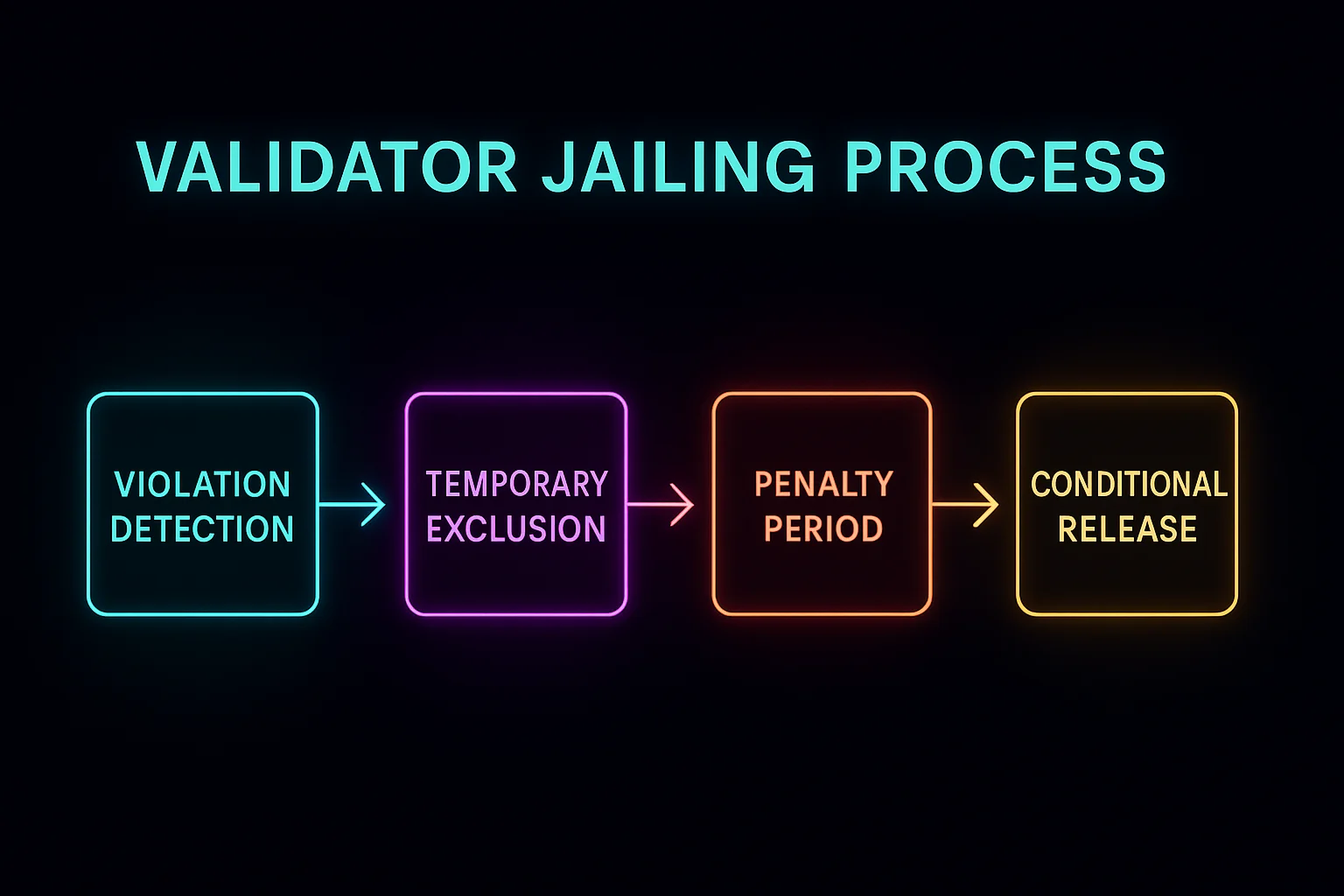
Validator jailing process showing violation detection, temporary exclusion, penalty period, and conditional release

Real-World Examples

  • Cosmos networks jail validators for missing blocks or double-signing, requiring unjailing transactions
  • Solana has similar mechanisms for removing poor-performing validators temporarily
  • Various PoS chains implement jailing to maintain network quality without permanent validator removal

Why Beginners Should Care

Network health maintenance through jailing mechanisms that remove problematic validators while allowing redemption opportunities.

Delegation risks as stakers may lose rewards when their chosen validators get jailed for poor performance or violations.

Validator selection considerations include uptime history and operational competence to avoid delegation to frequently jailed validators.

Related Terms: Validator, Slashing, Proof of Stake, Network Governance

Back to Crypto Glossary

Similar Posts

  • Storage Rent

    Storage Rent: Pay-per-Use Blockchain StorageStorage rent is a proposed mechanism where users pay ongoing fees for maintaining data on blockchain networks. It's like paying monthly rent for keeping files in cloud storage instead of a one-time purchase.Storage rent refers to fee mechanisms that charge users for ongoing blockchain storage rather than allowing permanent storage after…

  • Hard Fork

    Hard Fork: Splitting the Blockchain Hard forks create permanent splits in blockchain networks, often resulting in two separate cryptocurrencies. They’re like corporate divorces – messy, dramatic, and usually involving lots of arguing about money. A hard fork is a permanent change to a blockchain’s protocol that makes previously invalid blocks valid, or vice versa, requiring…

  • Dark Web

    Dark Web: Hidden Internet NetworksThe dark web consists of encrypted online networks accessible only through specialized software like Tor. It's where privacy advocates and criminals both hang out, but for very different reasons.The dark web refers to encrypted online content that exists on overlay networks requiring specific software, configurations, or authorization to access. Unlike the regular…

  • |

    Bridgeless Interop

    Bridgeless Interop: Direct Cross-Chain Communication Bridgeless interoperability enables direct communication between blockchains without traditional bridge infrastructure. It’s like having chains that can talk directly to each other instead of using translators. Bridgeless interoperability refers to cross-chain communication methods that don’t rely on traditional bridge protocols, instead using native blockchain features or specialized infrastructure for direct…

  • Public Key

    Public Key: Cryptographic Identity VerificationA public key is the openly shareable part of a cryptographic key pair that enables others to send you cryptocurrency or verify your digital signatures. It's like your mailing address that you can give to anyone who wants to send you mail.Public key refers to the cryptographic component of a key…

  • Halving

    Halving: Cutting Block Rewards in Half Halving events reduce block rewards by 50%, creating artificial scarcity that historically triggers major bull markets. It’s like cutting gold mining output in half overnight. Halving is a pre-programmed event that reduces block rewards by half, typically occurring every four years or after a specific number of blocks. This…